




Stainless Steel vs Standard Gas Springs: Which is Better?
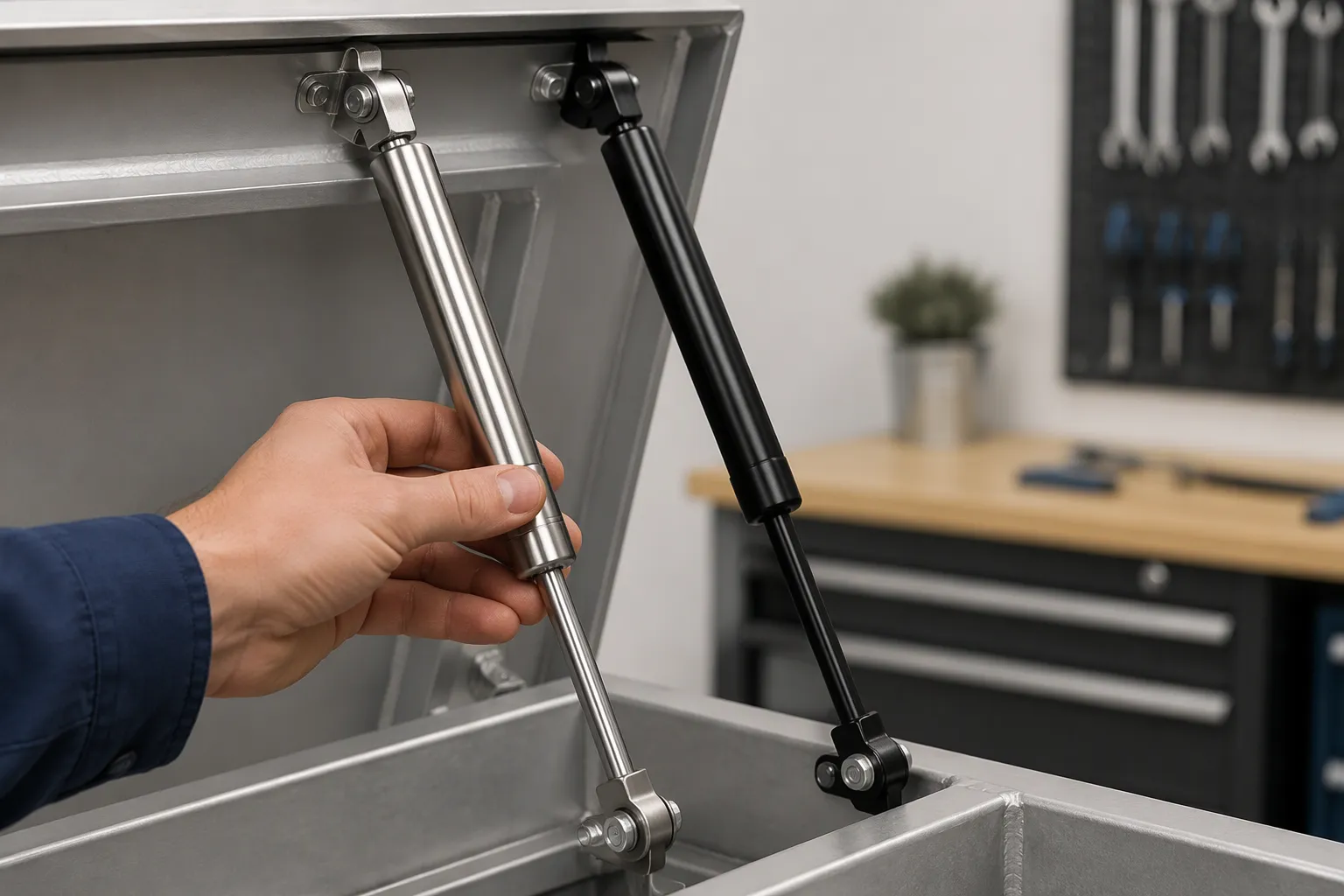
Neither stainless steel gas springs nor standard gas springs are universally better. The right choice depends on the application's environment, load requirements, compliance needs, and budget. Several factors deserve careful weight: corrosion exposure, strength and durability demands, temperature range, regulatory standards, and total cost of ownership. Corrosion alone carries real financial weight. According to recent studies by NACE International, the global cost of corrosion is estimated at roughly $2.5 trillion annually, equivalent to over 3% of the global GDP. This post compares the two options point by point, so you can match a spring type to your specific operating conditions.
Key Takeaways
Stainless steel gas springs resist rust and chemicals, making them ideal for wet or harsh environments.
Standard gas springs cost less and work well in dry, controlled indoor settings.
Stainless steel springs last longer in tough conditions, saving money on replacements and downtime.
Match the spring material to your environment: choose stainless for marine or washdown, standard for dry areas.
Consider total cost over time: stainless steel's higher upfront price often pays off in corrosive settings.
Corrosion Resistance of Stainless Steel Gas Springs
Moisture and Chemical Exposure
The rod and cylinder are the two surfaces most exposed to attack. Building both from stainless steel significantly enhances a gas spring's corrosion resistance. The alloy forms a passive surface layer that resists rust and pitting. This layer renews itself when scratched, so the protection lasts through years of service.
Grade 316L offers the strongest protection in this family. Its molybdenum content helps it withstand chlorides, acids, and industrial cleaning agents. Stainless Steel Gas Springs in 316L therefore suit a wide variety of corrosive environments. Coastal air, chemical processing rooms, and frequent washdown areas all fall within their range.
Where Standard Springs Hold Up (And When to Upgrade)
Standard gas springs rely on coatings for protection. Paint, zinc plating, and similar finishes create a barrier between the steel and the surrounding air. This barrier performs well in dry, controlled settings. Indoor cabinets, office furniture, and enclosed machinery rarely expose a spring to moisture or chemicals.
Coatings can chip at contact points and edges. A damaged coating leaves bare steel open to rust. Standard springs therefore fit best where humidity stays low and chemical contact is absent. Stainless steel earns its place where moisture, salt, or cleaning chemicals are routine. Each option serves its own conditions well. Matching the material to the exposure level protects both performance and budget.
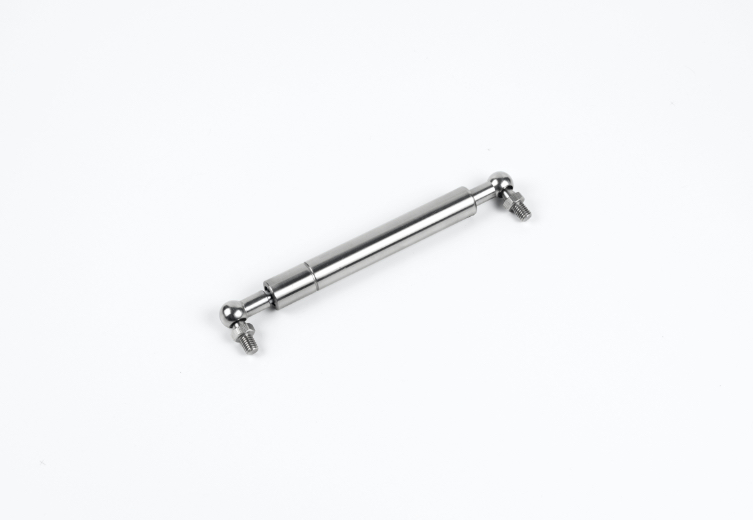
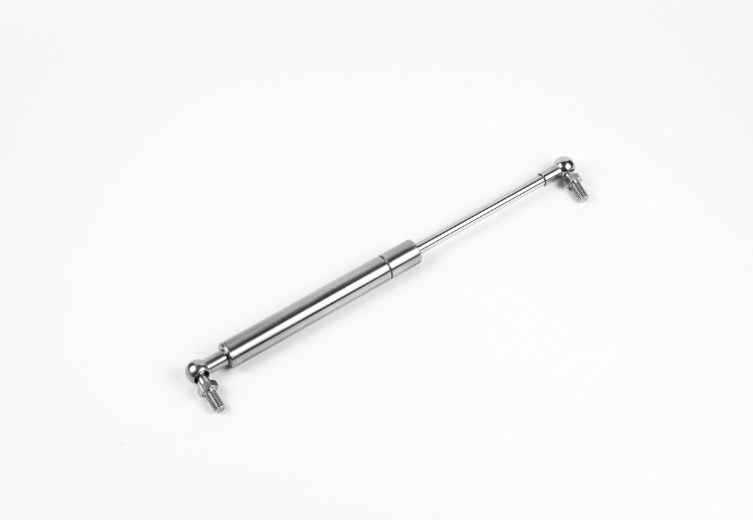
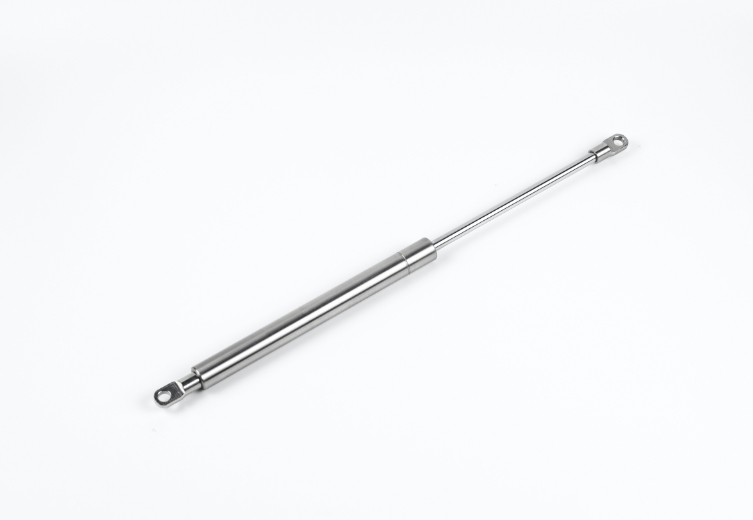
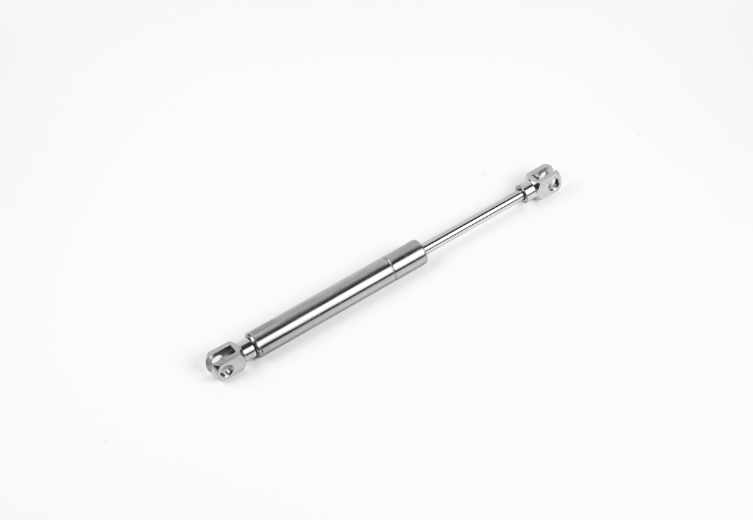
Beyond the Cylinder: End Fittings and Aesthetics. A stainless steel gas spring is only as strong as its weakest link. For marine or washdown applications, ensure that the end fittings (ball studs, clevises, and eyelets) and mounting hardware are also made of matching stainless steel to prevent galvanic corrosion at the joints. Furthermore, stainless steel offers a natural metallic luster that won't chip or peel like painted coatings, making it highly preferred for medical devices and high-end furniture where visual aesthetics are critical.
Strength and Service Life
Load Capacity and Rod Strength
Extension force determines what a gas spring can lift, hold, or control. Standard industrial gas springs typically deliver 10 to 875 lbs of extension force per strut. Specialty units push well beyond that ceiling, with some reaching 1,120 lbs. Stainless steel construction does not sacrifice this capacity. ACE Controls, for example, lists its GS-28-V4A stainless steel gas springs at 33.72 to 562.02 lbs, with certain configurations rated up to 887.995 lbs.
Product Line | Extension Force Range |
|---|---|
Volume Line (standard industrial) | 10 to 875 lbs |
Extended Life Customline (specialty) | 2 to 1,120 lbs |
Rod strength matters just as much as raw force. A stainless rod resists bending and surface damage under side loads. That durability keeps the seal intact and the force output consistent over time.
Cycling and Expected Lifespan
Cycle count tells you how long a spring will serve before replacement. JUTENG gas springs offer a service life of 10,000 to 50,000 double strokes, with pressures from 5N to 3000N. That range covers light furniture hinges and heavy machinery alike. Buyers should match the expected cycle demand to the rated lifespan, then add a margin for safety.
Stainless steel supports long service in wet or chemical environments. The corrosion-resistant surface protects the rod through repeated cycling. Standard springs can also deliver long life in dry, controlled settings. The deciding factor is the operating environment, not the cycle count alone. A spring rated for 50,000 strokes will still fail early if corrosion attacks its rod. Pair the lifespan rating with the right material, and the spring will meet its expected service window.
Temperature and Environmental Tolerance
Extreme Heat and Cold
Temperature changes the internal pressure of any gas spring. JUTENG gas springs operate from -40°C to +80°C. Within this window, temperature only affects the pressure of the gas inside the unit. The hardware itself stays stable. This range covers cold storage rooms, unheated warehouses, and hot engine bays alike.
Attribute | Specification |
|---|---|
Operating temperature range | -40°C to +80°C |
Gas used inside | Nitrogen (pressure medium); flame-retardant oil also present for lubrication and damping |
The pressure medium matters for safety as well as performance. Only nitrogen is used as the pressure medium in JUTENG gas springs. Nitrogen is safe and non-flammable, so a leak poses no fire risk. Every JUTENG pneumatic spring also contains flame-retardant oil to lubricate the seals.
"Using 100% nitrogen and flame-retardant oil isn't just about performance; it's a critical safety standard for JUTENG springs operating in high-temperature or enclosed industrial environments." — JUTENG Engineering Team
Standard gas springs face the same physics. Their seals and coatings, however, may age faster under repeated thermal cycling in wet conditions. Check the rated range against your process temperatures and review our technical sizing guide before specifying either type.
Salt, Dust, and Washdown
Salt and washdown chemicals attack exposed surfaces first. Corrosion typically begins at connection points or areas where moisture lingers after operation. Once it reaches the piston rod or sealing area, service life drops significantly. Standard gas springs may perform reliably indoors but degrade faster on boat hatches, outdoor cabinets, or equipment washed repeatedly with water and chemicals.
Stainless steel gas springs counter this with a material structure suited to wet, hygienic, and corrosive environments. For saltwater and coastal use, AISI 316 or 316L is preferred for direct saltwater, chloride, or marine exposure. AISI 304 suits general industrial and humid conditions. In marine and food-processing settings, check the exact cleaning chemical, concentration, and exposure time against the selected materials and seals. Stainless steel tolerates demanding environments better than ordinary painted units, yet no material suits every chemical.
Application Fit for Stainless Steel Gas Springs
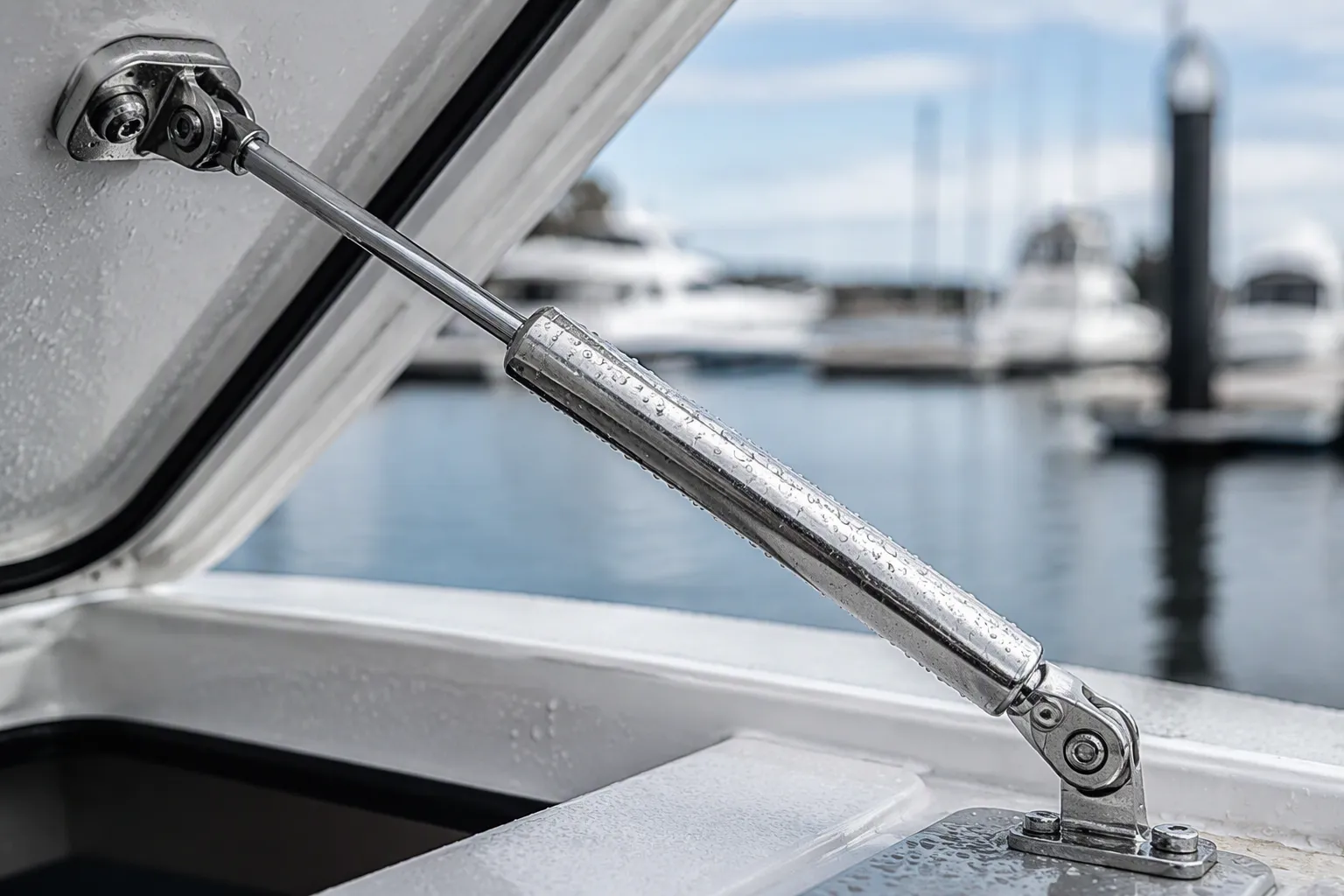
Marine, Food Processing, and Washdown
Highly corrosive settings call for a spring built to survive them. Marine and food-processing equipment rank among the toughest environments for any hardware component. Salt spray, cleaning chemicals, and constant moisture attack ordinary steel from the first day of service. Stainless Steel Gas Springs answer this challenge with an alloy body that resists chlorides and chemical attack.
Material grade drives the final decision. Grade 316L stainless steel is best suited for marine, chemical washdown, and outdoor harsh environments. Grade 304 stainless steel is intended for general industrial, indoor, and mild outdoor use. The difference matters most where chlorides are present. Grade 316 contains roughly 2% molybdenum, an element that resists seawater and salt spray.
The Golden Rule of Material Selection: If chlorides, salt, or caustic washdowns are present, 316L is mandatory. For humid but non-chemical indoor environments, 304 is sufficient. For dry interiors, standard coated steel remains the most economical choice.
Explore common gas spring applications that follow the exposure pattern. Boat hatches and engine covers, dock boxes, outdoor enclosures, washdown machinery, and pharmaceutical equipment covers all benefit from a corrosion-resistant build. Food-processing buyers should share their cleaning agents, concentration, temperature, and frequency with the supplier. That information lets the supplier review seal and fitting compatibility before shipment.
Industrial, Automotive, and Indoor Use
Controlled settings favor standard gas springs. Automotive applications form the largest segment, at roughly 38% of global demand in 2024. Trunk lids, engine hoods, tailgates, seat adjusters, and storage compartments all rely on controlled motion. A well-matched spring prevents sudden closure while it supports heavy components.
Industrial use covers heavy panels, access doors, machine covers, and inspection hatches. Each application reduces manual lifting effort and improves operational safety. Indoor furniture and ergonomic products form another major group. Office chairs, standing desks, recliners, and adjustable beds depend on smooth height and tilt control.
Lift gas springs are the most widely adopted product category, providing controlled lifting force and smooth motion assistance for automotive hoods, tailgates, cabinetry, and industrial access panels.
JUTENG supplies both paths with a broad catalog. The company offers four series: compressed gas springs, lockable gas springs, dampers, and traction gas springs. Over 300 varieties serve automotive, furniture, machinery, medical, marine, agricultural, construction, and waste management industries. A marine buyer can specify a corrosion-resistant unit from the same catalog that supplies an office chair manufacturer. That breadth lets one supplier cover mixed fleets and multi-site operations.
Setting | Typical Applications |
|---|---|
Marine and outdoor | Boat hatches, yacht covers, dock boxes, outdoor enclosures |
Food processing and washdown | Washdown machinery, cleanable enclosures, process equipment covers |
Automotive | Trunk lids, engine hoods, tailgates, seat adjusters |
Industrial | Machine covers, access doors, inspection hatches |
Indoor furniture | Office chairs, standing desks, recliners, adjustable beds |
The mapping is straightforward. Learn how to correctly match materials to the exposure, then match the series to the motion requirement. A corrosive site needs the stainless option. A dry, controlled site gains nothing from paying for corrosion protection it will never use.
Regulatory Compliance and Standards
FDA, NSF, and Hygienic Requirements
Food and medical settings impose strict hygiene rules on every component that touches the production space. A gas spring mounted on a washdown enclosure or a medical bed frame must survive repeated cleaning without shedding rust or trapping residue. Stainless steel construction supports these requirements in two ways. The smooth alloy surface offers fewer places for bacteria and soil to collect. The passive layer also withstands the caustic cleaners and sanitizers used in hygienic zones.
Standard springs can struggle here. Coated steel may chip at mounting points, and exposed steel then corrodes under daily washdown. Buyers in regulated hygienic settings should confirm material grade and seal compatibility by contacting JUTENG's engineering team before ordering. Stainless Steel Gas Springs give specifiers a material that aligns with washdown and cleanroom expectations.
ISO and Industry Standards
Compliance extends beyond hygiene. Industrial buyers often require documented quality systems and product standards. The table below lists the standards most relevant to gas spring sourcing.
ISO Standard | Relevance to Gas Springs in Industrial Applications |
|---|---|
ISO 9001 | Quality management system approval required of the gas spring production system/supplier. |
ISO 11982 | Gas spring specifications (road vehicles) cited as a product standard buyers should verify. |
ISO 12100:2010 | Safety of machinery — general design principles; used for risk assessment of equipment/cover-support design (e.g., for CE marking). |
ISO 13849-1:2023 | Safety of machinery — safety-related parts of control systems; applies when the gas spring is part of a safety-related control function, assessed at machine-specific level. |
Standard gas springs can meet ISO and general industrial standards wherever corrosion is not a regulated concern. A supplier holding ISO 9001 certification demonstrates control over its production process. Buyers should verify the specific product standard for their market, such as ISO 11982 for road vehicles. Machine builders also apply ISO 12100:2010 and ISO 13849-1:2023 during risk assessment. These standards address the equipment design, not the spring alone. Matching the spring to the machine's safety function remains the integrator's task.
Cost and Total Cost of Ownership
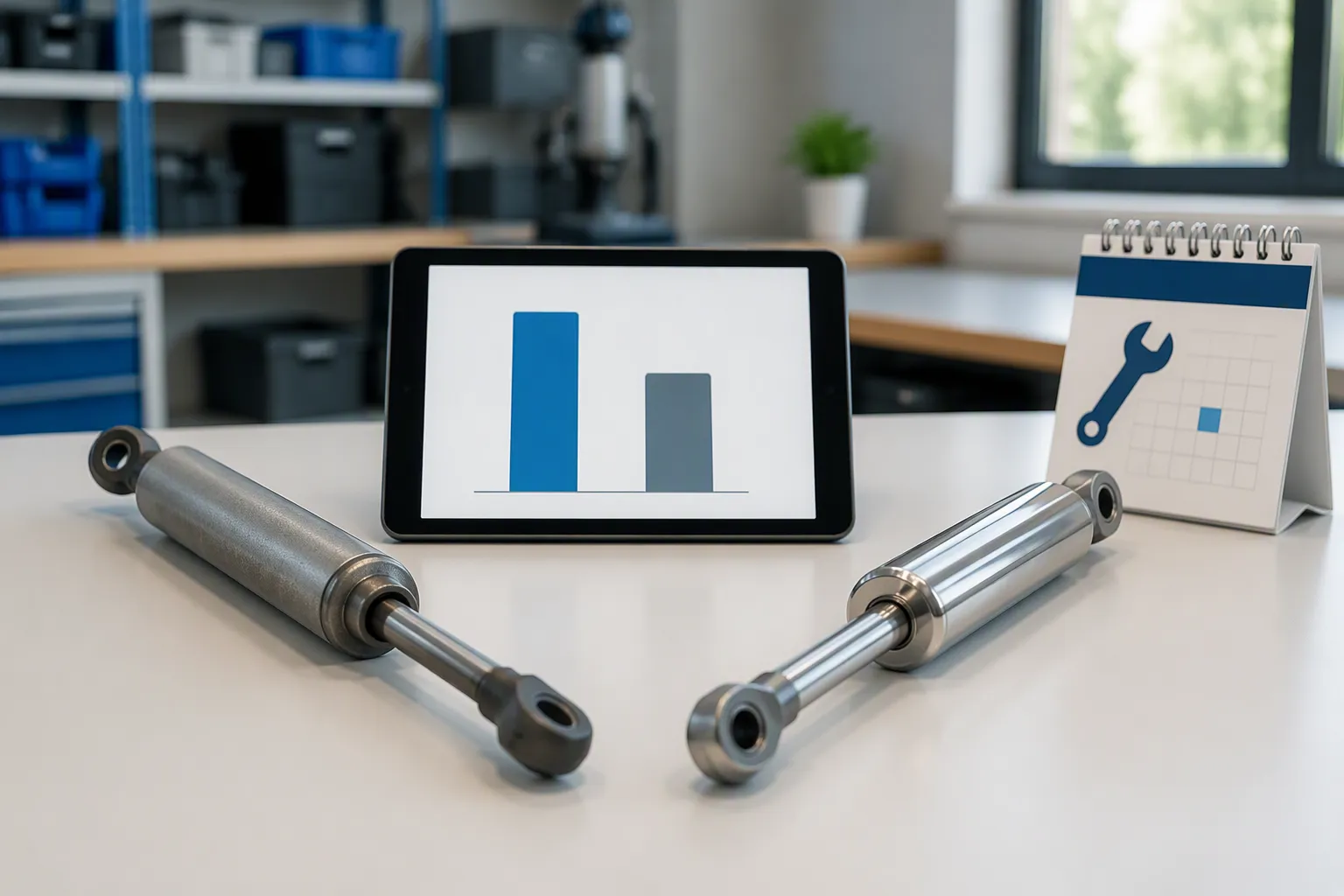
Initial Purchase Price
The sticker price tells only part of the story. A premium stainless steel gas spring typically costs about 2 to 3 times more than a standard carbon steel unit. For every dollar spent on a standard spring, a stainless version runs roughly two to three dollars. That multiplier holds across most catalog sizes, so the gap widens as order volume grows.
Standard springs keep the entry cost low. A buyer can equip a full production line for a fraction of the stainless outlay. This advantage matters most in dry, controlled settings where corrosion never becomes a factor. The lower price also shortens the payback period on short-lived equipment or one-off projects.
Stainless Steel Gas Springs carry a premium for a reason. The alloy itself costs more, and machining it demands tighter process control. Buyers should treat the higher price as an investment in service life, not as an expense to minimize. The next subsection shows how that investment performs over time.
Maintenance and Downtime
Replacement frequency drives the real cost picture. Standard springs in harsh environments may need replacement every 2 to 3 years. Stainless steel units in marine settings can run 8 to 12 years without replacement. Each avoided swap saves parts, labor, and production interruption.
Metric | Standard (Carbon Steel) Gas Springs | Stainless Steel (316L) Gas Springs |
|---|---|---|
Upfront cost per unit | $15–25 | ~200–300% premium over carbon steel |
Replacement cycle | Every 2–3 years (harsh environments) | 8–12 years without replacement (marine environments) |
10-year total cost of ownership | Baseline (higher lifecycle cost due to repeated replacement, downtime, labor) | 40–50% lower TCO over 10-year deployment when maintenance, replacement, and operational disruption costs are included |
Failure risk cost | Unexpected failures can cause $10,000–100,000 loss per incident | Premium corrosion resistance acts as insurance against high-impact failures |
Downtime often outweighs the parts bill. A failed spring can halt a washdown line or strand a boat hatch mid-season. Unexpected failures in critical equipment can cause $10,000–100,000 in losses per incident. Corrosion-resistant construction acts as insurance against those high-impact events.
The initial procurement price of a stainless-steel gas spring is naturally higher than that of a painted carbon steel equivalent. However, over a five-year operational period, the total cost of ownership for Juteng's stainless steel series can be up to 40% lower. This savings is realized through zero downtime for replacements, elimination of repainting costs, and avoidance of machinery damage caused by sudden spring failure.
JUTENG supports this calculation with services that reduce integration cost. The company offers OEM/ODM services and engineering support, including 3D modeling and simulation. Designers can validate fit and motion before tooling begins. That early review catches mismatches while changes remain inexpensive.
The core trade-off is straightforward. Stainless Steel Gas Springs cost more upfront, yet they excel in corrosive, hygienic, and harsh environments. Standard springs offer cost efficiency in controlled, low-exposure settings.
A short set of questions can guide the decision. Does the application face moisture, salt, or cleaning chemicals? What load and cycle demands apply? Which compliance obligations govern the installation? How long is the budget horizon? Honest answers to these questions point to the right spring type. Both options have valid use cases. Matching the spring to the environment, rather than defaulting to one type, is the key to a cost-effective, reliable choice.
FAQ
Which stainless steel grade should I specify, 304 or 316L?
Grade 316L is best suited for marine, chemical washdown, and outdoor harsh environments. Grade 304 is intended for general industrial, indoor, and mild outdoor use. The difference matters most where chlorides are present, since 316 contains roughly 2% molybdenum to resist seawater and salt spray.
How long will a stainless steel gas spring last?
JUTENG gas springs offer a service life of 10,000 to 50,000 double strokes. In marine settings, stainless steel units can run 8 to 12 years without replacement. Standard springs in harsh environments may need replacement every 2 to 3 years.
What temperature range can these springs handle?
JUTENG gas springs operate from -40°C to +80°C. Within this window, temperature only affects the pressure of the gas inside the unit. The hardware itself stays stable. Nitrogen serves as the pressure medium, and it is safe and non-flammable.
Which JUTENG series fits my motion requirement?
The catalog covers four series: compressed gas springs, lockable gas springs, dampers, and traction gas springs. Compressed units lift and support. Lockable units hold any position. Dampers control speed. Traction units extend when pulled. Over 300 varieties serve automotive, furniture, machinery, medical, marine, agricultural, construction, and waste management industries.
Does the higher price of stainless steel pay for itself?
Often, yes, in corrosive settings. A stainless unit typically costs about 2 to 3 times more than a standard carbon steel spring. Over a ten-year deployment, total cost of ownership can run 40–50% lower once maintenance, replacement, and downtime costs are included.
Not Sure Which Gas Spring is Right for Your Project?
Whether you need the extreme corrosion resistance of 316L stainless steel or a cost-effective standard solution, JUTENG's engineering team is here to help. We offer free 3D modeling, simulation, and custom OEM/ODM support.
Get a Free Quote & Engineering Consultation