





Which Gas Spring Performs Better Stainless-steel or Regular
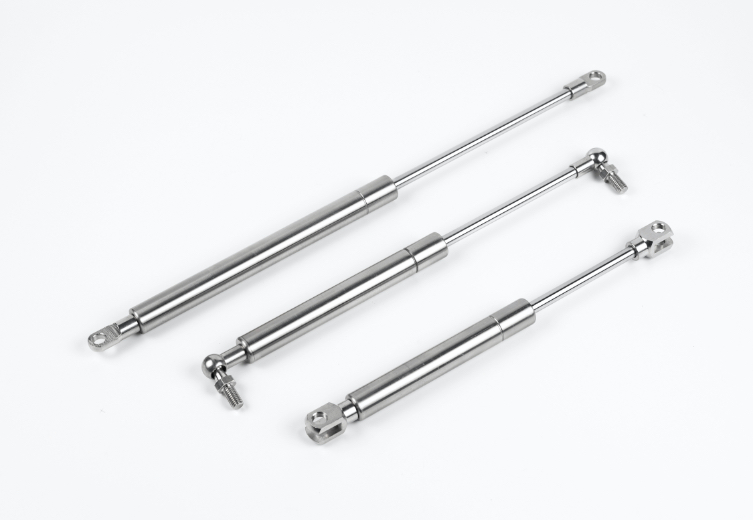
As a specialized manufacturer with over 15 years of experience and an annual production capacity of 1.5 million units, Changzhou Juteng Gas Spring Co., Ltd. frequently guides clients through the critical decision of selecting between stainless-steel and regular gas springs. Generally, stainless-steel variants perform exceptionally well when durability and corrosion resistance are top priorities. While standard springs typically last between 30,000 to 50,000 cycles, Juteng's premium stainless-steel models are rigorously tested to withstand up to 100,000 double strokes. The optimal choice depends on your specific application, environmental exposure, and total cost of ownership (TCO). The table below outlines the primary gas spring mechanisms we manufacture:
Type of Gas Spring | Description & Juteng Application |
|---|---|
Standard Compressed Gas Springs | Ideal for lifting and counterbalancing. Uses a precision rod and piston in a sealed cylinder. |
Adjustable Locking Gas Springs | Features an internal valve to lock securely at any position within the stroke. |
Traction Gas Springs | Operates in reverse, maintaining a pulling force to return mechanisms to a closed state. |
Safety Locking Shroud Gas Spring | Equipped with a mechanical shroud that automatically locks when fully extended. |
Dampers (Tension/Compression) | Provides speed control for moving masses, ensuring smooth and safe operation. |
Key Takeaways for Engineers & Buyers
Stainless-steel gas springs excel in harsh environments, offering superior resistance to saltwater, chemicals, and extreme humidity.
Regular carbon steel gas springs are highly cost-effective for indoor or controlled environments but may require protective coatings or more frequent maintenance.
Juteng engineers recommend evaluating the Total Cost of Ownership (TCO) rather than just the initial purchase price, especially for heavy-duty industrial applications.
Proper maintenance and correct installation angles significantly extend the lifespan of both stainless-steel and regular variants.
Both material options are available across Juteng's four major product series, ensuring you never have to compromise on the mechanism you need.
Performance & Technical Comparison
Durability & Fatigue Life
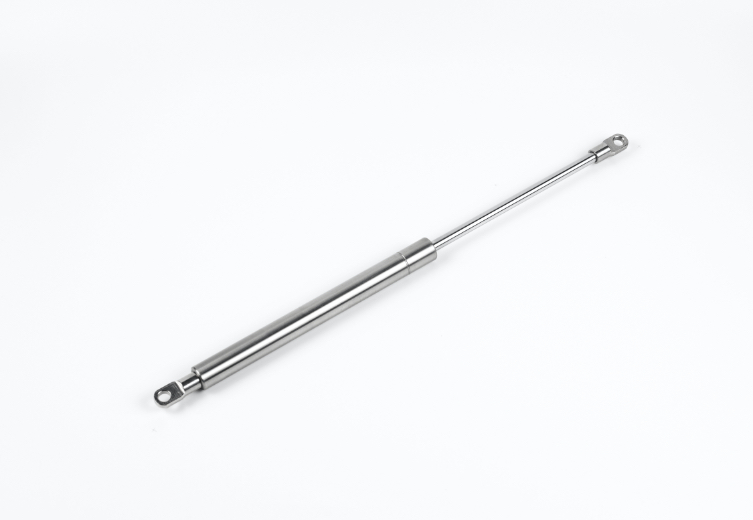
Stainless-steel gas spring durability stands out in demanding, high-cycle environments. At Juteng, we utilize premium SUS304 and SUS316L grades to create cylinders and rods that withstand rigorous fatigue testing. While standard steel models are rated for approximately 30,000 to 50,000 cycles, our stainless-steel models frequently surpass 100,000 cycles without seal degradation. This enhanced fatigue life is critical for automated industrial machinery, medical beds, and marine hatches that require continuous, reliable operation.
Technical Feature | Juteng Stainless Steel Series | Juteng Regular Carbon Steel Series |
|---|---|---|
Corrosion Resistance | Exceptional (Salt-spray tested) | Moderate (Requires QPQ or painting) |
Expected Cycle Life | 50,000 - 100,000+ cycles | 30,000 - 50,000 cycles |
Operating Temperature | -30°C to +80°C (Custom seals available) | -20°C to +60°C |
Seal Technology | HNBR / FKM (Highly chemical resistant) | Standard NBR Rubber |
Stainless steel designs inherently resist environmental stress cracking. By pairing SUS316L cylinders with advanced HNBR or FKM sealing materials, Juteng ensures zero gas leakage even in highly humid or chemically aggressive conditions. Understanding how gas struts work internally highlights why material selection and seal compatibility are just as important as the external metal.
Corrosion Resistance: SS304 vs. SS316L
Corrosion resistance is the defining factor when specifying materials for outdoor or marine applications. While standard carbon steel will rapidly oxidize when exposed to moisture, stainless steel forms a passive chromium oxide layer.
SUS304: Excellent for general outdoor equipment, food processing machinery, and environments with moderate moisture. It resists standard oxidation and rust effectively.
SUS316L: The marine-grade standard. The addition of molybdenum in the alloy provides superior resistance to chloride ions, preventing pitting and crevice corrosion caused by saltwater spray and harsh industrial chemicals.
Standard carbon steel components can fail within weeks in marine environments, whereas Juteng's AISI316L gas springs maintain structural integrity for years.
High humidity and chemical exposure degrade standard paint and QPQ coatings over time, making solid stainless steel the only reliable choice for zero-maintenance requirements.
Load Capacity & Customization
Load capacity dictates the mechanical viability of a gas spring. At Juteng, our stainless-steel manufacturing capabilities cover an extensive force range from 50N to 2,500N, with stroke lengths customizable from 20mm to 1,000mm. Whether you need a delicate 50N spring for a medical laboratory lid or a heavy-duty 2,500N strut for an industrial access hatch, our engineering team utilizes CATIA and SolidWorks to calculate the exact pressure and tube thickness required.
Heavy-duty stainless steel struts (600N - 2500N) are engineered with reinforced piston rods to prevent bending under extreme dynamic loads.
For adjustable seating and ergonomic furniture, moderate forces (e.g., 250N - 400N) allow for smooth, user-friendly height adjustments.
All Juteng gas springs are dynamically balanced to accommodate shifting center-of-gravity loads, ensuring consistent performance throughout the entire stroke.
Practical Factors & Application Scenarios
Maintenance Needs
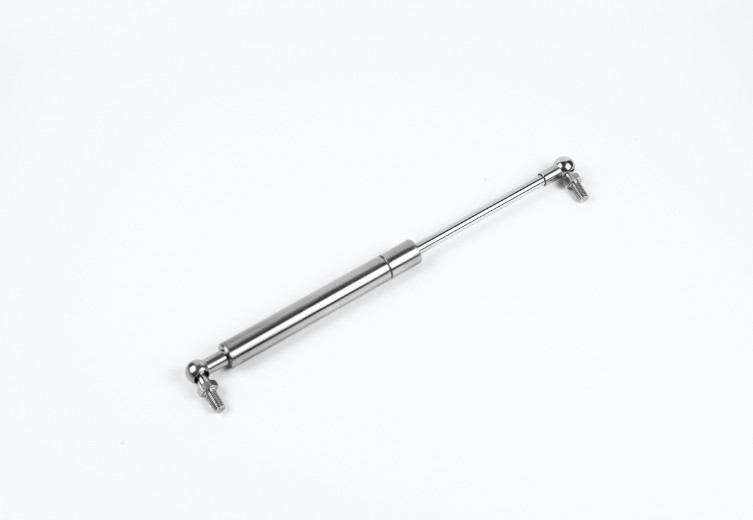
Proper installation and maintenance are vital. While stainless-steel bodies resist rust, the internal seals and external rod still require care. Juteng recommends installing gas springs with the rod pointing downwards (where possible) to ensure the internal lubrication oil constantly bathes the sealing lip, preventing dry rot and gas leakage.
Keep the exposed piston rod clean from abrasive dust and grit.
Avoid applying external greases to the rod, as they can attract debris and damage the internal seals.
Ensure mounting brackets allow for a slight pivot to prevent side-loading, which causes premature seal wear.
Cost Comparison & Total Cost of Ownership (TCO)
The initial procurement price of a stainless-steel gas spring is naturally higher than that of a painted carbon steel equivalent. However, over a five-year operational period, the total cost of ownership for Juteng's stainless steel series can be up to 40% lower. This savings is realized through zero downtime for replacements, elimination of repainting costs, and avoidance of machinery damage caused by sudden spring failure.
Procurement Tip: Bundle your stainless-steel gas spring orders with other custom OEM hardware to optimize manufacturing setups and achieve better volume pricing from Juteng's production lines.
Quick Decision Guide: Which Material Should You Specify?
Use the table below to quickly identify the best material for your specific industry based on Juteng's engineering guidelines:
Industry / Application | Recommended Material | Why? |
|---|---|---|
Marine & Boat Hatches | SUS316L Stainless | Mandatory resistance to salt spray and chloride pitting. |
Food & Beverage Processing | SUS304 Stainless | Withstands harsh washdown chemicals; prevents rust contamination. |
Medical & Laboratory Beds | SUS304 / SUS316 | Hygienic, easy to sanitize, and aesthetically clean. |
Automotive Hoods / Trunks | Regular Steel (QPQ/Painted) | Cost-effective; protected by the vehicle's exterior housing. |
Indoor Office Furniture | Regular Steel (Painted) | Standard environmental conditions; budget-friendly. |
Pros and Cons Summary
Feature | Stainless-Steel Gas Springs | Regular Carbon Steel Gas Springs |
|---|---|---|
Corrosion Resistance | Excellent. Solid alloy resists rust internally and externally. | Moderate. Relies on surface coatings (paint, QPQ, zinc). |
Durability & Lifespan | Very High. Paired with premium HNBR seals for extreme longevity. | Standard. Excellent for controlled indoor environments. |
Aesthetic Appeal | Sleek, polished, or brushed finish. Ideal for exposed architectural designs. | Industrial finish (usually black). Appearance is secondary to function. |
Initial Cost | Higher initial investment due to raw material costs. | Lower upfront cost. Highly economical for mass production. |
Maintenance Needs | Minimal. "Install and forget" reliability. | May require inspection for coating chips or surface rust. |
Regular gas springs, featuring advanced QPQ (Quench-Polish-Quench) treatment or epoxy painting, remain a highly practical choice for less demanding uses. They provide excellent structural support for automotive, standard furniture, and indoor machinery. However, selecting between stainless-steel and regular variants ultimately hinges on the environmental hostility your application faces.
Environmental factors heavily influence gas spring performance. Low temperatures reduce internal nitrogen pressure (lowering support force), while extreme heat increases pressure. Furthermore, high humidity and airborne particulates accelerate seal degradation. Consulting with Juteng's engineering experts ensures your custom solution accounts for these dynamic variables.
Frequently Asked Questions (FAQ)
What is the main difference between stainless-steel and regular gas springs?
Stainless-steel gas springs are manufactured from solid corrosion-resistant alloys (SUS304 or SUS316L), making them immune to rust. Regular gas springs use carbon steel that requires surface coatings to prevent oxidation, making them better suited for dry, indoor environments.
Can Juteng manufacture custom stainless steel gas springs with specific force ratings?
Yes. As an OEM/ODM manufacturer, Juteng can custom-calibrate the nitrogen pressure to your exact force requirements (from 50N to 2500N). We also provide 3D CAD modeling to ensure the stroke length and mounting brackets perfectly integrate into your design.
What certifications do Juteng's gas springs hold?
Juteng operates under strict ISO9001 quality management systems. Our products undergo rigorous testing, including salt-spray tests, high/low-temperature cycle testing, and fatigue life testing to ensure they meet international industrial standards.
Are stainless-steel gas springs worth the higher cost?
Absolutely, if your application involves moisture, salt, or chemicals. While the initial price is higher, stainless-steel springs eliminate the cost of premature replacements, machinery downtime, and warranty claims, resulting in a much lower Total Cost of Ownership.
Do you offer samples for testing before bulk orders?
Yes, we highly encourage testing. Juteng provides rapid prototyping and sample production so you can verify the force, dimensions, and mounting compatibility in your actual equipment before committing to a full production run.
Ready to Optimize Your Application?
Not sure which gas spring is right for your project? Juteng's engineering team provides free design consultations, precise force calculations, and custom OEM/ODM solutions tailored to your unique environmental challenges. Contact us today to discuss your requirements and request a quote.
Recommended Juteng Products
Recent News
1.How traction gas springs function in modern applications
2026-06-082.Need a lockable gas spring? Avoid these common mistakes
2026-05-093.SS304 stainless steel gas spring apply to boat
2026-04-254.Step by Step Guide to Compressing a Gas Spring Safely
2026-05-265.Lockable Gas Spring vs Standard Gas Spring Which Is Right for Your Project
2026-04-03