




Lockable Gas Spring Selection Guide

Selecting the optimal lockable gas spring requires a thorough understanding of your project’s load dynamics, stroke requirements, and operating environment. As a specialized manufacturer with over a decade of industry experience and an annual capacity of 1.5 million units, Changzhou Juteng Gas Spring Co., Ltd. provides engineered solutions that ensure safety, precision, and longevity. This guide outlines the critical technical factors engineers and procurement specialists must consider to avoid common specification errors and ensure optimal performance in furniture, medical, and industrial applications.
Engineering Note: Proper specification of locking mechanisms and installation geometry is critical. Miscalculations can lead to premature seal failure, inadequate support, or safety hazards.
Key Takeaways
Accurate calculation of the F1 force and leverage geometry is essential to prevent overloading the internal seals.
Choosing between rigid locking (hydraulic) and elastic locking (pneumatic) mechanisms dictates the safety and comfort level of the end application.
Proper installation orientation—specifically the piston rod facing down—is mandatory to ensure internal seal lubrication and maximize the lifecycle.
Lockable gas springs are sealed, maintenance-free units; understanding their environmental limits (-40°C to +80°C) is key to reliable performance.
What Is a Lockable Gas Spring?
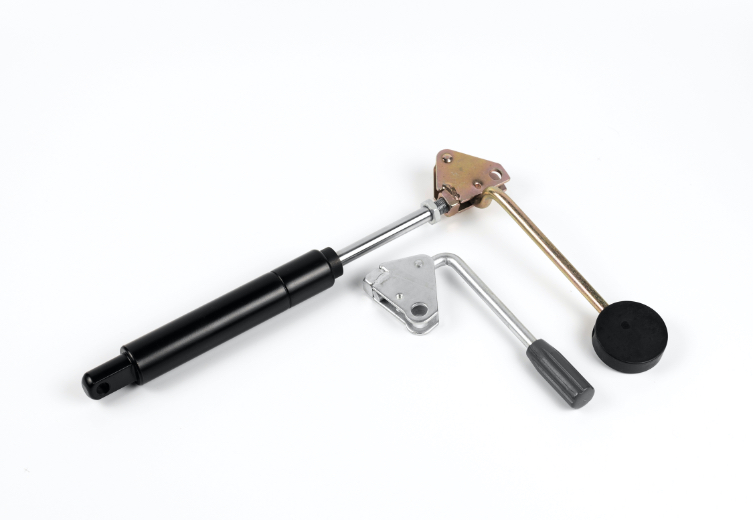
Basic Function and Features
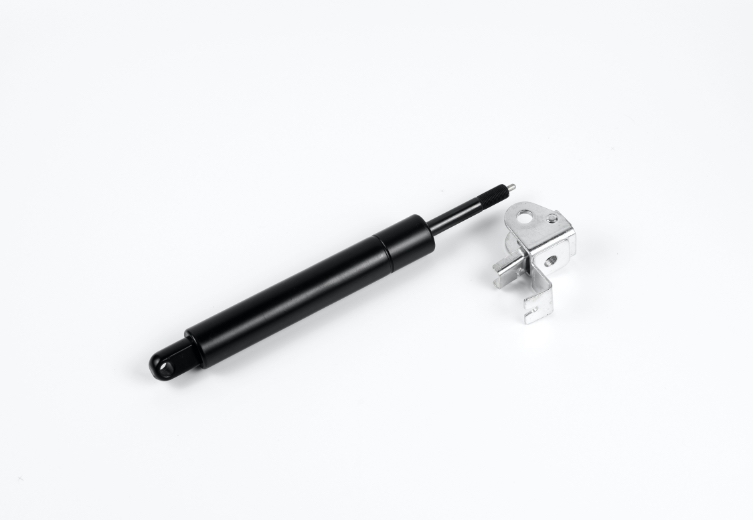
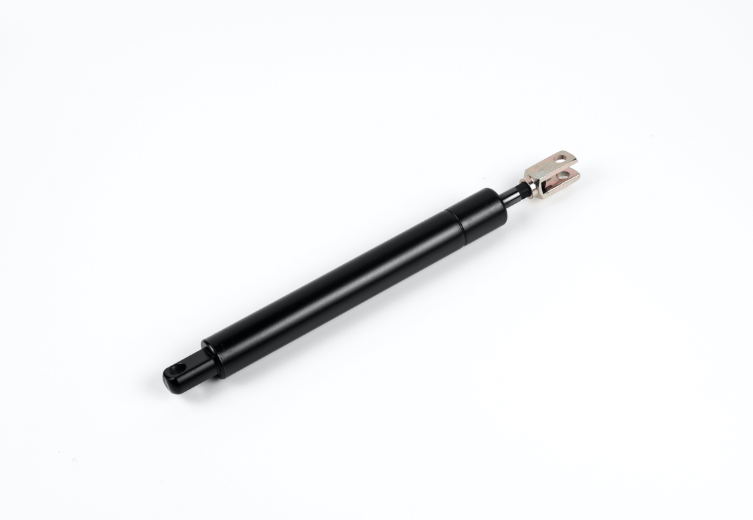
A lockable gas spring is a sophisticated mechanical component that combines the energy storage of compressed gas with a precision locking mechanism. The core structure consists of a sealed pressure tube filled with high-pressure nitrogen and a specific volume of flame-retardant oil.
Unlike standard gas springs that merely push or pull, a lockable gas strut utilizes an internal valve system actuated by a release pin or external cable. When the valve is open, gas and oil flow through the piston, allowing smooth extension and compression. When the valve is closed, the flow path is blocked, effectively locking the piston rod at any desired point along its stroke.
Key Benefits for Projects
Integrating lockable gas springs into your design offers significant mechanical and ergonomic advantages:
Advantage | Engineering Description |
|---|---|
Infinite Positioning | Lock the piston rod securely at any point within the stroke length, providing exact adjustment for users. |
Integrated Damping | The internal flame-retardant oil provides end-position damping, preventing harsh impacts and protecting hinges. |
High Safety Standard | Filled with pure, non-flammable nitrogen and manufactured to strict international quality standards (No explosion risk). |
Space Efficiency | Delivers high force output (up to 3000N) within a compact cylindrical footprint, ideal for tight assemblies. |
Maintenance-Free | Pre-lubricated for life during production; requires zero servicing or oiling throughout its 10,000 - 50,000 cycle lifespan. |
Differences from Standard Gas Springs
Understanding the clear differences between standard and lockable variants is crucial for project safety:
Position Control: Lockable springs hold loads statically at any angle; standard springs only provide dynamic force toward full extension.
Safety Profile: Lockable struts prevent sudden collapse if a user releases the load; standard springs require external mechanical latches for safety.
Internal Design: Lockable units feature complex valve assemblies and specialized oil chambers, whereas standard units rely on simple gas compression.
Types of Lockable Gas Springs
Based on the internal locking mechanism and the medium used to achieve the lock, Juteng offers a comprehensive range of lockable gas springs for diverse industrial and furniture applications. Selecting the correct type is vital for user comfort and structural integrity.
Rigid Locking Gas Springs (Hydraulic Lock)
Rigid locking gas springs utilize the incompressible nature of the internal flame-retardant oil to achieve a hydraulic lock. When the valve closes, the oil is trapped, creating an extremely stiff, virtually immovable hold in both extension and compression directions.
Best Applications: Heavy-duty medical beds, surgical tables, industrial machinery hatches, and automotive engine covers where absolute stability and zero "bounce" are critical for safety.
Elastic Locking Gas Springs (Pneumatic Lock)
Elastic locking relies on the compressed nitrogen gas to hold the position. Because gas is compressible, these springs allow for a slight, cushioned "give" when subjected to heavy shock loads.
Best Applications: Ergonomic office chairs, massage chairs, bus seats, and adjustable furniture where user comfort and shock absorption are prioritized over absolute rigidity.
OEM Note: Juteng offers comprehensive customizable locking gas springs, including specialized release mechanisms (mechanical pins, Bowden cables, or electronic actuators) to match your exact assembly requirements.
How to Identify Your Project Requirements
Specifying the correct gas spring goes beyond simply matching the weight of the lid or panel. Engineers must account for leverage, geometry, and environmental variables.
Load and Force Calculation (Understanding F1 Force)
The most critical specification is the F1 Force. In the gas spring industry, F1 is the designed extension force measured when the piston rod is extended to exactly 5mm from the cylinder, at a standard temperature of 20°C.
A common engineering mistake is assuming F1 directly equals lifting capacity. In reality, the effective lifting force depends heavily on the installation geometry, the distance from the hinge to the center of gravity, and the mounting angle. To avoid this, engineers can leverage Juteng's free computer-aided design services to calculate the optimal leverage geometry and F1 force.
Formula Insight: Because the internal volume is closed, pushing the piston rod in reduces the free space for the gas, causing the pressure (and force) to increase progressively throughout the stroke. For a deep dive into force metrics, read our guide on What Gas Spring Force Ratings Mean.
Stroke Length and Size Constraints
The stroke length dictates the maximum opening angle of your application. When calculating the required stroke, ensure that the fully extended length does not over-travel the hinges, and the fully compressed length fits within the physical boundaries of the housing or cabinet. Juteng manufactures stroke lengths ranging from 20mm to over 500mm to accommodate diverse spatial constraints.
Mounting and Orientation (Crucial for Lifespan)
Installation orientation directly impacts the lifespan of the internal seals. Gas springs must be installed with the piston rod facing downward in the static (closed) position.
Lubrication: The rod-down position ensures the internal seal is constantly bathed in the flame-retardant oil, preventing dry friction.
Permeation Reduction: This orientation minimizes the microscopic permeation of nitrogen gas through the seal over time.
Side-Loading: Always align mounting brackets perfectly to avoid lateral forces, which will score the piston rod and destroy the seal.
Environmental Considerations
Gas springs are sensitive to thermal dynamics. Juteng gas springs are engineered for an operating range of -40°C to +80°C.
Temperature Extremes: High temperatures increase internal gas pressure (raising the F1 force), while extreme cold reduces it.
Damping Viscosity: Temperature changes affect the viscosity of the internal oil. Higher temperatures thin the oil (reducing damping speed), while cold thickens it (slowing the return stroke).
Corrosive Environments: For marine, agricultural, or high-humidity applications, specify stainless steel pressure tubes or specialized protective coatings.
Matching Gas Spring Features to Applications
Industry-Specific Requirements
Industry | Application Examples | Critical Requirement |
|---|---|---|
Medical & Healthcare | Hospital beds, surgical tables, dental chairs | Rigid locking, quiet operation, high safety margins |
Furniture & Ergonomics | Office chairs, lift tables, adjustable sofas | Elastic locking, smooth damping, aesthetic end fittings |
Automotive & Transit | Bus seats, passenger vans, engine hoods | Vibration resistance, extreme temperature tolerance |
Heavy Machinery | Tractor hoods, construction equipment panels | High F1 force (up to 3000N), robust steel construction |
Selection Checklist and Decision Tree
Quick Reference Checklist
Before finalizing your CAD designs or issuing a purchase order, verify the following parameters against Juteng’s specification sheets:
Locking Type: Rigid (hydraulic) vs. Elastic (pneumatic).
Geometry: Extended length, compressed length, and stroke.
Force Dynamics: Required F1 force based on leverage calculations.
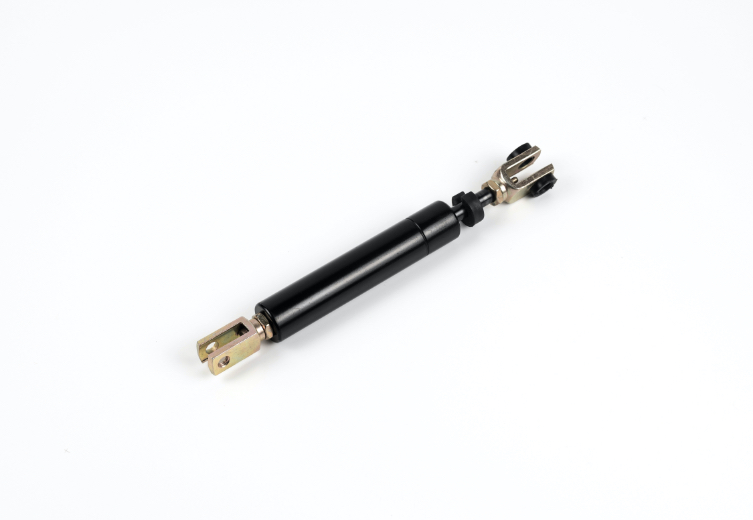
End Fittings: Ball studs, clevises, or custom eyelets.
Release Mechanism: Pin, lever, or cable actuation.
Stepwise Decision Tree
Does the application require holding a load safely at multiple angles?
Yes: Proceed with Lockable Gas Spring.
No: Consider a Standard Compression Gas Spring.
Is absolute zero-movement required under heavy load (e.g., Medical Bed)?
Yes: Specify Rigid Locking (Oil-based).
No (Comfort is priority): Specify Elastic Locking (Gas-based).
Will the environment exceed standard conditions or involve moisture?
Yes: Request stainless steel or specialized anti-corrosion coatings from Juteng's engineering team.
Installation and Maintenance
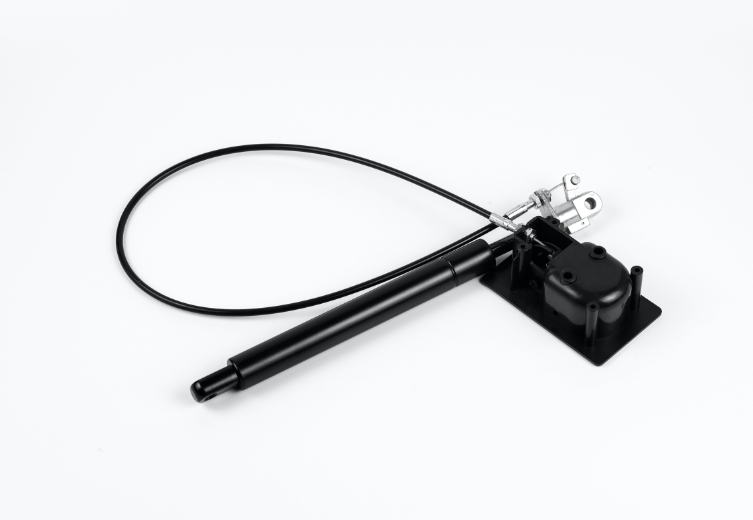
Installation Best Practices
Proper installation ensures safety and maximizes the 10,000 to 50,000 cycle lifespan of the unit. Follow these safe compression and installation guidelines:
Always use appropriate PPE (safety glasses and gloves) when handling high-pressure components.
Secure the moving load (e.g., heavy hatch) with a prop rod before attaching the gas spring.
Never apply lateral (side) force to the piston rod during installation; this will bend the rod and compromise the seal.
Ensure the rod is pointing downward in the closed position to maintain internal lubrication.
The Truth About Maintenance and Repair
A common misconception is that gas springs require periodic oiling or can be rebuilt.
Maintenance-Free: Juteng gas springs are pre-filled with a lifetime supply of lubricant during production. Wiping the exposed piston rod with a clean, dry cloth to remove dust is the only recommended care. Never use harsh chemical solvents.
Non-Repairable: Due to the plastic deformation of the external pipes during the manufacturing process, gas springs are permanently sealed units. They cannot be opened, repaired, or refilled. If a unit loses pressure or fails to lock, the entire assembly must be safely replaced.
Partner with an Experienced Manufacturer
Selecting the right lockable gas spring is an engineering decision that impacts the safety, ergonomics, and perceived quality of your final product. With 12 years of manufacturing expertise, over 300 standard varieties, and a robust OEM/ODM capability, Changzhou Juteng Gas Spring Co., Ltd. provides the technical support and reliable supply chain necessary for your project's success.
Need help calculating your F1 force or designing a custom release mechanism?Contact our engineering team today for a free consultation and rapid prototyping.
FAQ
Can lockable gas springs be mounted horizontally?
While they can function horizontally, it is highly discouraged. Gas springs must be mounted with the piston rod facing downward (at least 30 degrees below horizontal) to ensure the internal seal remains lubricated by the flame-retardant oil.
What causes a lockable gas spring to lose its locking ability?
Loss of locking capability usually indicates internal seal wear or a loss of nitrogen pressure, often caused by side-loading (lateral force) during operation or installation. Because they are sealed units, they must be replaced.
Does Juteng support OEM branding and custom packaging?
Yes. Juteng enthusiastically accepts OEM/ODM orders. We can customize the spring force, stroke, end fittings, and apply your company's label or logo to the pressure tube and packaging.