


Sourcing Gas Springs from China: A Checklist for International Buyers
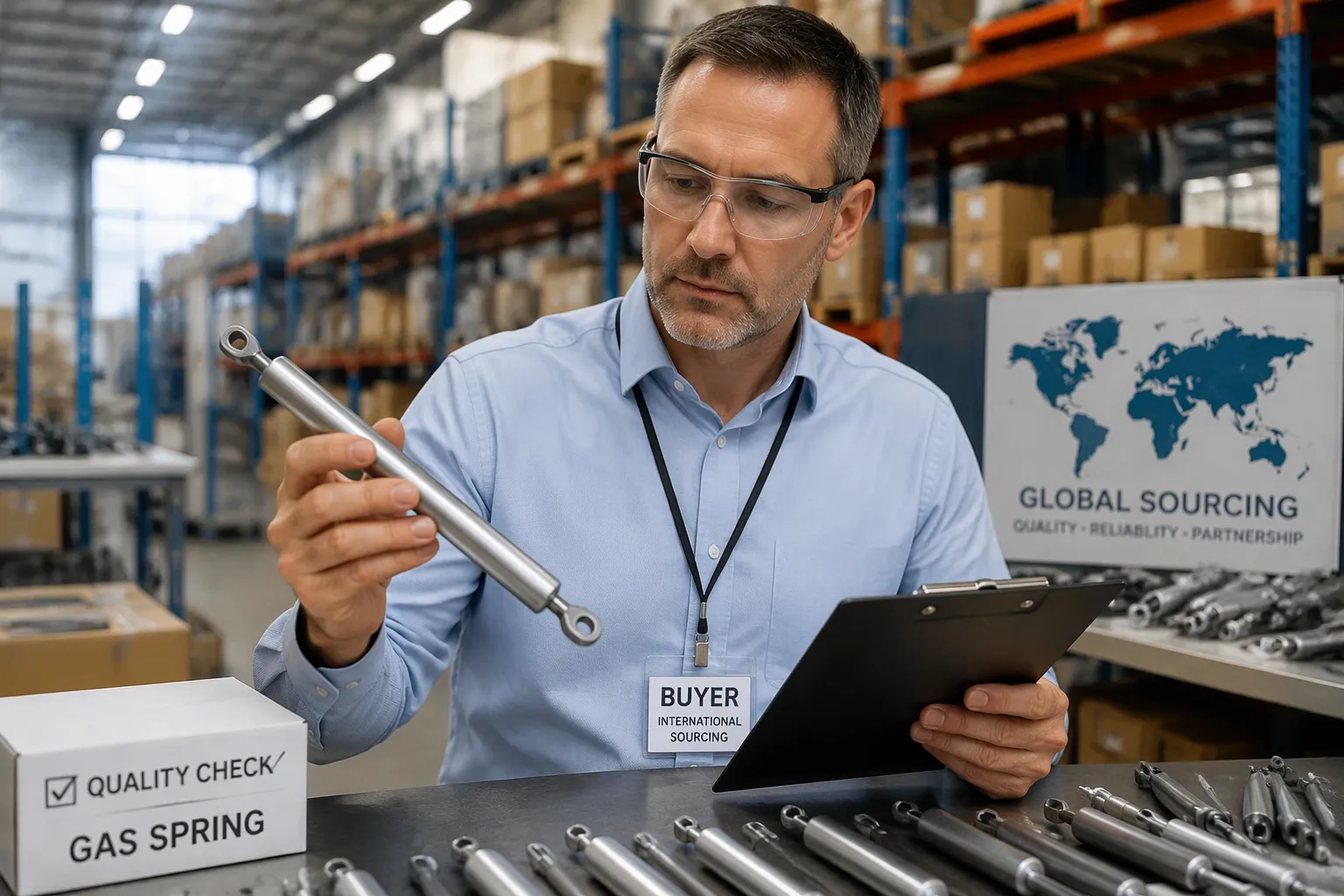
Most sourcing mistakes happen before the price negotiation. They happen when one vague email goes to five factories and five incomparable answers come back.
Gas springs punish that shortcut. Force, stroke, length, damping and end fittings interact, so a quote for "a 300N gas spring" can still deliver a part that will not hold your lid or clear your frame.
This guide covers sourcing gas springs from China in ten steps: specification, certification, landed cost, engineering, capacity, communication, logistics, warranty, company verification and inquiry preparation.
Key Takeaways
Write the specification first. Comparability starts with your document, not the quotation.
A certificate proves a system exists, not that your batch passed.
Landed cost, not unit price, decides which gas spring supplier is cheaper.
A trading company can reply faster than a factory and still fail every technical question.
Verify the legal entity, the bank account and the shipment record before you pay.
Score every reply on the same sheet. Documented scoring is defensible scoring.
Step 1: Define the Specification Before You Ask for a Price
What to Record on the Spec Sheet
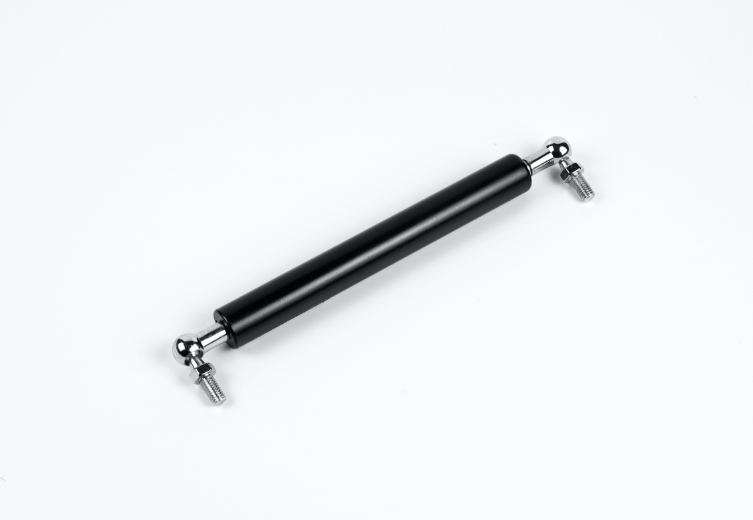
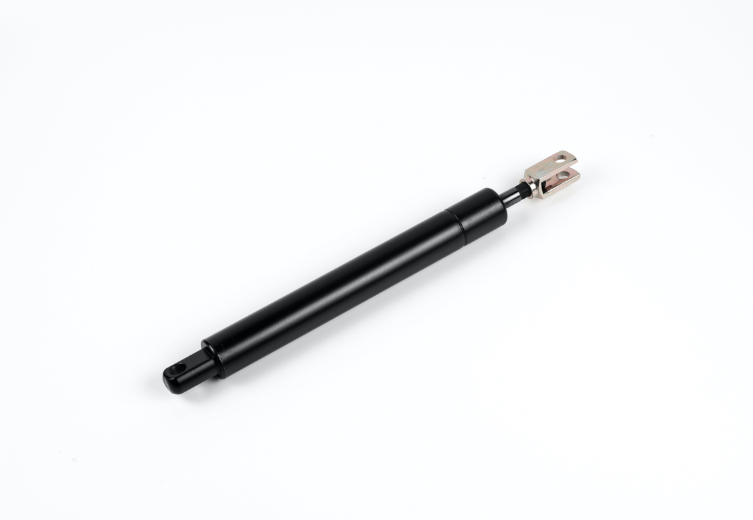
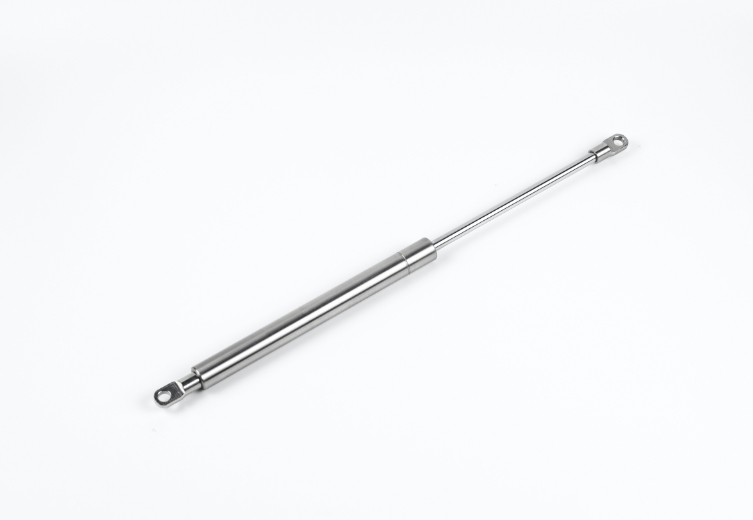
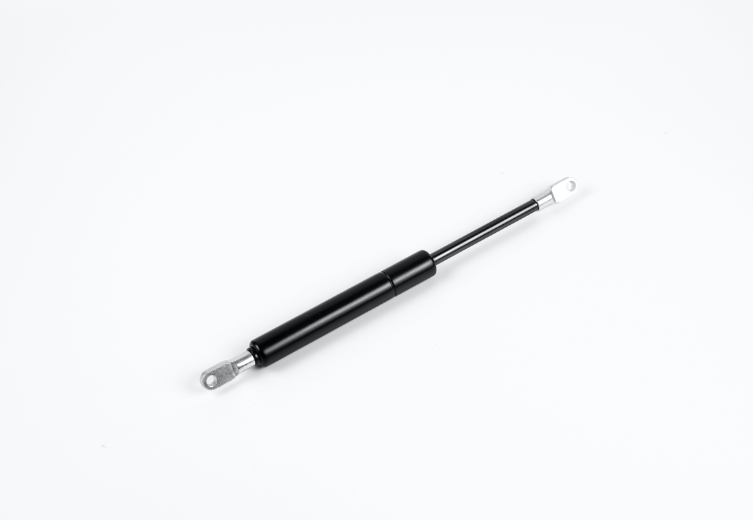
Start with the family. A compressed gas spring extends when released. A lockable gas spring holds any position until the release pin is actuated. A damper resists motion with force that follows piston speed. A traction gas spring rests retracted and extends only when pulled.
Record force at the rated position, stroke, extended and compressed length, tube and rod diameter, end fittings, release method, nitrogen filling and operating temperature. Fittings include ball socket, eyelet, bracket, pin and stud, and swapping one changes installed geometry more than buyers expect.
On temperature, JUTENG specifies -40°C to +80°C, the window Western sources quote as -40°F to 180°F. Confirm which unit a supplier uses, and confirm the seal compound for your application. Custom gas springs run from 10N to 3000N, with heavy-duty and lockable versions reaching 5000N. Ask whether the figure is F1 force, measured at 20°C with the rod extended 5mm, or internal filling pressure. Mixing the two causes rejected batches.


Four Terms Worth Defining
Stroke is the travel between fully extended and fully compressed. Damping is controlled resistance near the end of travel. The force curve shows how force changes across the stroke, and a gas spring holds a near-linear profile, which is why the motion feels predictable. F1 is the rated force at a defined rod position and temperature, and it is what most quotations mean.
Why the Written Sheet Matters
A written sheet turns requirements into checkable numbers, so every gas spring supplier quotes against one baseline. Engineers then catch a force rating that misses the load, or a rod diameter that misses the bore, before tooling is cut.
Add application photos, the weight and travel of the moving part, hinge positions, opening angle and quantities. Without them a factory guesses, and a guess that passes a sample can fail in serial production. One decision precedes the drawing: fixed or adjustable. If the load will change, compare adjustable and ordinary gas springs before you freeze the force.
Step 2: Verify Certifications and Test Reports
Which Certificates Matter
Certificates reduce risk only when they are current and relevant to your market. Ask for copies, then confirm the scope covers gas springs and names the site that will run your order. A group certificate does not cover a subsidiary plant. The supplier selection guide lists four documents to request first.
Certification / audit | What to confirm |
|---|---|
IATF 16949 | Needed for automotive programs; held by the plant that runs your parts |
ISO 9001 | Baseline quality management; number traceable to the issuing body |
RoHS / REACH | EU and North American access; reports covering seals and oil, not only the assembly |
SGS or equivalent | Independent process audit; check date and how findings were closed |
Treat each document as one input. ISO 9001 shows a working quality system; it does not show that every batch holds your force tolerance. Pair the paperwork with test reports and a sample run where the order justifies it.
What the Factory Tests In-House
Ask which tests run in the plant and how often. The usual set covers salt spray, cycle life and force. Look for force testing built into the gas-filling station, so out-of-tolerance units stop before packaging, and for multi-head rigs that test many gas springs at once.
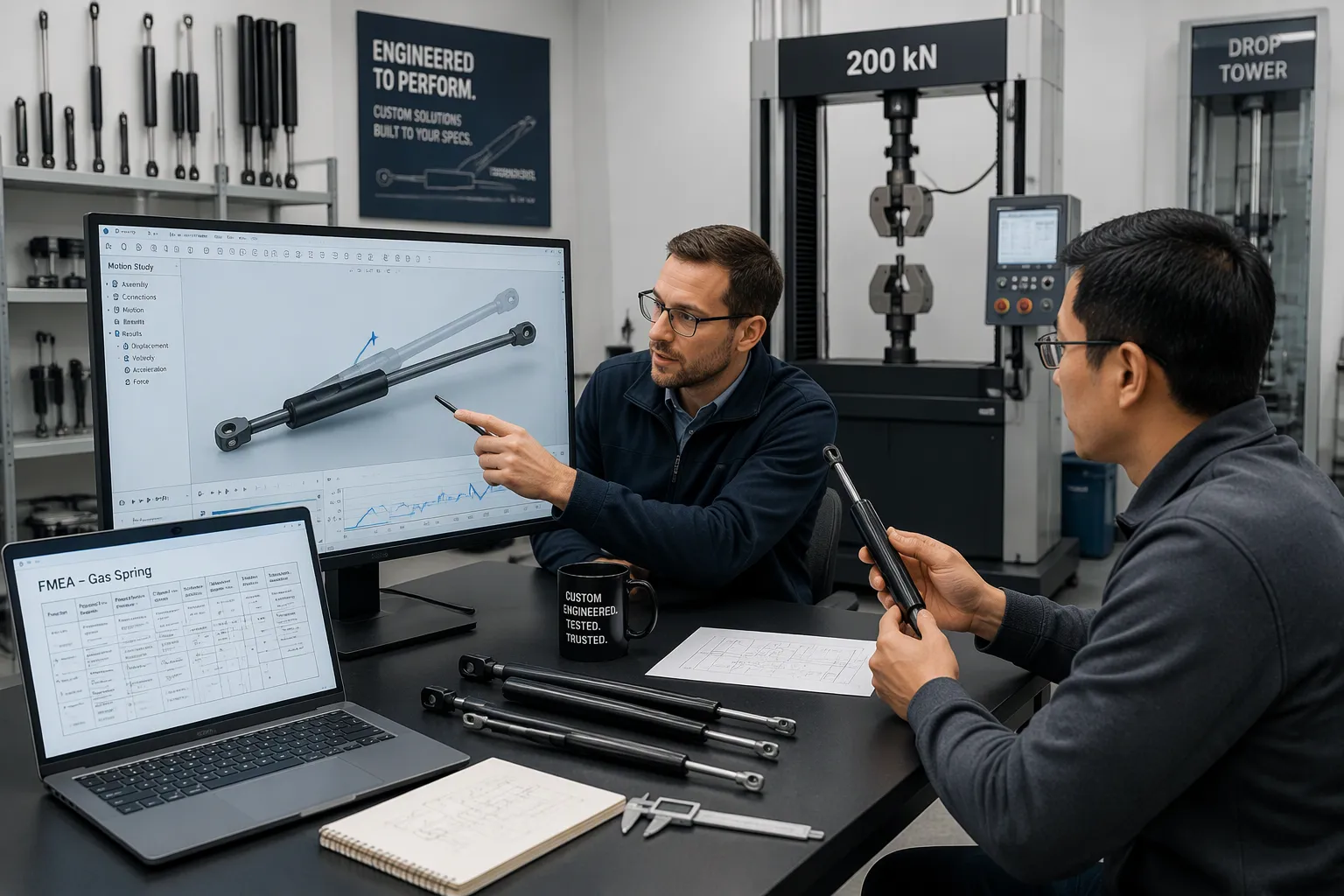
JUTENG tests on a 200kN force frame, a 10m drop tower reaching 40 km/h, a roller carriage, a high-speed camera and salt-spray chambers. Rated life for standard units is commonly quoted at 10,000 to 50,000 double strokes, and the real figure depends on installation and cycle rate, so test in your own application before fixing a service interval.
Does a Gas Spring Need CE Marking?
European buyers ask early, and the answer is usually no at component level. Whether a gas spring falls under the Pressure Equipment Directive depends on maximum allowable pressure multiplied by volume, and most small-volume units sit outside that scope. What matters is the CE file for the machine or furniture, where the gas spring is a purchased component needing material and test documentation.
Step 3: Build a Total Landed Cost Model

Hidden Cost Components
Landed cost is what a gas spring costs on your dock: piece price, amortized tooling, freight, insurance, duties, tariffs, brokerage, inspection, and the cost of carrying inventory in transit and in stock.
Cost component | What to confirm |
|---|---|
Piece price and tooling | Amortized tooling for custom fittings; one-off or charged per order |
Freight and insurance | Ocean versus air; dense steel parts rarely benefit from dimensional weight |
Duties and tariffs | HTS code and origin; US measures have changed repeatedly since 2025, so price the rate in force |
Inspection | Third-party pre-shipment checks to an AQL plan such as ANSI/ASQ Z1.4 |
Carrying cost | Commonly 20–30% of inventory value per year, including storage and obsolescence |
Two more lines belong on the sheet: letter-of-credit fees, and quality overhead such as audits, travel and a bad lot found weeks later.
Comparing Quotes on One Basis
The lowest gas spring price rarely wins. Weigh total cost of ownership, then cover MOQ, payment terms and how long the price holds.
Request tiered pricing to see how cost scales with the forecast.
Separate tooling and sampling charges from the piece price.
Confirm the Incoterm. Under FOB the buyer pays freight and insurance; under CIF they sit in the invoice; under DDP the seller covers nearly everything, at a premium.
Estimate defect handling, because early failures cost line time as well as scrap.
Normalize every reply to one Incoterm and one delivery point before ranking. That is what turns scattered quotations into a shortlist.
Step 4: Assess Engineering Support
Signs of Real Capability
Engineering depth separates a manufacturer from a trading desk. JUTENG engineers work in CATIA and SolidWorks on 3D modeling, component calculation, motion simulation and FMEA, and the useful test is whether a supplier can model your assembly rather than quote a catalog number.
Customization range is the second signal. Prototypes start from 5 units with lead times of 7–10 business days, fast enough to test a hinge geometry before you cut a tool. Custom mass production commonly starts at 100 pieces.
Capability | Evidence to request |
|---|---|
CAD design support | 3D modeling, motion simulation and FMEA in CATIA or SolidWorks |
Custom force range | 10N to 3000N standard; up to 5000N heavy-duty and lockable |
Prototype support | From 5 units, 7–10 business days after drawing approval |
In-house testing | 200kN frame, 10m drop tower, salt-spray and cycle-life rigs |
Mass production MOQ | Commonly 100 pieces for a custom run |
Budget-focused producers often lack CAD support, in-house labs and complex OEM capability. They deliver reliable performance on standard gas springs for light furniture and general machinery, and that fit is legitimate. Paired gas springs, tight tolerance or unusual mounting need more.
Not sure the force you calculated will hold the lid?
Send the drawing, the weight of the moving part and the hinge positions. JUTENG engineers will run the geometry check and return a force and stroke recommendation before tooling is released.
Customization Questions to Ask
Ask how the supplier reviews force, stroke, lengths, fittings, bracket load, material and damping before quoting. A direct test: "Can you calculate the force from my lid weight and hinge points?" A capable engineer will ask for the weight of the moving part, hinge position and opening angle. Then ask how many sample rounds are included, and how design changes are communicated, so no silent change reaches your rods, seals or fittings.
Step 5: Confirm Capacity and Lead Times
Capacity Indicators to Request
Capacity claims need numbers behind them, and a comparison of gas spring suppliers in China is only as good as the figures underneath. Ask for annual or daily output, floor area, headcount and line count, then check that the arithmetic holds.
Indicator | JUTENG (Changzhou Juteng Gas Spring Co., Ltd.) |
|---|---|
Established | 2009, Changzhou, Jiangsu |
Annual capacity | 1.5 million units |
Product range | Four series, more than 300 variants, OEM and ODM included |
Engineering and test | CATIA and SolidWorks; 200kN frame; 10m drop tower; salt-spray and cycle rigs |
Prototype lead time | From 5 units, typically 7–10 business days |
Delivery follows the product, not the catalog. Stock gas springs usually ship within 1–2 weeks; custom specifications need 4–8 weeks depending on complexity and volume. Ask what happens to the lead time when the order doubles.
Planning for Peak Season
Ask when the factory's busiest months fall and how much capacity is booked. A manufacturer with headroom absorbs a spike without moving your date; a plant near its ceiling will delay someone, and the newest customer waits longest. Request a written lead time for your volume rather than a catalog average, and ask how orders are prioritized when bookings overlap.
Step 6: Test Communication and Technical Fluency
What Reply Speed Reveals
Reply speed is an early signal. Send a short, specific question and note the response time. A prompt, complete answer suggests a staffed sales and engineering team; a slow reply, or one that ignores the question, hints at thin coverage. Send two or three messages at different times of day. Many gas spring suppliers market responsiveness as a value. Treat it as a promise to test.
Checking Technical Fluency
Fluency matters more than speed, because a fast reply that misreads your drawing creates rework. Ask how the mechanism works inside a specific model, and listen for whether the answer explains internal structure or circles back to the catalog page.
Hand over the technical pack for one core product and request a first-off-tool sample.
Compare it with your current supplier's unit using calipers, load tests and assembly checks.
Judge whether the drawing was read faithfully and whether smart questions came back.
Clarifying questions are a good sign. A supplier that asks about hinge position, load weight or mounting angle is reading the specification; one that quotes without asking is guessing, and guessing is cheap until the first rejected batch.
Step 7: Review Logistics, Packaging and Documentation
Packaging and Shipping Checks
Confirm the Incoterm behind each quote, since it decides who books freight, who insures cargo and who clears duty. Then ask which freight options the supplier can arrange and how it protects heavy gas springs in transit. Packaging should separate units, resist moisture and survive stacked pallets without rod-to-rod contact.
Gas springs ship as pressurized articles, so confirm the carrier's classification before booking air freight. Request the documents in advance: commercial invoice, packing list, bill of lading and certificate of origin, with model, force and quantity matching the approved sample record.
Why Tariffs Hit This Category Harder
Gas springs are low-value, high-volume parts with thin margins, so a modest duty change can erase the profit on a container. Model landed cost at two or three duty and exchange-rate scenarios before signing an annual price.
Step 8: Agree Warranty and Defect Handling
Put the Terms in Writing
Warranty terms vary, so write them into the contract. Suppliers in this category commonly offer one to three years on finished struts, and some publish wider operating ranges and extended salt-spray results for specific series. Treat any such figure as a starting point, not an industry standard. Ask how a claim is handled: who pays return freight, whether replacement or credit applies, how fast a batch can be traced, and what evidence you must supply.
Five Points That Separate Supplier Grades
Check in-house manufacturing rather than assembly of bought-in parts, the stated force tolerance, the seal compound, whether customization is done per order, and whether OEM and aftermarket gas springs come off the same platform. A ±5% force tolerance holds its rating where a ±10–15% commodity part drifts, and paired applications punish that drift. HNBR seals resist UV and ozone better than basic NBR, which matters outdoors and on marine units.
Acceptance Criteria and Common Failure Modes
Agree the acceptance test before the first shipment, not after the first complaint. The four recurring failures are gas loss and force decay, noise or judder during travel, scoring on the rod, and blistering after salt spray.
Force: measured at the rated position and temperature, inside the drawing tolerance.
Life: a cycle test to the agreed count, with force decay checked before and after.
Corrosion: neutral salt spray to an agreed hour count, with the standard named.
Function: full-stroke travel at low temperature, checking for judder or a hard stop.
Step 9: Verify the Company, Not Just the Certificates
Factory or Trading Company?
This question decides most of the risk. A trading company can be a good partner, but only if you know that is what you are buying, because technical support, change control and traceability usually sit with the plant behind it.
Check whether the business license scope includes manufacturing, not only sales or import and export.
Compare registered capital and social-insurance headcount with the workforce the sales team describes.
Ask for video of the press, welding, gas-filling and packing lines, filmed on request rather than supplied as a stock clip.
Ask whether an unannounced visit is acceptable, and whether the consignor on past export declarations matches the company name.
Check the return address on a sample parcel; it often differs from the address on the quote.
Verification Steps Before Ordering
Verification starts at the desk. Request a company profile, then validate the business license and certificates against official records such as China's National Enterprise Credit Information Publicity System. Check that the bank account name matches the registered company name exactly. A mismatch is a payment-fraud risk, not a clerical detail.
Shipment databases add a second layer, showing export history and the products a company actually moves. Pre-shipment inspection then covers the order itself: quantity and SKU counts, dimensional and visual checks to your drawing on an agreed AQL sample, fitment checks on mounting points and thread pitches, packaging review and a documentation audit.
For a first order, a factory audit beats inspection alone, because inspection sees the batch while an audit sees the system behind it. Third-party audits commonly run from a few hundred to about a thousand dollars per factory, which is small against a failed container.
Common Red Flags
Treat red flags as caution signals that call for more questions rather than instant rejection. The recurring ones are resistance to independent inspection, pricing far below market average, missing ISO 9001 certificates or material test reports, slow or evasive replies, and lead times quoted without written milestones.
One signal needs context. A factory that declines random filming may be protecting customer IP or honoring an NDA, so "no filming" does not equal "not transparent". Ask instead for a scheduled, NDA-backed video walk-through, test data tied to a named standard, and batch traceability with a closed-loop corrective process.
Want the paperwork checked before you pay a deposit?
JUTENG can supply its business license, certificate copies with issuing-body numbers, plant photos and the test report for the model you are considering, so verification does not rest on a sales claim.
Step 10: Send a Complete Pre-Inquiry Package
What to Include in Your Inquiry
A complete gas spring inquiry saves weeks of back-and-forth. Send the same package to every candidate, and attach whichever identifier you have: an OEM part number, a drawing, or a physical sample.
Drawings or spec sheets covering stroke, force, lengths and end fittings such as ball socket, eyelet, bracket, pin or stud.
Target quantities, including trial order size and annual forecast.
Certification needs for your market. European buyers usually need REACH and RoHS statements; Russian and Central Asian customers ask for EAC / TR CU.
Required delivery date, destination port or city, and the Incoterm you want quoted.
State the destination plainly, because it decides freight mode, labeling language and documentation. Ask each supplier to confirm MOQ and warranty in the same reply. A 50-unit MOQ with a two-year warranty is a workable baseline, and JUTENG starts prototypes at 5 units with custom production commonly from 100 pieces.
Payment Terms to Expect
A common structure is 30% deposit with the balance against the bill of lading copy; letter of credit or escrow suits larger first orders where bank cost is small against the risk. Confirm the beneficiary name matches the registered company before the first transfer, and keep every amendment in writing.
Shortlisting from Responses
Score every reply against the checklist, using the manufacturer selection guide as the reference sheet. A supplier that quotes immediately without asking about weight, geometry or environment has skipped the engineering review. Confirm that the legal name on certificates, patents and invoices matches the entity you pay; unverifiable certificates are caution signals, not automatic rejections.
Agree the specification in writing before anyone earns a sample order. Drawing, force tolerance, stroke, fittings, finish, marking, packaging and test method should all appear on the approved sample record, and both sides should keep approved units so later batches can be compared.
Stage | Typical duration | What must be signed off |
|---|---|---|
Drawing review | 3–5 business days | Force, stroke, lengths, fittings, tolerance, finish |
Quotation and Incoterm | 2–3 business days | Tiered price, tooling, MOQ, payment terms |
Prototype run | 7–10 business days | Sample to drawing, with test report |
Sample evaluation | 1–2 weeks | Fit, force curve, damping, cycle check |
First article approval | 1 week | Approved sample record and packaging spec |
Mass production | 4–8 weeks | Written lead time tied to your volume |
Pre-shipment inspection | 2–3 days | AQL result, photos, packing list |
Putting the Checklist to Work
Treat the ten steps as a repeatable process. Define the specification, verify quality through certificates and test reports, compare total landed cost, confirm engineering and production support, then verify the company before money moves.
Four actions cut risk most. A written spec sheet gives every gas spring supplier the same baseline. Verified certificates confirm a quality system exists at the plant that will run your parts. Capacity confirmation protects the delivery date. A complete pre-inquiry package turns replies into an objective shortlist.
Apply the same sheet to every gas spring candidate, and score it twice: once on paper, once on the sample. Consistent scoring keeps the comparison objective, and each decision rests on evidence you can defend to colleagues, auditors and customers.
If you would rather start from a specification than a blank page, send JUTENG the weight of the moving part, the hinge positions and the space you have. You will get a force and stroke proposal against your drawing, with the test data behind it, before any tooling is released.
Ready to compare suppliers on the same basis?
Send one drawing and one quantity to JUTENG. You will receive a costed quotation, the test specification for the model and a prototype lead time in the same reply, so the sheet you score is complete.
FAQ
What is a typical minimum order quantity for gas springs?
Terms vary by supplier and product type. A 50-unit MOQ is a workable baseline for standard models, JUTENG offers prototypes from 5 units, and custom mass production commonly starts at 100 pieces. Confirm the MOQ for your specification in writing before comparing quotes.
Can I order samples before committing to a full order?
Yes. Sample orders are standard practice, and JUTENG reports prototype lead times of 7–10 business days after drawing approval. Test the sample against your drawing, then keep approved units on both sides as a reference for later batches.
How tight should the force tolerance be?
Tolerance matters most in paired applications, where two springs must match. A ±5% force tolerance holds its rating over life, while a ±10–15% commodity part drifts. Specify it on the drawing and ask each supplier to confirm it in the quotation.
What lead times should I expect?
Stock gas springs typically ship within 1–2 weeks. Custom specifications need 4–8 weeks depending on complexity and volume. Ask for a written lead time tied to your order size, and confirm it again when the order doubles.
Which payment terms are common?
A 30% deposit with the balance against the bill of lading copy is common, with letter of credit or escrow for larger first orders. Confirm the bank account name matches the registered company before any transfer.
How much does a gas spring cost from China?
Price depends on force, stroke, tube and rod diameter, fitting complexity, finish and volume, so a credible quote needs the drawing rather than a generic enquiry. Ask for tiered pricing at your trial quantity and forecast, then compare landed cost on one Incoterm.