





Limitations of Telescopic Gas Spring
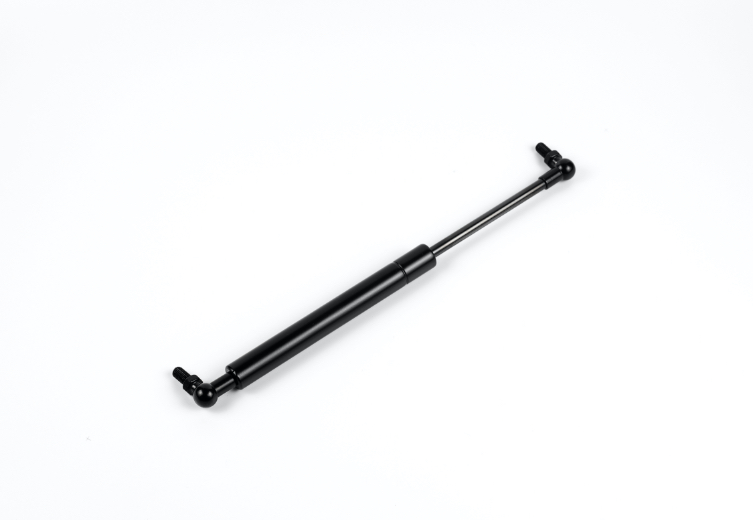
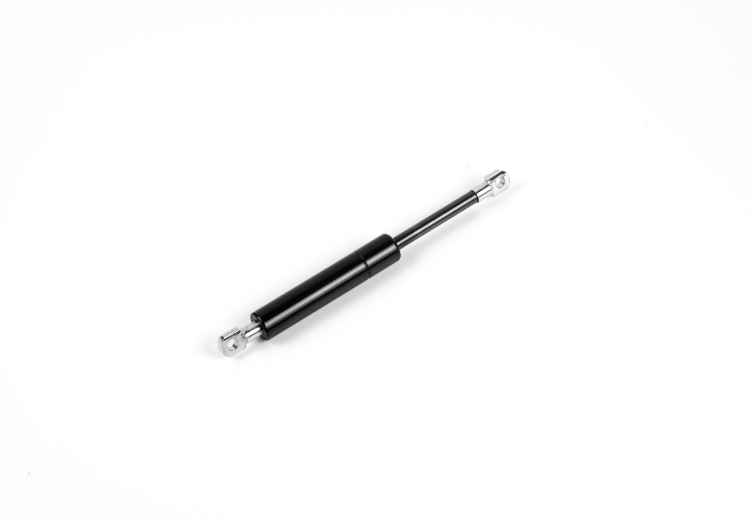
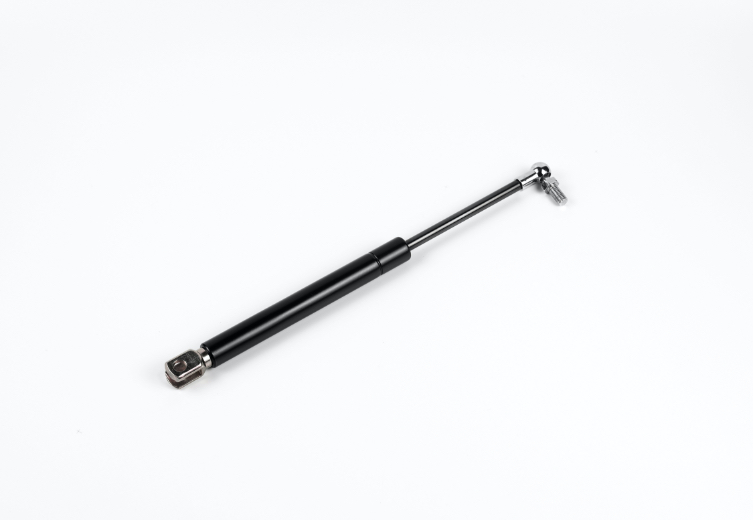
Telescopic gas spring is a kind of mechanical component which relies on internal compressed gas to achieve elastic support and reciprocating movement, it is widely used in furniture lifting, car tail door support, medical equipment adjustment and other fields. However, this seemingly efficient device is not perfect. Its structural characteristics and working principle determine that there are many shortcomings that are difficult to avoid in practical applications. Telescopic gas spring is of great significance to understand these limitations for reasonable selection and risk avoidance.
Hard constraints on performance boundaries
The core function of a retractable gas spring depends on the Dynamic equilibrium between the gas pressure in the cylinder and the expansion of the piston rod. This physical property keeps the spring within certain limits. The ceiling effect of bearing capacity is particularly prominent. The common civil telescopic gas springs on the market usually only bear 50-500 N, even industrial products are difficult to break through the 2000 n upper limit. When the application scenario frequently needs to bear excess load, such as an office chair carrying more than 150 kg of weight for a long time, the internal piston will be deformed by excessive extrusion, resulting in a shortening of the telescopic stroke by more than 50% , eventually losing its regulatory function.
Travel restrictions are another big pain point. Due to the restriction of cylinder length and gas compression ratio, the maximum stroke of the telescopic gas spring is usually less than 600 mm, and the effective adjustment interval is only 70% of the total stroke. In the scene that requires long-distance adjustment, such as the height adjustment of the industrial pipeline, multiple groups must be used in series, which not only increases the installation complexity, but also causes synchronization deviation due to the uneven stress of each group, the adjustment error of ± 15 mm seriously affects the accuracy of the equipment.
The problem of dynamic response hysteresis is also significant. In a fast-flex operation, the speed of the gas molecules does not match the mechanical motion in real time, resulting in a delay of 0.3-0.5 seconds. This is especially dangerous in situations that require emergency braking, such as the rapid descent of a medical operating table, where delays can increase a patient's collision risk by up to 30% .
The fatal weakness of environmental adaptability
Temperature sensitivity is the Achilles of a telescopic gas spring. The internal gas pressure is linearly related to the temperature. At-10 °C, the pressure will drop by 25% , resulting in the attenuation of the support force. However, above 60 °C, the pressure will increase by 30% , which may exceed the bearing limit of the cylinder. In the cold area of outdoor equipment, such as RV awning support device, winter low temperature will make the gas spring support force decreased to 60% of the design value, resulting in the awning can not be fully deployed; However, in the application of tailgates in tropical areas, the internal pressure may exceed the safety threshold after summer exposure, resulting in a"Bounce" phenomenon when the tailgate is opened, and the impact force is increased by 40% compared with that at room temperature, easy to cause the hydraulic rod connection point fracture.
Erosion in humid and corrosive environments is more subtle but more persistent. When the ambient humidity exceeds 65% , water vapor will penetrate into the seal through the small cracks of the cylinder block, accelerating the aging process of nitrile rubber, so that the sealing performance is reduced by 40% in 6 months. In the outdoor furniture in coastal areas, high salt spray environment will lead to pitting corrosion on the surface of the cylinder block, the corrosion depth can reach 0.2 mm per year, and the air spring leakage rate of more than 3 years is more than 60% . The average service life of the air spring is only 1/3 of the inland area because of ignoring the influence of humidity in the outdoor parasol device of a seaside hotel.
Dust and particle pollution can exacerbate mechanical wear. In dusty environments such as construction, particles ≥5 μm in diameter are brought in when the piston rod is retracted, and these impurities form an abrasive in the cylinder block, lead to the piston and cylinder wall fit clearance from the initial 0.01 mm to 0.1 mm or more, leakage rate increased to 5 times the normal situation. A construction machinery telescopic console, in the dust environment after 3 months of use, the telescopic gas spring leakage reached 5% per day, must be air supplement every week to maintain the basic function.
The systematic problem of maintenance and repair
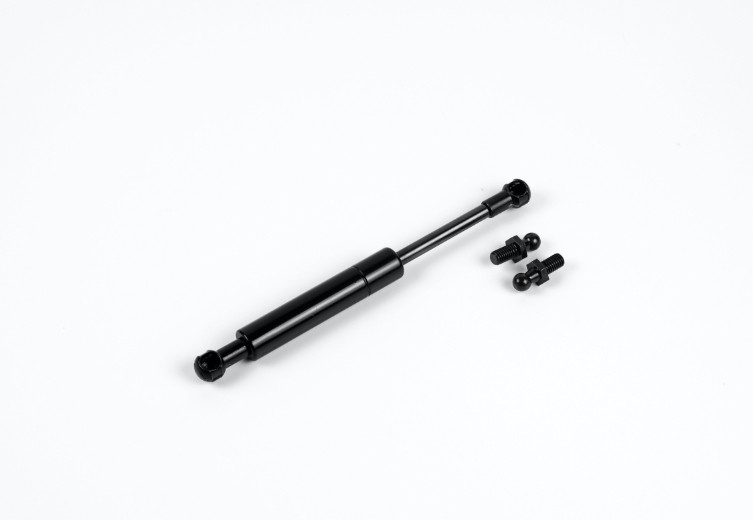
The irreparability of the sealing system is the greatest barrier to maintenance. The core seal of the telescopic gas spring relies on the composite seal structure composed of the dust ring, the main seal ring and the guide ring. Once these components are worn, the internal high-pressure gas will leak at a rate of 0.5-2 l/min. . Due to the interference fit between the seal and the cylinder block and the high pressure gas being filled in the seal, the seal can not be replaced without damaging the cylinder block.
High professional dependency exacerbates the maintenance dilemma. The maintenance of telescopic gas springs requires special inflatable equipment (accuracy of ± 0.05 MPA) , dust-free assembly environment and sealing pre-compression tools, which are beyond the maintenance capacity of ordinary enterprises. The user must rely on the original manufacturer or authorized service provider, which results in a maintenance response period of 3-7 days. In continuous operation scenarios such as production lines, the loss caused by this downtime is often more than 10 times the value of the telescopic gas spring itself.
The hidden trap of cost control
High manufacturing costs directly push up the procurement threshold. The cylinder body of the telescopic gas spring shall adopt No. 45 precision seamless steel tube (tolerance control in ± 0.02 mm) , the piston rod shall be chrome-plated (thickness ≥0.05 mm) , and the sealing element shall use high pressure resistant fluoroelastomer, these materials cost 5-8 times more than conventional mechanical springs. Combined with 100% air tightness testing during the assembly process (three cycles at -40 °C to 80 °C) , it is much more expensive to manufacture than conventional elastomers.
Long-term cost out of control due to high replacement frequency. In the medium load condition, the average service life of telescopic gas spring is 1.5-2 years, and mechanical spring can reach 5-8 years. Taking the supermarket cold chain display cabinet as an example, the air spring supporting the door body has an average life of only 8 months due to the double influence of frequent opening and closing (more than 200 times per day) and low temperature environment, the annual replacement cost is 3 times higher than with mechanical support structures.
Potential threats of security risks
The risk of overpressure burst always exists. When the telescopic gas spring internal pressure exceeds the design value of 1.5 times (usually 8-10 MPA) , the cylinder may burst, high-speed jet debris with deadly kinetic energy. This risk increases dramatically in high-temperature environments, overinflation, or corrosion.
The risk of a sudden failure is worrying. When the telescopic gas spring is suddenly released due to sealing failure or piston fracture, the weight supported by the gas spring will fall rapidly under the action of gravity. For example, the air spring supporting a 50 kg tail door has a drop acceleration of 0.8 g when it fails, and the impact force on the ground is more than 400 n, which is enough to cause a finger fracture.
The lack of an effective early warning mechanism amplifies security risks. The internal damage of the air spring can not be directly judged by the appearance, and the initial air leakage only shows a slight decrease in support force (usually less than 10% of the loss is imperceptible to the user) , but at this time from the complete failure may only 50-100 use cycle. At present, there is no low-cost real-time monitoring scheme, and users can only find the problem through periodic testing (once per quarter) , but there is still a gap for early warning for high-frequency devices.
Conclusion: trade-offs in rational choice
Many shortcomings of telescopic gas spring are the inevitable result of its"Gas-mechanical" composite structure characteristics. It is not the optimal solution in all scenarios due to its limitations in carrying capacity, environmental adaptability and maintenance cost. When there are severe temperature fluctuations, high humidity or dust pollution in the application environment, or there are strict requirements for service life and safety redundancy, traditional mechanical springs, hydraulic rods and other alternatives may have more advantages.
Understanding these shortcomings, not to deny the value of telescopic gas spring, but in order to select a more accurate match. In the low load, room temperature clean, no long-term use of the scene, its convenience is still irreplaceable. The key is to establish a"Whole life cycle cost" thinking, comprehensive consideration of procurement, maintenance, replacement and potential risk costs, in order to make this kind of mechanical device really play its due value.
Recent News
1.Applications Of Stainless Steel Gas Spring
2024-11-192.What is 100N Gas Strut ?
2024-11-073.Six Advantages Of Stainless Steel Gas Spring
2024-10-244.Eight Advantages of Lockable Gas Struts
2024-10-165.How is The Corrosion Resistance Of Stainless Steel Gas Springs?
2024-11-286.Benefits of Heavy Duty Gas Springs
2024-11-287.Gas Spring Maintenance Guide
2024-12-138.What Is The Purpose Of A Gas Spring?
2024-12-069.How do adjustable gas struts work?
2024-12-17