



Standard vs Custom Gas Springs Compared
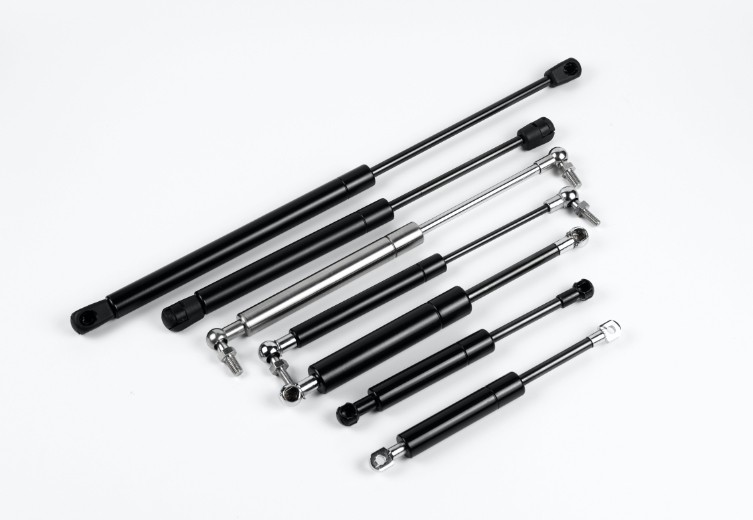
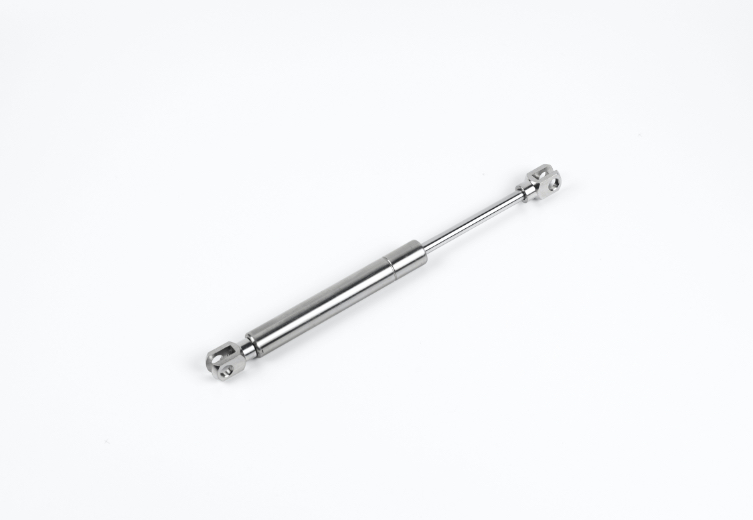
Selecting off-the-shelf gas springs ensures rapid delivery and lower upfront costs. However, custom gas springs deliver precise force profiles and exact design integration for demanding applications. Balancing speed against engineering requirements determines the ideal project outcome.
As an industry leader in hydropneumatic motion control, Changzhou Juteng Gas Spring Co., Ltd. manufactures reliable standard gas springs and tailored solutions to satisfy diverse industrial parameters.
Key Takeaways
Standard gas springs with fixed force ratings save money up front and ship immediately.
Custom gas springs requiring safe installation and compression techniques deliver exact forces for complex machinery.
Custom development requires four to eight weeks for engineering and testing.
Properly sized gas springs prevent equipment damage and extend product lifespan.
Overview of Industrial Gas Springs
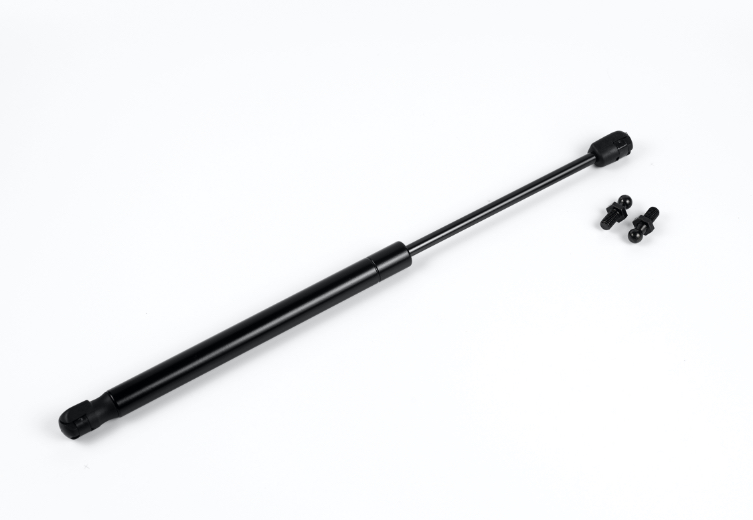
Hydropneumatic technology powers industrial motion components. A sealed pressure cylinder houses inert nitrogen gas and flame-retardant oil. The compressed gas provides the lifting force, while the internal oil provides lubrication and seal protection. Piston rod movement within this sealed environment defines basic gas spring operation.
Standard Stock Gas Springs
Standard gas struts offer convenient off-the-shelf motion support for basic enclosures and access panels. These pre-engineered components suit general applications with predictable load requirements.
Functional Aspect | Standard Stock Gas Springs | Custom-Engineered Gas Springs |
|---|---|---|
Output Force Options | Pre-set fixed force values | Tailored force profiles up to 5000N |
Integration & Fit | Fixed length and standard hardware | Bespoke geometry and dedicated fittings |
Environmental Adaptation | Standard operating range | Extreme durability (-40°C to +80°C) |
Quick Decision Guide: When to Choose Which?
Choose Standard Gas Springs IF: You are performing routine maintenance, replacing standard automotive hatch struts, or building low-stress furniture with predictable load requirements.
Choose Custom Gas Springs IF: You are an OEM designing medical beds, marine hatches, or automated machinery requiring precise tension/extension forces, extreme temperature resistance, or specific damping curves.
Specifying Custom Gas Springs
Demanding industrial applications require exact force dynamics and specialized hardware. Through our comprehensive gas spring design services, we guarantee optimal stroke length, exact mounting fittings, and precise force progression. Engineers choose tailored designs to eliminate mechanical fit issues and survive harsh operating environments.
Juteng utilizes advanced CAD tools, including CATIA and SolidWorks, to engineer precise custom solutions for complex mechanical assemblies.
Core Types of Gas Springs
Engineers select from four primary types of gas springs to achieve specific motion profiles:
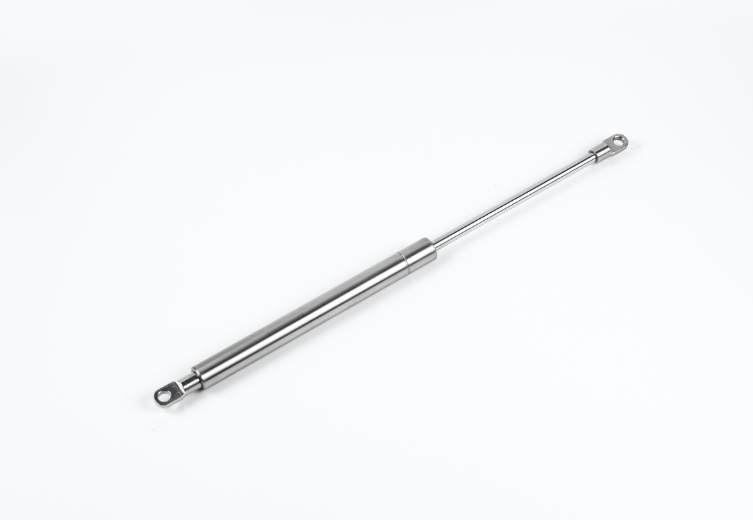
Compressed Gas Springs: Support heavy lids and provide smooth pushing assistance.
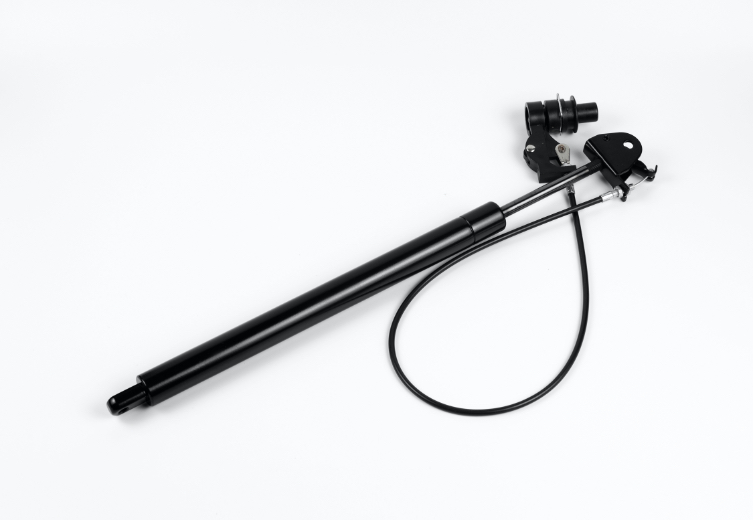
Lockable Gas Springs: Allow variable positioning and rigid locking along the stroke length.
Dampers: Regulate velocity and decelerate moving masses to reduce equipment impact.
Traction Gas Springs: Pull moving components back toward their origin point safely.
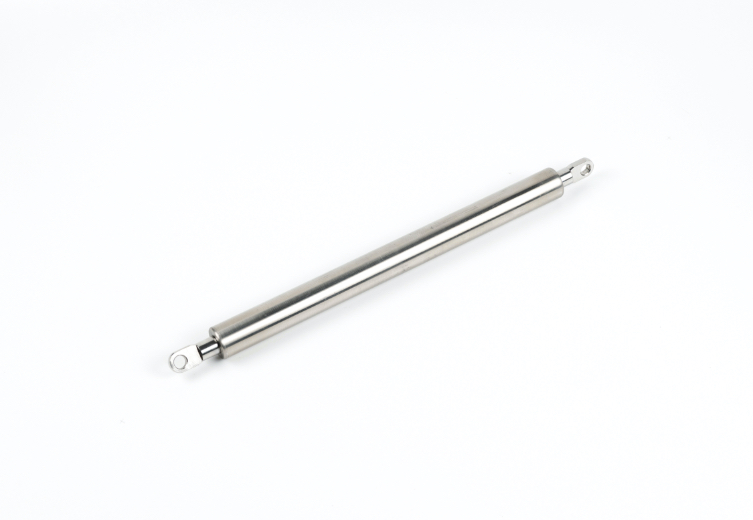
Different types of gas springs serve vital roles across critical sectors. Automotive manufacturers utilize these units for tailgates and hoods. Medical equipment relies on them for smooth bed positioning. Industrial machinery and maritime installations utilize robust stainless steel units to maintain reliable operation under challenging environmental conditions.
Cost Analysis: Standard vs Custom
Budget planning for industrial motion components requires a clear understanding of initial purchase prices and long-term operational expenses. Project managers must evaluate immediate unit costs against tailored engineering needs.
Unit Prices and Upfront Investment
Standard off-the-shelf gas struts offer the lowest initial purchase price. Manufacturers mass-produce these components in fixed dimensions, keeping unit costs extremely low for standard projects. Buying catalog items allows engineering teams to deploy basic motion support without committing extra capital up front.
Cost Tip: Off-the-shelf components work well for tight initial budgets, but tailored engineering prevents premature mechanical failure in heavy-duty machinery.
Specifying custom gas springs requires an initial design investment. Tailored units demand customized mounting setups, specialized valve tuning, and specialized stroke lengths. While the initial cost per unit is higher than standard stock items, custom engineering ensures exact force profiles for complex equipment.
Non-Recurring Engineering Fees
Custom development involves upfront engineering work. Manufacturers charge Non-Recurring Engineering (NRE) fees to cover key technical stages:
CAD Modeling and Simulation: Engineers create precise 3D mechanical models using advanced design tools like CATIA and SolidWorks.
Prototyping: Technical teams build custom sample units to verify stroke mechanics and damping characteristics.
Specialized Tooling Setup: Factory technicians prepare unique assembly fixtures, specialized internal valving, and custom mounting brackets.
NRE charges impact short prototype runs and low-volume orders significantly. However, these one-time fees vanish once full production scales up.
Minimum Order Quantities
Minimum order quantity (MOQ) requirements vary depending on customization depth and tooling availability. Standard stock units are available immediately from warehouse inventory without order limits. Conversely, custom manufacturing requires set production batches to balance factory setup times.
Gas Spring Category | Customization Level | Tooling Condition | Standard Minimum Order Quantity (MOQ) | Key Characteristics |
|---|---|---|---|---|
Standard Stock Units | None (Off-the-shelf) | Existing Tooling | None (0 pieces) | Shipped immediately from existing inventory with zero lead time for tooling |
Low-Volume Custom Units | Low Customization / Prototyping | Existing Tooling | 10 to 50 pieces per SKU | Accommodates small OEM runs, testing setups, and prototype development |
Standard Catalog Customization | Moderate Customization | Existing Tooling | 200–1,000 units per SKU | Direct factory OEM gas spring customization with customized force settings |
Fully Custom Production | High Customization | New Tooling Required | 5,000–10,000+ units per SKU | Produced on demand according to specific design requirements or material specs |
Factory order limits directly reflect production efficiency. While low-volume runs carry higher unit costs to cover machine setup, high-volume orders distribute tooling fees across thousands of gas springs to lower the price per unit.
Total Cost of Ownership
Focusing only on the initial purchase price can lead to hidden operational costs. Standard units operating near maximum load capacities wear out quickly. Frequent seal breakdown causes premature pressure loss, driving up maintenance downtime and hardware replacement expenses.
Investments in proper upfront specification dramatically reduce total cost of ownership (TCO):
Eliminate Mechanical Misalignment: Exact stroke calculations prevent side-load stress on piston rods.
Protect Internal Components: High-grade metal housings and optional 304 stainless steel prevent rust in corrosive environments.
Extend Product Lifespan: Tailored internal valving ensures smooth deceleration, extending operational longevity between 10,000 and 50,000 double strokes.
Precise force specification prevents equipment damage, protects surrounding mechanical hinges, and guarantees long-term operational reliability without maintenance.
Delivery Timelines and Lead Times
Project schedules rely heavily on predictable component delivery. Planning equipment assembly requires clear expectations regarding component supply times and production delays.
Off-the-Shelf Availability
Standard catalog products offer the fastest route to project completion. Warehouse stock allows immediate dispatch for urgent maintenance needs or rapid machinery builds.
Typical Shipping Timeline: Standard catalog items ship within 1 to 2 weeks after order confirmation.
Immediate Deployment: Pre-assembled inventory eliminates factory queue delays entirely.
Streamlined Ordering: Standard part numbers simplify purchasing steps without technical reviews.
Speed Advantage: Understanding standard force ratings for in-stock gas struts supports tight assembly schedules and allows engineers to complete functional prototypes rapidly.
Off-the-shelf logistics serve maintenance managers well when immediate replacement prevents costly system downtime.
Custom Manufacturing Lead Times
Bespoke hardware requires dedicated engineering development before factory fabrication begins. A typical custom project requires 4 to 8 weeks from initial consultation to final delivery.
[Phase 1: Engineering & CAD] [Phase 2: Prototyping] [Phase 3: Validation Testing] [Phase 4: Final Assembly]
Engineering and CAD Development: Technical teams evaluate application loads and create exact 3D models using CATIA or SolidWorks.
Physical Prototyping: Machine operators create sample units to confirm stroke mechanics and mounting alignment.
Validation and Testing: Quality technicians test prototypes under realistic loads to verify stroke durability and operating forces.
Comprehensive design validation ensures tailored components match specific mechanical requirements before full-scale manufacturing begins.
Production Schedules for Bulk Orders
Once technical designs pass initial testing, factories transition to high-volume assembly line production. Standard bulk production orders typically average 2 to 4 weeks for completion.
Factory managers balance raw material availability and machine setup constraints to optimize yield. The following table outlines standard industry delivery parameters for volume manufacturing:
Production Category | Average Lead Time | Primary Schedule Factors |
|---|---|---|
Standard Mass Production | 15 to 25 Days | Component availability and automated assembly lines |
High-Volume OEM Orders | 3 to 6 Weeks | Total batch quantity, custom valving, and surface finishing |
Juteng optimizes production scheduling to deliver high-performance gas springs on time. Precise manufacturing controls maintain consistent quality across large production volumes without delaying client delivery dates. Dedicated account managers provide real-time updates throughout the entire fabrication process.
Key Technical Specs for Custom Gas Springs
Engineers evaluate technical parameters during component selection. Specifying custom gas springs ensures ideal performance in demanding industrial setups.
Force Range and P1 Pressure Limits
Standard units provide fixed pushing force. Custom gas struts deliver precise force capacities spanning from 5N up to 5000N. Internal P1 pressure settings control output force profiles accurately. Factory technicians adjust internal nitrogen volume to match specific mechanical loads.
Stroke Lengths and Sizes
Every application requires specific shaft travel distances. Tailored dimensioning maximizes geometric movement within tight mechanical enclosures:
Heavy Duty Compression Gas Springs: Offer stroke lengths spanning from 1” to 20”.
Extended Life Custom Compression Line: Features available stroke lengths ranging between 2" and 20".
Mounting Hardware and End Fittings
Secure attachment points protect mechanical assemblies against operational vibration. Choosing appropriate hardware depends on physical movement patterns:
Threaded Clevis Pins: Feature threaded ends secured with a nut to establish a durable, permanent bond against severe mechanical shaking.
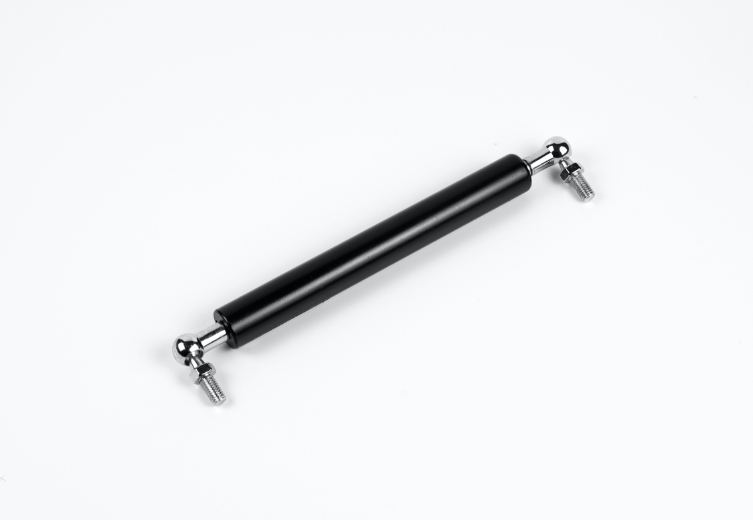
Ball Clevis Fittings: Utilize a ball-and-socket design that permits rotational freedom and dissipates ongoing mechanical vibrations.
Engineers must review gas spring considerations and installation parameters during initial system design phases. Additionally, proper installation prevents destructive side-load forces on piston rods.
Operating Temperature and Environmental Resistance
High-grade metal constructions perform reliably under harsh working conditions. Optional 304 stainless steel offers exceptional resistance against marine corrosion. Specially formulated internal seals maintain gas springs in extreme temperature environments ranging from -40°C to +80°C.
Changzhou Juteng Gas Spring Co., Ltd. enforces strict quality assurance standards across all product lines. Exhaustive physical testing, such as our F160 series 50,000 cycles gas spring validation protocol, ensures zero required lifetime maintenance across high-cycle industrial machinery.
Benefits and Applications of Gas Springs
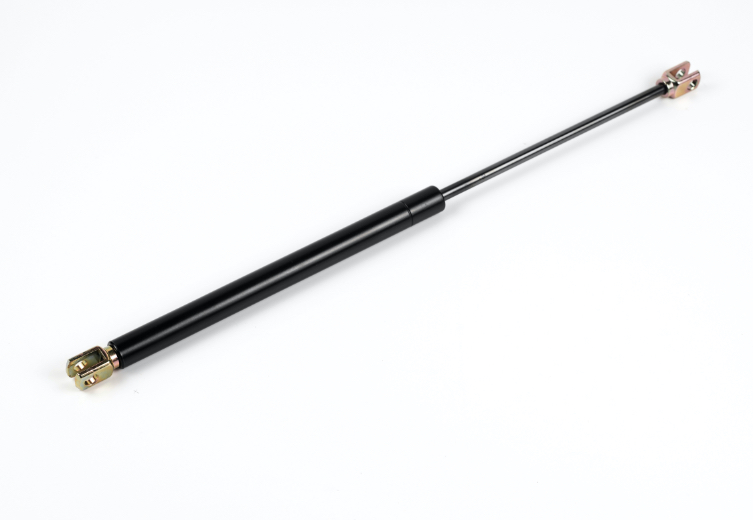
Engineers select hydropneumatic components to enhance user safety and mechanical performance. Understanding the benefits and applications of gas springs helps design teams match specific motion components with exact operational environments.
Automotive and Transportation Systems
Modern vehicles utilize linear motion components for effortless hood and tailgate operation. Dynamic gas springs featuring a specialized cylinder slot mechanism enable precise motion tuning. This design controls movement speed and provides smooth damping throughout the full stroke.
Category | Requirement / Specification |
|---|---|
Force Range | 300N to 1500N (tailored to hood material like steel or aluminum) |
Stroke Length | 150mm to 450mm |
Tube Diameter | 18mm / 22mm |
Damping Mechanism | Hydraulic end-damping for smooth, controlled soft closure |
Construction Materials | QPQ Black Nitriding Steel or Stainless Steel; Fluororubber seals |
Temperature Resistance | Range from -30°C up to +120°C |
Certifications | IATF 16949 and ISO 9001 |
Mounting & Joints | Ball head, fork, or eye customized joints matching original vehicle mounting points |
Proper hinge alignment during vehicle assembly ensures long-term operational performance. Correct installation prevents premature seal degradation in passenger vehicles.
Medical Furniture and Patient Care
Healthcare environments require silent, reliable, and smooth positioning equipment. Mechanical support systems choose specialized locking options over basic motion components:
Standard Springs: Provide basic lifting support but lack fixed-position holding capabilities.
Basic Locking Springs: Hold position exclusively at full extension for access doors.
Rigid-Lock Springs: Secure equipment at any point along the stroke for exact clinician positioning.
Functional Advantage | Impact on Caregivers & Patients |
|---|---|
Controlled Motion & Damping | Prevents sudden adjustments, safeguarding patients from injury. |
Infinite Locking Capability | Enables precise angle adjustments anywhere along the stroke. |
Ergonomic Lifting Assistance | Offloads physical exertion, allowing staff to adjust beds easily. |
Accidental Movement Prevention | Secures the bed firmly to optimize clinical safety. |
Industrial Machinery and Heavy Doors
Heavy production equipment requires robust motion control components to protect operators. Specifying heavy duty gas struts allows facilities to manage heavy access panels safely.
Parameter Category | Specific Consideration | Application Guidance |
|---|---|---|
Force & Adjustability | Guard weight and hinge friction | Utilize adjustable force units to fine-tune pulling force during installation. |
Stroke & Geometry | Extended lengths and mounting angles | Match stroke to movement limits and verify mounting center distances. |
Motion Control | Damping and noise reduction | Select damped gas struts to ensure smooth, controlled operator movement. |
Environmental Materials | Moisture and chemical exposure | Choose high-grade alloys for washdown and harsh factory conditions. |
Industrial maintenance teams evaluate several core factors during machinery setup:
Primary Selection Criteria: Engineers evaluate load weight, hinge placement, opening angle, stroke length, and force needs.
Operational Risk Management: Heavy access covers utilize paired gas springs or mechanical safety locks to prevent accidental closures.
Marine and Coastal Installations
Saltwater environments cause rapid physical corrosion on standard hardware. Selecting the correct metallurgical composition guarantees reliable operation on sea vessels.
Material | Marine Environment Suitability | Key Performance Factors |
|---|---|---|
Carbon Steel | Not Recommended | Prone to rapid failure due to salt spray exposure. |
AISI 304 Stainless Steel | Not Recommended | Susceptible to pitting corrosion caused by chloride ions. |
AISI 316L Stainless Steel | Strongly Recommended | Contains added molybdenum to resist aggressive chloride corrosion. |
Understanding the benefits and applications of gas springs enables marine engineers to select AISI 316L components for long-lasting hatch control.
Choosing standard inventory or custom gas springs depends on your operational priorities. Standard gas springs deliver fast delivery and lower upfront costs. Conversely, tailored hardware provides exact technical alignment for challenging environments.
Pro Tip: Collect application weight, required force, physical dimensions, and operating environment parameters before requesting quotes.
Contact Juteng's engineering team today for expert CAD design assistance. Our specialists provide tailored mechanical design solutions to achieve optimal product design performance.
FAQ
What is the main difference between standard and custom gas springs?
Standard gas springs offer immediate stock availability with fixed dimensions and pre-set output forces. Custom gas springs provide tailored stroke lengths, custom mounting fittings, and precise pressure settings (e.g., understanding 200N to 5000N) designed for specific application mechanics.
What lead times should I expect for custom gas springs?
Custom gas spring development typically takes 4 to 8 weeks. This timeline includes CAD modeling in SolidWorks or CATIA, physical prototyping, dynamic testing, and final manufacturing setup. High-volume custom production orders usually average 2 to 4 weeks.
What parameters are required to request a custom gas spring quote?
Engineers must prepare five key specification parameters:
Moving object weight and center of gravity
Required stroke length and extended length
Desired opening angle
Operating environment temperatures (-40°C to +80°C)
Preferred end fittings and mounting points
How long do Juteng gas springs last in industrial applications?
Quality Guarantee: Juteng gas springs undergo rigorous quality validation to guarantee reliable operation between 10,000 and 50,000 double strokes. High-grade metal construction and sealed internal nitrogen design ensure zero required lifetime maintenance.