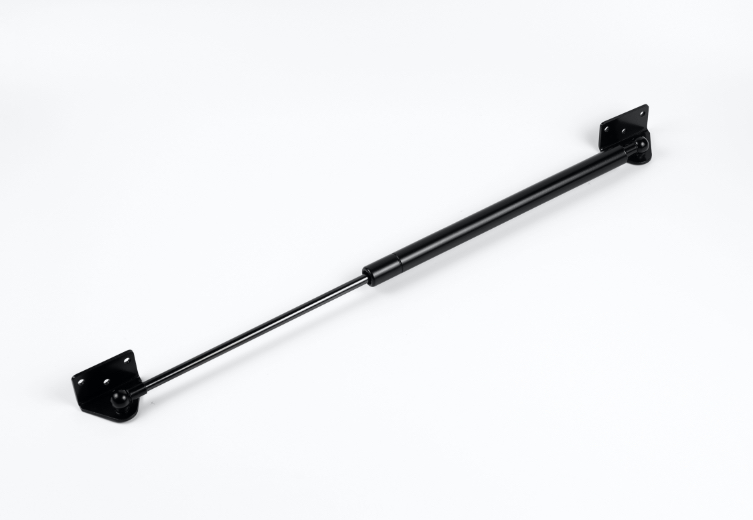





How to Choose the Best Telescopic Gas Spring for Your Needs

You want to select the best telescopic gas spring for your project. You need to avoid mistakes like overlooking the 30-60% effective force ratio, ignoring temperature-induced pressure drops, or risking sudden seal failures. Juteng offers gas spring solutions for automotive, furniture, machinery, and medical equipment. You can choose high-quality products that fit your needs and prevent costly errors.
Here are some common mistakes people make when choosing gas springs:
Common Mistake | Description |
|---|---|
Overlooking load capacity | Assuming rated force equals lifting weight. Only 30-60% of rated force is usable due to installation geometry. |
Ignoring environmental factors | At -10°C, pressure drops by 25%; above 60°C, it increases by 30%, risking cylinder limits. |
Sudden failure risks | Seal wear in >65% humidity reduces sealing performance by 40% in 6 months, causing rapid drops. |
Key Takeaways
Understand load capacity and force requirements. Remember that actual lifting capacity is only 30-60% of the rated force (e.g., a 250N spring lifts about 7.5-15kg effectively). This prevents sudden failures and ensures proper support.
Consider environmental factors. Humidity above 65% accelerates nitrile rubber aging, while extreme temperatures alter internal nitrogen pressure. Choose protective coatings for harsh conditions.
Accurately measure stroke and length. Note that the maximum stroke is usually under 600 mm, and the effective adjustment interval is only 70% of the total stroke due to gas compression ratios.
Select the right mounting position. Install with the piston rod facing down to lubricate seals and reduce nitrogen permeation, extending the 10,000-50,000 cycle lifespan.
Consult with a supplier for complex projects. Expert guidance helps you avoid mistakes and ensures you choose the best gas spring for your needs.
Application Requirements

Load and Force Needs
You must understand the load capacity and force requirements before selecting a telescopic gas spring. Each application has unique demands. For example, in the automotive industry, you need to support the weight of doors, hoods, or covers. In furniture, you want smooth and controlled movement for cabinet doors or lids. Medical equipment requires enhanced safety and convenience for users. The table below shows how different industries use gas springs:
Industry | Application Requirement |
|---|---|
Automotive | Assist in opening mechanisms for hoods and tailgates (typically requiring 40N to 1200N). |
Furniture | Provide controlled movement for cabinet doors or storage beds (up to 200 kg). |
Medical Equipment | Enhance safety with lockable features for beds and surgical tables. |
You should always match the linear force of the gas spring to the weight and movement needed. Remember, a 250N gas spring exerts about 25.5 kg of force theoretically, but due to hinge leverage and mounting angles, only 30-60% converts to usable lifting force. Always check the manufacturer’s F1 force specifications (measured at 5mm extension and 20°C) to ensure the spring meets your requirements. This step prevents sudden failures and extends the life of your equipment.
Motion and Function
You need to consider how the gas spring will move and function in your application. The design of the spring, including its internal high-pressure nitrogen and flame-retardant oil mechanism, determines how it operates. The piston moves inside the cylinder to compress or release gas, which controls the motion. Some springs have locking mechanisms that hold the piston or rod in place. This feature is important for applications that require the spring to stay in a fixed position.
Gas springs can lift heavy objects, making operations like opening car hoods easier. They also provide cushioning by absorbing shock and impact forces. This action prevents hard collisions and protects your equipment. In precision instruments, the smooth operation of the spring ensures accuracy and reduces wear. You should always consider the installation position and mounting points. Secure mounting ensures the spring can handle the force requirements and perform reliably. The installation angle should align with the direction of force for the best results.
Environmental Factors
You must evaluate the environment where you will use the gas spring. Temperature changes linearly affect internal nitrogen pressure. At -10°C, pressure drops by 25%, attenuating support force; above 60°C, pressure increases by 30%, potentially exceeding cylinder limits. High humidity (>65%) allows water vapor to penetrate seals, accelerating nitrile rubber aging and reducing sealing performance by 40% in just 6 months.
You should also consider dust and particle pollution. Particles ≥5 μm can act as abrasives, increasing the piston-cylinder clearance from 0.01 mm to over 0.1 mm, and raising leakage rates by 5 times. Choose materials like stainless steel or special coatings to resist corrosion and wear. Always review the environmental conditions before making your final selection. This step ensures the gas spring will perform well and last longer in your specific application.
Telescopic Gas Spring Specifications
Force Calculation
You need to calculate the correct F1 force (measured at 20°C with the rod extended to 5mm) before you select a telescopic gas spring. This step ensures the spring will support your load and provide the right linear force response. You can use simple tools and methods to measure the force needed for your application.
Attach a fish-scale to the point where the actuator connects. Pull or lift at the correct angle and read the force value.
Try different mounting points. Changing the angle or position can help you find the best leverage and force.
Use practical tests. Remember that pushing the rod in reduces the free gas volume, increasing pressure (p2 = (V1/V2) x p1). Hands-on tests account for this progressive force curve.
Tip: Always test your setup with the actual weight and movement. This helps you avoid errors and ensures the spring works as expected.
Stroke and Length
You must measure the stroke and length of your gas spring accurately. These measurements determine how far the spring can extend and retract. Industry standards use center-to-center measurements between mounting holes. Be aware of hard constraints: the maximum stroke is usually less than 600 mm, and the effective adjustment interval is only 70% of the total stroke due to gas compression ratios. The table below shows the common reference points and ranges:
Measurement Type | Reference Points | Common Range | Purpose |
|---|---|---|---|
Extended Length | Center-to-center of mounting holes | 200-800mm | Determines maximum open position |
Compressed Length | Center-to-center of mounting holes | 120-480mm | Determines minimum closed position |
Stroke Length | Extended minus compressed | 80-320mm | Determines total travel distance |
You should always check the available space in your equipment. For long-distance adjustments exceeding 600mm, multiple springs in series might be needed, but beware of synchronization deviations (±15 mm error) caused by uneven stress. Standard products may not fit, so custom options can solve this problem.
Choosing the Right Gas Strut
Selecting the right gas strut means matching spring to purpose. You must consider several factors to ensure the gas spring fits your application needs.
Orientation: Install the spring with the piston rod facing down. This ensures the internal flame-retardant oil lubricates the seal and reduces nitrogen permeation.
Mounting Point: Adjust the mounting location to change the force and mechanical advantage.
Tube and Rod Diameter: Larger diameters support heavier loads and provide more strength.
Extended and Stroke Length: Make sure these match your required movement and available space.
Internal Pressure: Higher pressure gives more force. You can tune performance by adjusting this value.
Custom gas struts let you specify stroke length and overall size at the same time. This helps you optimize the ratio between stroke and compressed length. You can use this feature for applications with limited space. Matching spring to purpose improves efficiency and prevents design changes.
Juteng offers a wide range of customizable gas springs. You can choose the graphic, package, logo, or even base your order on a sample. This flexibility helps you get the right gas strut for your project.
Note: Matching specifications to your application needs ensures smooth operation, safety, and long service life. Always review your requirements and consult with experts if you have unique challenges.
Mounting and End Fittings
Mounting Positions
You need to choose the right mounting position for your gas springs. The mounting position affects how well the spring supports your equipment and how long it lasts. You should install gas springs with the piston rod facing down when possible. This position ensures the internal flame-retardant oil constantly lubricates the piston rod seal and reduces the permeation of nitrogen gas through the seal, maximizing the 10,000 to 50,000 cycle lifespan. You also improve the damping effect, which makes movement smoother.
Think about the direction of force in your application. The mounting angle should match the direction of movement. If you mount the spring at the wrong angle, you may reduce its efficiency or cause uneven wear. You should also check for enough space around the mounting points. This step prevents the spring from hitting other parts during operation.
When you use gas struts in doors, lids, or panels, test the opening and closing motion. Make sure the spring does not bind or twist. Proper alignment keeps the load balanced and extends the life of your equipment.
End Fitting Types
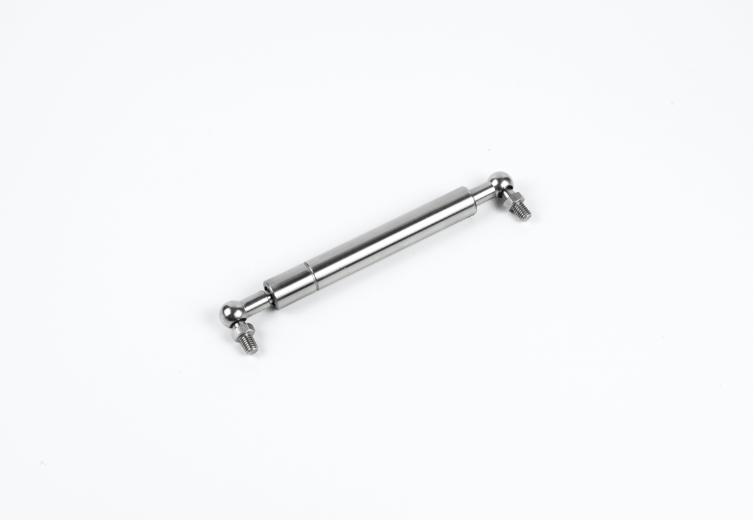
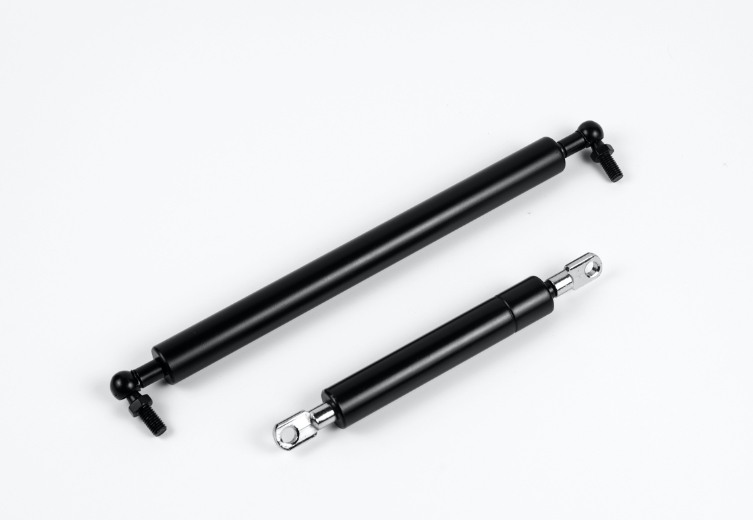
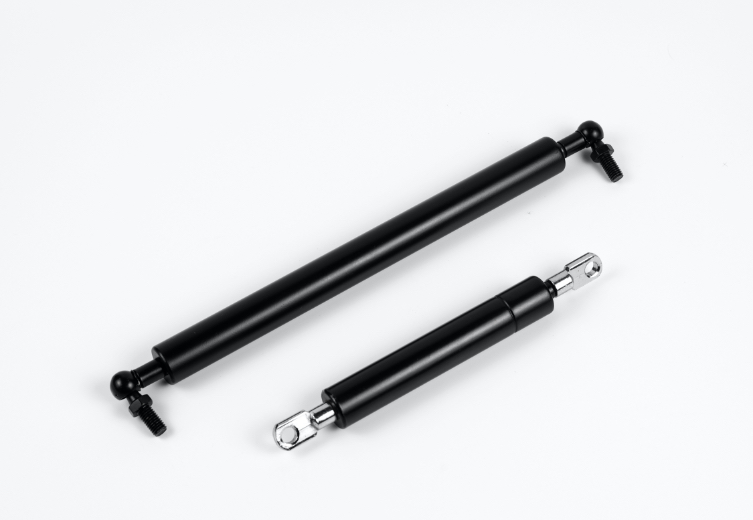
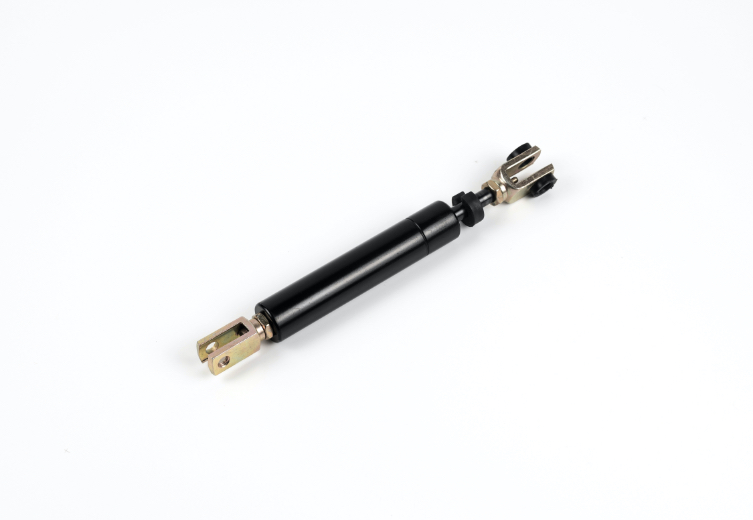
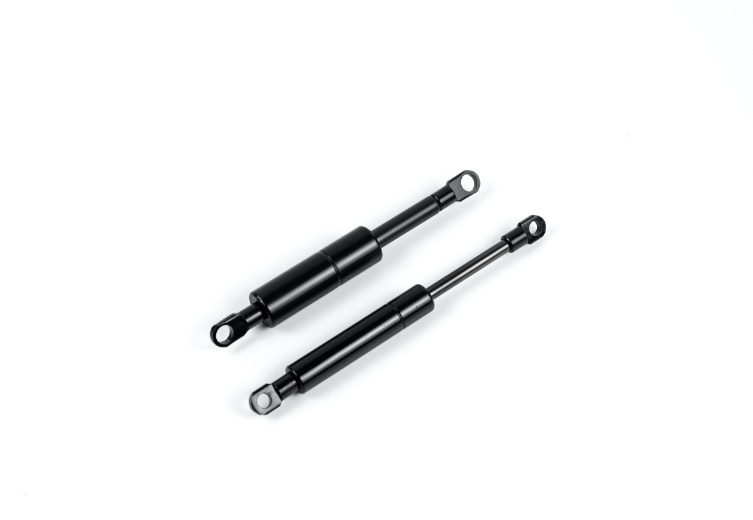
You must select the right end fittings for your gas struts. End fittings connect the spring to your equipment. They come in many shapes, such as ball sockets, eyelets, clevises, and threaded ends. Each type suits different mounting needs.
When you choose end fittings, consider these important factors:
Material strength matters. High-strength steel or alloys can handle heavier loads.
The design and shape of the fitting affect how the load spreads across the part.
A larger cross-sectional area gives more support and reduces stress.
The connection type, such as a bolt or pin, impacts how well the load transfers.
End fittings must resist fatigue from repeated use.
Environmental conditions like temperature or humidity can change how the fitting performs.
Always follow the manufacturer's recommendations for load ratings and safety margins.
Manufacturers test end fittings to meet industry standards. They include safety factors to prevent failures from unexpected forces. You should always match the end fitting to your application and check for compatibility with your mounting points. This step ensures your gas springs work safely and reliably.
Gas Spring Features
Damping and Speed
You want your telescopic gas spring to deliver smooth motion. Damping controls how fast the spring extends and retracts. The flow of nitrogen gas and flame-retardant oil inside the cylinder regulates speed. Oil reduces friction and provides end-position damping. You can adjust the diameter of the orifices or use different damping discs to change how quickly the rod moves. This gives you precise control over the speed and performance. By tuning the throttle aperture and oil-air ratio, you can create ultra-smooth motion for ideal applications. Damping also helps prevent sudden movements, making your equipment safer and easier to use.
Tip: If you need controlled motion, choose a gas spring with adjustable damping. This feature lets you match the speed to your project needs.
Locking and Safety
Locking mechanisms add stability and safety to your gas spring. You can fix the piston or rod in any position. This is important when you need the spring to hold a load securely, such as in medical beds or adjustable furniture. Lockable gas springs prevent accidental movement and protect users from sudden drops. You should always check the locking feature for reliability. A strong locking mechanism ensures your equipment stays in place during use. Safety improves when you combine locking with proper damping.
Feature | Benefit |
|---|---|
Locking | Holds load securely |
Damping | Prevents sudden movement |
Combined Use | Enhances safety and stability |
Corrosion Resistance
Corrosion resistance extends the lifespan of your gas spring. Protective coatings shield the spring from moisture, chemicals, and wear. In coastal areas, high salt spray can cause pitting corrosion of 0.2 mm per year on unprotected cylinders, leading to a 60% leakage rate within 3 years. The choice of materials, such as corrosion-resistant stainless steel or passivated finishes, boosts durability. You want your gas spring to perform reliably across different conditions. Corrosion resistance makes the spring a smart choice for ideal applications where longevity matters.
Note: Corrosion-resistant coatings protect your investment and ensure consistent linear force throughout the life of the gas spring.
Environment and Safety
Temperature and Humidity
You need to consider temperature and humidity when choosing a telescopic gas spring. Temperature changes linearly affect the nitrogen pressure. Between -40°C and +80°C, the gas spring operates, but at -10°C, pressure drops by 25%, and above 60°C, it increases by 30%. Low temperatures also make the damping oil more viscous, increasing resistance, while high temperatures reduce damping.
Humidity also plays a big role. When ambient humidity exceeds 65%, water vapor penetrates small cracks, accelerating nitrile rubber aging and dropping sealing performance by 40% in 6 months. If you use gas springs in damp environments, choose stainless steel or special surface treatments. For ideal applications, always match the material and finish to the environment. This step helps you avoid early wear and keeps your equipment working longer.
Tip: Store gas springs in a dry place before installation. This prevents rust and keeps the seals in good condition.
Safety Guidelines
You must follow safety guidelines when installing and using gas springs. Always read the manufacturer’s instructions before starting. Use the correct tools and mounting hardware. Never try to open or repair a gas spring yourself. Telescopic gas springs are filled with high-pressure nitrogen (up to 8-10 MPa) and rely on an interference-fit composite seal. They are completely irreparable; attempting to open the plastic-deformed cylinder will cause an overpressure burst, releasing high-speed debris with deadly kinetic energy.
Check the mounting points for strength and stability. Secure all fittings tightly. Test the gas spring after installation to make sure it provides controlled motion. If you notice any leaks, dents, or damage, replace the spring right away.
Here are some key safety tips:
Wear safety glasses and gloves during installation.
Do not expose gas springs to open flames or high heat.
Avoid bending or twisting the piston rod.
Dispose of old gas springs according to local regulations.
Following these steps keeps you safe and ensures the gas spring works as designed.
Expert Advice and Support
When to Consult a Supplier
You may feel confident choosing gas struts for simple projects. However, some situations require more than basic knowledge. You should reach out to a supplier when you face complex requirements or unique challenges. For example, if you need gas struts for heavy machinery, medical equipment, or specialized furniture, you should not guess the specifications. You want to avoid costly mistakes and ensure safety.
You should consult a supplier if you notice any of these signs:
You cannot find a standard gas strut that fits your size or force needs.
Your application requires precise or controlled motion.
You need to meet strict industry standards for safety or durability.
You want to improve the quality and lifespan of your equipment.
You have questions about mounting positions or end fittings.
Tip: Early communication with a supplier helps you avoid delays and ensures you get the right product the first time.
Juteng provides technical support for all types of gas struts. You can ask for advice on force calculation, stroke length, or material selection. The engineers at Juteng understand the importance of quality and safety. They can help you select gas struts that match your exact needs. You will benefit from their experience and commitment to customer satisfaction.
Custom Solutions
Every project has different requirements. Sometimes, standard gas struts do not fit your application. You may need custom solutions to achieve the best results. Customization allows you to choose the stroke length, force value, mounting style, and even the finish of your gas struts. This flexibility helps you solve space limitations, weight challenges, or special environmental conditions.
You should consider custom gas struts in these cases:
Your equipment operates in extreme temperatures or high humidity.
You need gas struts with special coatings for corrosion resistance.
You want to add features like locking mechanisms or adjustable damping.
You must meet specific industry regulations or certifications.
You want to enhance the quality and performance of your product.
Juteng specializes in custom gas struts for many industries. You can work with their engineers to design a solution that fits your project. They use high-quality materials and advanced manufacturing processes. You will receive gas struts that deliver reliable performance and long service life.
Note: Expert guidance makes a big difference when you need custom gas struts. You can trust Juteng to provide support from design to delivery.
You should always value expert advice when working with gas struts. The right support helps you achieve controlled motion, safety, and high quality in your applications. You can contact Juteng for technical support, product selection, or custom solutions. Their team will help you avoid common mistakes and ensure your project succeeds.
When to Consult a Supplier | Custom Solutions Benefit |
|---|---|
Unusual size or force needs | Tailored fit for your project |
Controlled motion required | Enhanced safety and performance |
Strict quality standards | Reliable, long-lasting products |
Special environments | Materials and coatings for durability |
Need for expert guidance | Support from design to delivery |
You can choose the best telescopic gas spring by following a clear process. Start by understanding your application needs. Measure force, stroke, and length for your gas spring. Check mounting options and special features. Always consider the environment and safety. If you need help, reach out to Juteng for expert advice. You will find the right telescopic gas spring for your project and ensure reliable performance.
FAQ
How do you determine the correct force for your gas spring?
You must calculate the F1 force (measured at 20°C, 5mm extension). Remember that only 30-60% of the rated force (e.g., 250N or 25.5kg) is usable for lifting due to installation geometry and leverage. Test different mounting positions to find the optimal mechanical advantage.
Can you customize a gas spring for unique applications?
Yes, you can request custom gas springs from Juteng. You can specify the stroke length (up to 600mm), force value, damping discs, and fluoroelastomer seals for extreme temperatures. Customization helps you solve space and performance challenges.
What maintenance do gas springs require?
Gas springs are maintenance-free and pre-lubricated for life. However, you should keep the piston rod clean to prevent dust particles (≥5 μm) from acting as abrasives. Never attempt to repair a leaking spring, as the sealed system is irreparable. Replace worn springs to maintain safety.
What are the most common end fittings for gas springs?
End Fitting Type | Typical Use |
|---|---|
Ball Socket | Furniture, machinery |
Eyelet | Automotive |
Clevis | Medical equipment |
Tip: Match the end fitting to your mounting points for best results.