




Comparing Gas Spring Suppliers in China Key Factors to Consider
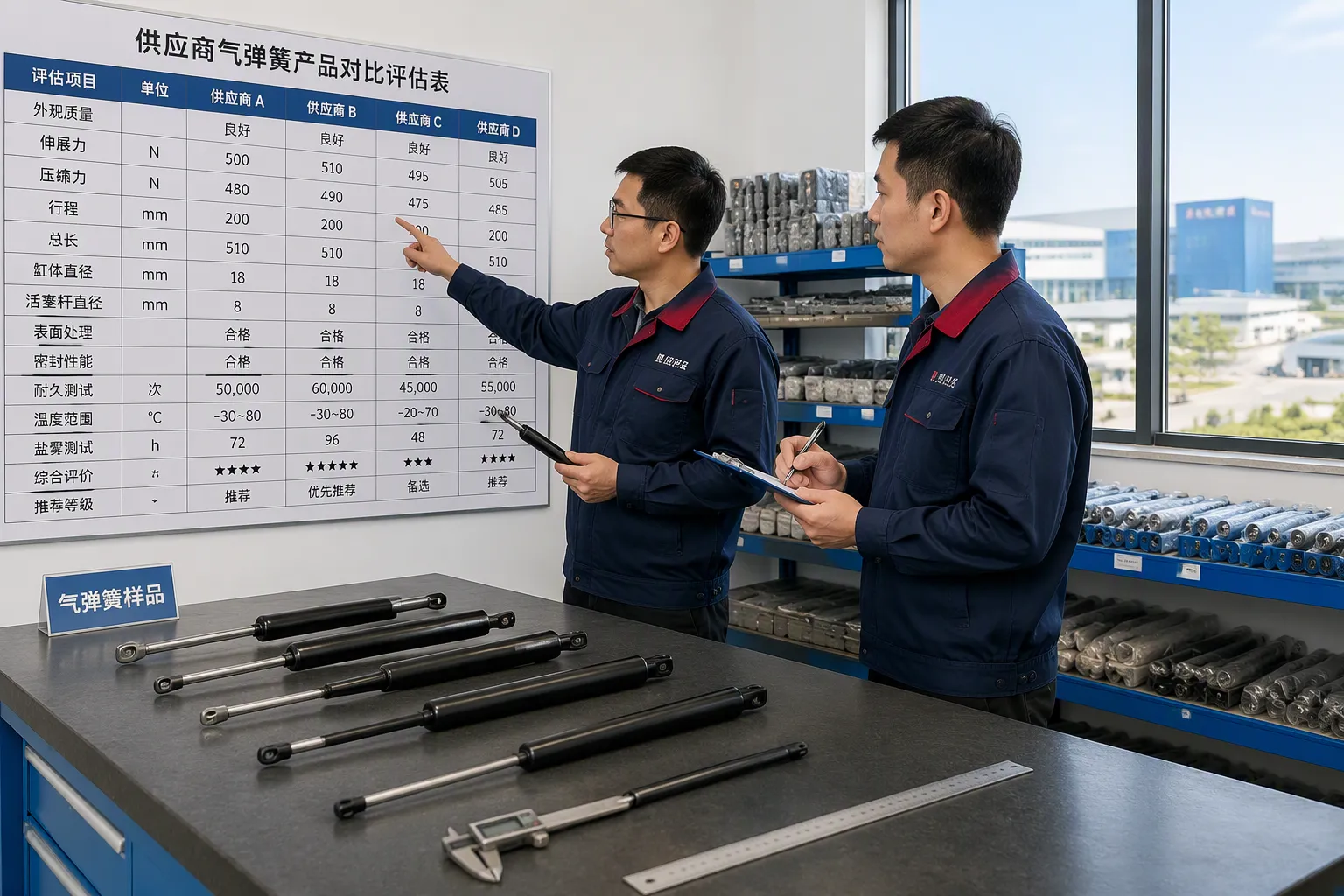
Imagine scrolling through dozens of gas spring suppliers on Alibaba. Each lists similar specifications for nearly identical gas springs. Which gas springs truly fit your project? China's gas spring market reached USD 183.5 million in 2024, with a 6.2% CAGR since 2020. This growth means more options, but also more confusion. This article offers a comparative analysis of the factors separating reliable suppliers from risky ones. Evaluate quality, pricing, customization, capacity and lead times, communication, shipping, after-sales support, and supplier verification. By the end, you will know precisely what to ask, what to check, and what to prioritize for your own application.
Key Takeaways
Check quality certifications like ISO 9001 and IATF 16949 to ensure reliable gas springs.
Evaluate total cost, not just unit price, to avoid hidden fees and defects.
Choose suppliers with strong engineering support for custom gas spring designs.
Confirm production capacity and lead times to prevent delays in your projects.
Test communication and verify supplier reputation to build a trustworthy partnership.
Gas Spring Suppliers: Quality and Certifications
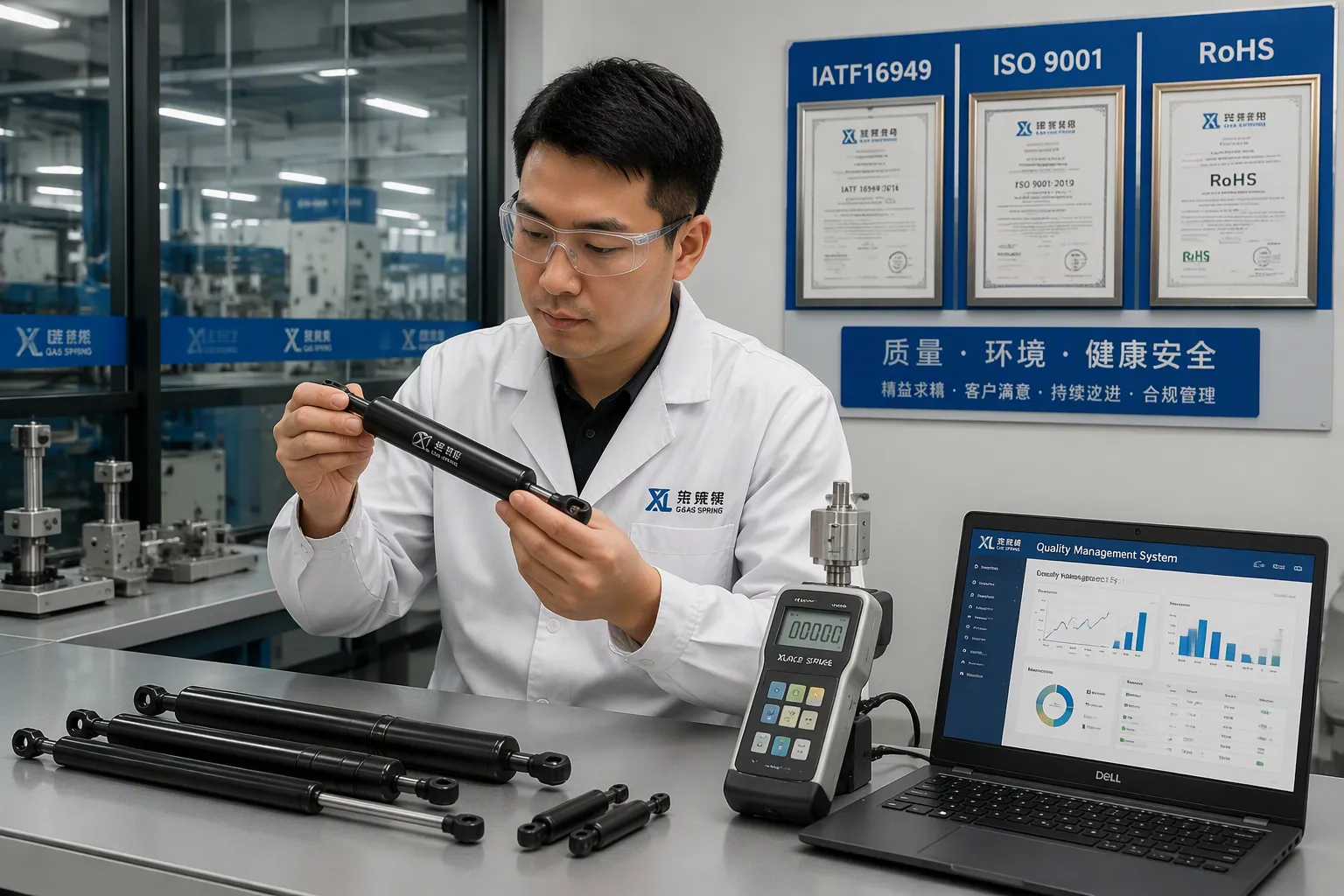
Quality is the first filter when comparing gas spring suppliers in China. China's gas spring market is growing rapidly, backed by a strong manufacturing base. This growth creates many options, but not all suppliers maintain consistent quality control. Buyers must separate reliable gas spring suppliers from those cutting corners.
Industry Standards That Matter
International quality certifications provide a common language for evaluating gas spring manufacturers. These documents verify that a supplier follows recognized processes and meets specific requirements.
Certification / Audit | Relevance to Gas Spring Suppliers |
|---|---|
IATF16949 | Essential for automotive OEMs and tier suppliers |
ISO 9001 | Foundational quality-management certification |
RoHS / REACH | Confirms hazardous-substance compliance for EU and North American markets |
SGS Product Audit | Independent third-party verification of processes and product quality |
At JUTENG (established in 2009 in Changzhou), we apply strict quality management systems to every production run. Our in-house testing lab conducts 72-hour salt spray tests and extreme temperature cycling (-40°C to +80°C) to guarantee durability. Furthermore, our gas springs are filled with 99.9% high-purity nitrogen to prevent internal corrosion and ensure stable pressure over time, delivering exceptional performance across automotive, furniture, machinery, and medical equipment applications.
Technical factors matter during comparison. Output extension force ranges from 50N to 3000N. Lockable types offer adjustable force from 200N to 5000N. Buyers should also review stroke length, cycle life, and operating environment. Quality gas springs typically achieve 50,000 to 100,000 cycles or more. The K-factor (the ratio of force at full compression to force at full extension) indicates gas volume efficiency; a lower value (typically between 1.1 and 1.4) indicates a larger gas volume and steadier force output.
Verifying Quality Claims
Certifications alone do not guarantee product quality. Buyers should request specific documents from trusted gas strut manufacturers and gas spring suppliers. These include business registration, current ISO 9001 certificates, material certifications, pressure-test reports, and calibration records.
A practical verification method involves requesting records from three different orders. Then select a finished serial number from the manufacturing floor and ask the quality group to retrieve its complete history without warning. This spontaneous retrieval test reveals more about a quality control system than scheduled discussions.
Compliance with standards such as ISO 11901-1, which covers nitrogen gas springs for press tools, demonstrates technical reliability. Buyers seeking gas struts or gas springs should prioritize suppliers who welcome factory audits and provide transparent documentation. This approach ensures consistent quality control and long-term reliability.
Supplier Selection: Pricing and Cost Structure
Reading Beyond the Unit Price
Supplier selection should weigh total cost of ownership rather than the lowest quoted number. Unit pricing captures only one piece of the equation. Tooling fees, sampling charges, freight, import duties, and defect handling all shape the real cost of doing business with an expert gas spring supplier. A quote that looks cheap at first glance may carry expensive surprises later.
Standard gas springs serve fixed-force, high-volume, cost-sensitive applications. These products work well when the required force never changes. Adjustable gas springs cost more upfront. They deliver variable force and precise positioning across different operating conditions. Buyers must match the product type to the application before comparing gas spring pricing across vendors.
Pricing discussions should also account for order volume. A gas spring manufacturer producing 4 million units annually can spread fixed costs across large runs. Smaller orders may carry higher per-unit pricing. Buyers should request tiered pricing based on quantity to understand how gas spring pricing scales.
Hidden Costs to Watch For
Several costs rarely appear on the initial quotation. Tooling and mold fees apply when custom end fittings or mounting hardware require new production setups. Sampling costs cover prototype runs before mass production begins. Freight charges vary by shipping method, package weight, and destination. Import duties depend on trade agreements and product classifications.
Defect handling represents another hidden cost. Poor quality gas springs may fail early, creating replacement expenses, production delays, and customer dissatisfaction. Strategic supplier selection means evaluating reliability alongside pricing. A slightly higher unit price from a dependable gas spring supplier often costs less over time than repeated failures from a cheaper alternative.
Buyers should request a complete cost breakdown before committing. Ask about minimum order quantities, payment terms, and price validity periods. These details affect cash flow and budgeting. A transparent gas spring supplier will provide clear answers without hesitation. This transparency builds trust and supports better decision-making throughout the sourcing process.
Manufacturer Capabilities: Customization and Engineering Support
Strong manufacturer capabilities separate basic suppliers from true partners. A provider of custom gas spring solutions offers 3D modeling, component calculation, motion simulation, and prototype creation. These services ensure the final product fits the application perfectly.
Assessing Technical Capability
Technical capabilities determine whether a supplier can handle complex projects. Engineering teams should review application geometry and environmental conditions. They use CAD platforms to create 3D models and simulate motion paths. This process detects leverage dead-zones or collision risks before manufacturing begins.
Why JUTENG Stands Out in Customization
At JUTENG, we don't just manufacture standard parts; we engineer solutions. Backed by an in-house R&D team, we provide 3D motion simulation to eliminate leverage dead-zones before tooling begins. Our production lines support over 300 varieties across four core series. Whether you need specific stroke lengths, extreme temperature resistance (-40°C to +100°C), or specialized end fittings, our flexible OEM/ODM processes ensure your exact specifications are met with a tight tolerance of ±5%. Furthermore, we source premium seal kits (equivalent to top-tier imported brands) to ensure zero gas leakage and maximum lifespan.
Mounting orientation and end fittings are critical factors during supplier comparison. A gas spring that fits poorly creates installation problems and premature wear.
Customizable Parameter | Options |
|---|---|
Extension Force | Selected by load and mounting geometry |
Stroke Length | Designed around movement distance |
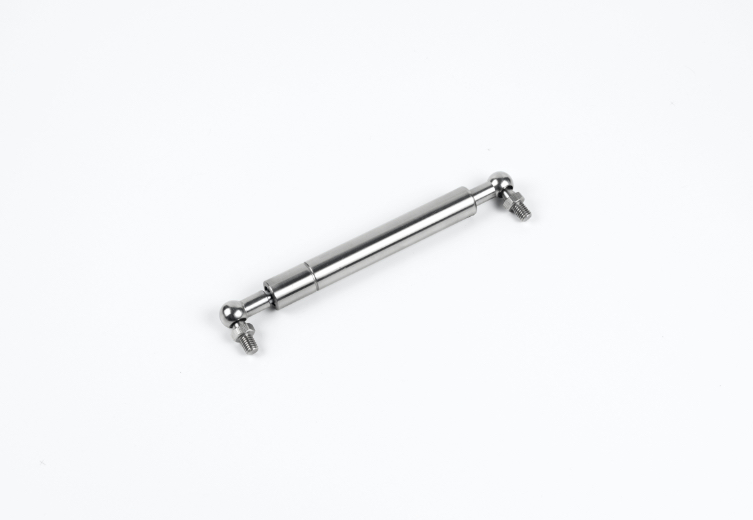
Materials | Carbon steel or stainless steel |
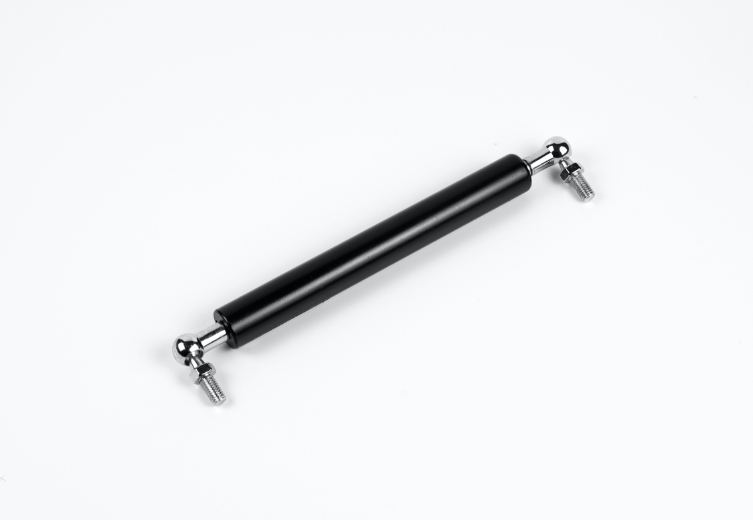
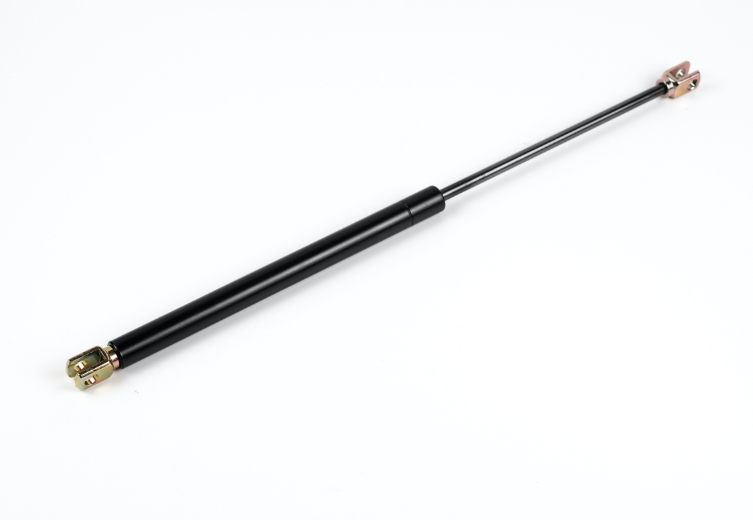
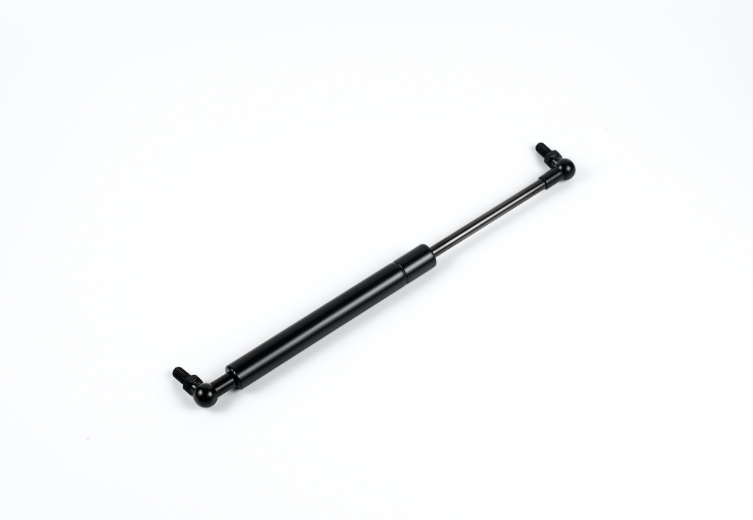
End Fittings | Ball sockets, eyelets, forks, clevises |
Special Functions | Locking or adjustable force |
Prototyping and Sample Process
The prototyping phase validates design decisions before mass production. Reliable gas strut manufacturers provide samples for functional testing and customer approval. Testing more than one unit gives a better basis for evaluating product behavior. Sample quantities and lead times depend on project complexity.
Prototype lead times typically run 7–10 days with minimum quantities from 5 units. Mass production minimums often start at 500 pieces. Buyers should evaluate force consistency at full extension and compression. Industry tolerance is plus or minus 5% for standard applications. A stable K-factor between 1.05 and 1.8 indicates correct gas pressure and seal integrity. Durability testing validates service life through repeated double strokes.
Request Your Custom Gas Spring Quote Today
Production Capacity and Lead Times
Capacity vs. Order Volume
Matching a supplier's production capacity to your order volume prevents delays and quality problems. Buyers should ask for annual output figures and peak-season constraints. A high-volume gas spring manufacturer with high capacity can absorb large orders without sacrificing quality. A smaller operation may struggle during busy periods. Understanding capacity helps buyers plan inventory and avoid stockouts.
JUTENG operates with 4 million units of annual production capacity. This capacity ensures timely delivery for both standard and custom orders. Their manufacturing capabilities support four product series and over 300 varieties. Buyers evaluating potential gas spring partners should request capacity data in writing. Ask about monthly output, maximum order size, and seasonal limitations. A supplier with proven capacity offers greater reliability and delivery consistency, which protects your production schedule and customer commitments.
Setting Realistic Lead Times
Lead times vary by order size, customization level, and production schedules. Buyers must confirm lead times in writing before placing orders. Verbal promises mean little when production slows. A written agreement creates accountability and protects both parties. Standard gas springs may ship faster than custom designs. Custom orders require additional time for tooling, sampling, and approval.
Chinese New Year creates significant production slowdowns. Factories close for one to two weeks, and workers return gradually. Buyers should plan orders around this holiday and other national events. Ordering well in advance prevents gaps in supply. Gas strut manufacturers with strong capacity can sometimes maintain partial operations. However, most suppliers experience reduced output during holidays. Buyers should add buffer time to every lead time estimate. A gas spring manufacturer with 4 million units of capacity still faces holiday constraints. Planning ahead ensures your gas springs arrive on schedule. This approach strengthens supply chain reliability and reduces risk.
Communication and Language
Strong communication separates dependable B2B gas spring suppliers from risky intermediaries. The inquiry stage offers a live test. Ask a question about gas springs and observe the response. Does the reply arrive within hours? Does it address the technical detail, or does it offer a generic sentence? These signals reveal process discipline.
Responsiveness and Clarity
Technical questions deserve answers from the engineering team, not messages relayed through a sales layer. Response time should be four hours or less, measured in hours rather than days. Time-zone overlap matters because shorter gaps reduce back-and-forth on technical issues. Set clear communication protocols before ordering. Document every specification, customization detail, and delivery schedule in writing. Confirm shipping options, costs, and estimated transit times before production begins. On-time delivery rates above 95 percent are a reasonable benchmark.
During inquiry, assess clarity. Request concrete technical figures for force tolerance, temperature range, and cycle life. Vague phrases such as "quality guaranteed" carry no engineering content. Supplier answers that cite test conditions show greater competence. Written documentation adds accountability. If a supplier refuses to sign off on specifications, treat that as a warning signal.
Bridging the Language Gap
English fluency varies across factories. A supplier with basic English can still manufacture quality gas springs if both sides adapt. Use simple English, short sentences, and plain vocabulary. Drawings and spec sheets reduce ambiguity. A dimension callout or a force requirement communicates faster than a long paragraph.
Complex negotiations may require a third-party interpreter. Small wording differences around tolerance and warranty create major obligations. An interpreter also helps navigate cultural context. Sharing an annotated photo of the application gives engineering a concrete reference. Label the mounting points, movement angle, and load. After the sample stage, ask for a written summary of the agreed specifications. Confirm the mounting orientation and end fittings in the same format used for production gas springs. This documentation-driven approach builds reliability throughout the supply chain.
Shipping and Logistics
Incoterms and Freight Options
Incoterms define where risk and cost transfer between buyer and seller. Three terms dominate shipments from Chinese ports. Each shifts responsibility differently.
Term | Seller pays | Buyer pays |
|---|---|---|
FOB | Chinese port fees and loading to vessel | Ocean freight, insurance, destination charges |
CIF | Ocean freight and insurance folded into invoice | Import clearance and inland delivery |
DDP | Everything, including destination duty and final delivery | Almost nothing |
FOB suits medium and large importers. The supplier bears costs until cargo loads on board. Ocean freight is quoted separately. This gives buyers clarity and access to cheaper forwarder rates. CIF fits importers with low shipment frequency or newcomers unfamiliar with supply chain control. The supplier delivers to the destination port with sea freight included. DDP provides door-to-door service with duties and taxes covered. First-time importers often choose DDP for predictable all-in pricing. The premium for DDP typically runs 10-20% above CIF.
Packaging and Damage Prevention
Gas springs require careful packaging to survive ocean transit. Corrosion protection is essential. Rod protection prevents scratches and dents. Carton strength must withstand stacking pressure. Buyers finalizing their supply chain should request packaging specifications before ordering. Weak packaging leads to rejected shipments and costly returns.
Proper packaging preserves product reliability and reduces defect claims. Suppliers should use moisture barriers and secure internal bracing. Each gas strut needs individual protection against movement. Buyers should confirm carton burst strength and pallet configuration in writing. These details prevent damage during loading, transit, and unloading. A supplier with strong packaging standards demonstrates operational discipline. This discipline protects both product quality and delivery schedules.
After-Sales Service and Warranty
What a Good Warranty Covers
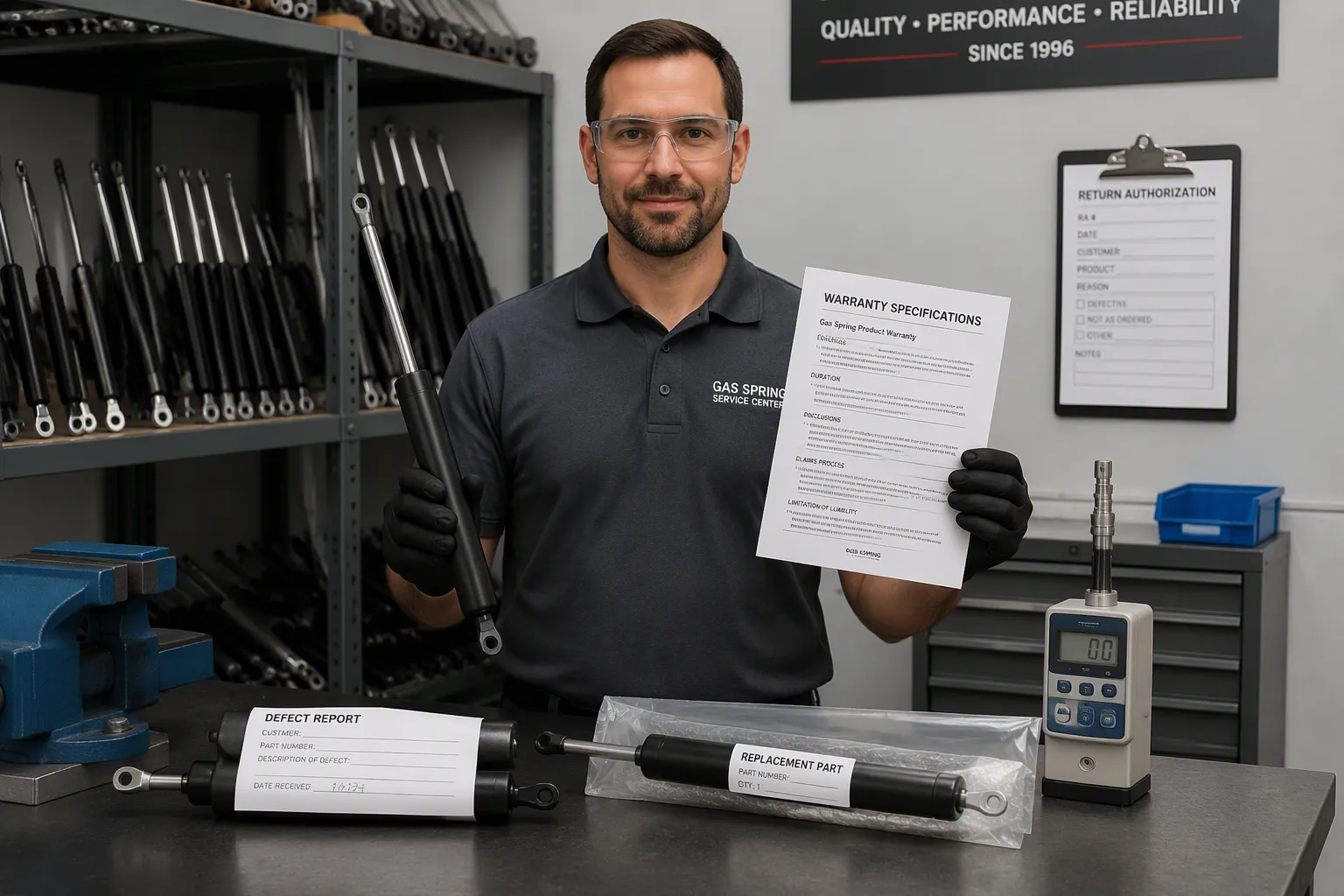
A solid warranty protects buyers from defective gas springs and unexpected performance failures. Reputable gas spring suppliers typically offer a 3-year warranty on most standard products. This coverage addresses defects in materials and workmanship with free repair or replacement. Furniture gas springs carry a 2–3 year warranty. Industrial cabinet gas springs may extend to 3–5 years depending on quality and intended use. High-volume or customized orders often include negotiable warranty terms that build long-term relationships.
Warranty coverage should address specific failure modes. Force tolerance matters because gas springs must deliver consistent extension force across their service life. Leakage prevention is critical since nitrogen loss degrades performance. Finish issues such as corrosion or coating defects also fall under proper warranty protection. Standard compressed gas springs and lockable or damped types may carry warranties up to 5 years with guaranteed minimal force loss and strict seal leakage prevention. Extreme environment struts maintain stable pressure and damping in conditions from -40°C to +80°C. A typical warranty period of 2 years excludes misuse, physical damage, or harsh working circumstances. The designed lifespan ranges from 2–5 years depending on application and working frequency. Lab lifecycle testing confirms 50,000 cycles or more. Operating temperature range spans -30°C to +100°C.
Handling Defects and Returns
A clear defect-handling process protects both buyer and supplier. The first step involves documenting the problem with photo or video evidence. This record shows the failure mode and helps the supplier identify root causes. Batch traceability allows the manufacturer to review production records and isolate the affected run.
After evidence review, the supplier should offer replacement or credit based on the defect severity. Efficient replacement handling and a straightforward returns process demonstrate strong after-sales commitment. Root-cause feedback closes the loop. The supplier analyzes why the defect occurred and implements corrective actions. This feedback prevents similar problems in future orders. Buyers assessing long-term supplier relationships should evaluate warranty terms and defect procedures alongside product quality. Since returning heavy, defective gas springs internationally is impractical, JUTENG offers a hassle-free claim process: we require photo/video evidence of the defect, and replacements or credits are issued immediately with your next shipment. This policy, combined with our maintenance-free designs and full OEM/ODM support, ensures long-term peace of mind.
Supplier Verification and Reputation
Audits, References, and Track Record
Verification separates reliable gas spring suppliers from trading companies posing as factories. Third-party audits provide independent confirmation of a supplier's claims. Firms like SGS or TÜV conduct on-site inspections covering production capacity, quality systems, and working conditions. Buyers should request the full audit report, not just a summary page.
Factory visits, whether in person or virtual, reveal operational reality. A video walkthrough shows equipment, inventory, and staff. Ask to see the production line for gas springs and the testing lab. Request contact details for two or three existing customers. A supplier with a strong track record will share references without hesitation. These references confirm delivery performance and product reliability.
China is a major gas spring manufacturing hub. The Chinese gas spring market supplies global industries across automotive, furniture, and medical sectors. Verification filters out weak suppliers. It does not mean avoiding the market entirely. A verified gas spring manufacturer with years of experience and verifiable certifications demonstrates commitment to quality. Buyers should check business licenses, export records, and compliance documents. This due diligence protects long-term sourcing relationships.
Red Flags and Warning Signs
Several warning signs indicate a supplier may not meet expectations. Refusal to share certifications or compliance documents is a serious concern. Inconsistent answers about production capacity or lead times suggest disorganization or dishonesty. Unusually low prices often signal poor materials or skipped quality steps. No verifiable address or business license means the supplier may be an intermediary with no factory.
Buyers should also watch for pressure tactics or evasive responses. A legitimate gas spring manufacturer welcomes questions and provides clear documentation. Certifications and compliance records should be readily available. If a supplier cannot explain their quality process for gas springs, walk away. Trust your instincts during negotiations. A supplier who avoids transparency will likely cause problems after the order. Filtering suppliers carefully ensures you find a partner who delivers quality gas springs on time and at a fair price.
Quality, pricing, customization, capacity, communication, shipping, after-sales support, and verification all matter. No single factor should decide your choice alone. Rank these factors by your own priorities. A high-volume OEM buyer may weight capacity and quality above price. A small custom project may prioritize engineering support and flexibility. Build a simple comparison scorecard. Evaluate at least three suppliers against it before committing. This practical step clarifies trade-offs and supports a confident sourcing decision.
FAQ
What certifications should a gas spring supplier hold?
IATF 16949 matters for automotive OEMs. ISO 9001 provides the quality-management baseline. RoHS and REACH compliance satisfy EU and North American markets. An SGS product audit offers independent verification. Always request current certificates before comparing vendors.
How can a buyer verify quality claims?
Request business registration, ISO 9001 certificates, material certifications, pressure-test reports, and calibration records. Then pick a serial number from the production floor. Ask the quality group to retrieve its complete history. This spontaneous check exposes weak quality systems.
What is the difference between compressed and lockable gas springs?
Compressed gas springs deliver smooth, controlled motion through a pressure tube and piston rod. Lockable gas springs use a high-precision locking mechanism. They hold any position. Adjustable force mechanisms range from 200N to 5000N. Hydraulic damping smooths movement.
How long does custom gas spring sampling take?
Prototype lead times typically run 7–10 days. Minimum sample quantities start at 5 units. Mass production minimums often begin at 500 pieces. Confirm these timelines in writing before ordering. Test several samples to validate force consistency.
What hidden costs affect total ownership cost?
Tooling and mold fees apply to custom fittings. Sampling costs cover prototype runs. Freight, import duties, and defect handling add expense. Request a complete cost breakdown from each supplier. Include minimum order quantities, payment terms, and price validity.
Ready to Upgrade Your Gas Spring Supply Chain?
Stop guessing with unverified suppliers. Partner with JUTENG for transparent pricing, rigorous quality control, and reliable global shipping.
Contact Us for a Free Quote & Sample Kit