




Standard vs Adjustable Locking Gas Springs for Heavy Lids
Standard vs Adjustable Locking Gas Springs for Heavy Lids
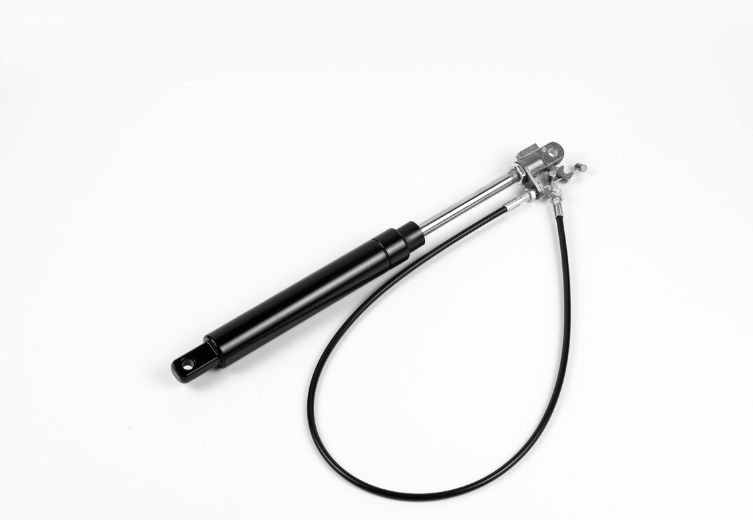
Selecting the right hydropneumatic support for heavy access covers, industrial hatches, and medical equipment requires a careful evaluation of safety and load predictability. While a standard compression gas spring delivers consistent lifting force for stable masses, it cannot hold a heavy lid safely in a mid-stroke position. For applications where operator safety and adjustable positioning are paramount, a lockable gas spring provides rigid locking at any point in the stroke. Reviewing the mechanical differences and application benefits of these gas springs guides engineers toward the optimal motion control solution. Ultimately, matching the strut type to the operational environment maximizes both user safety and equipment longevity.
Key Takeaways
Standard gas springs provide steady lifting force for heavy lids but lack mid-stroke locking capabilities.
Lockable gas springs allow adjustable positioning and rigid locking, ensuring operator safety during maintenance.
Symmetrical dual-strut mountings prevent lid twisting and protect hinges from severe mechanical damage.
JUTENG heavy-duty gas springs handle demanding loads up to 5000N and endure up to 50,000 double strokes.
Understanding Lockable Gas Spring Mechanics
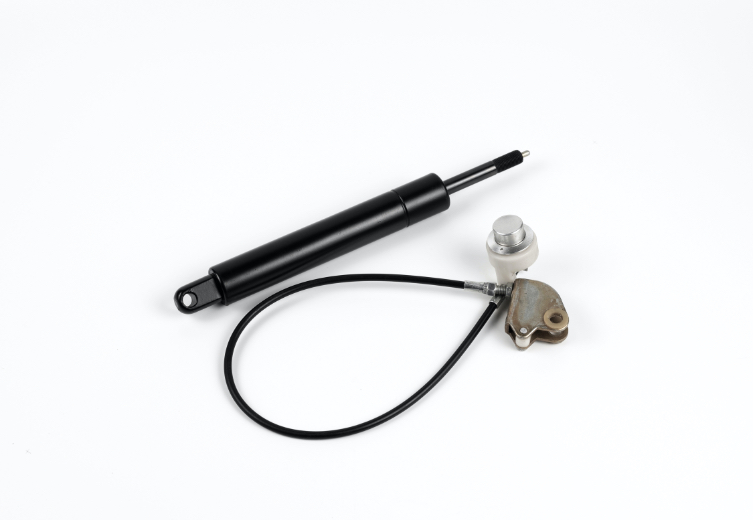
Fixed Force vs Internal Release Valves
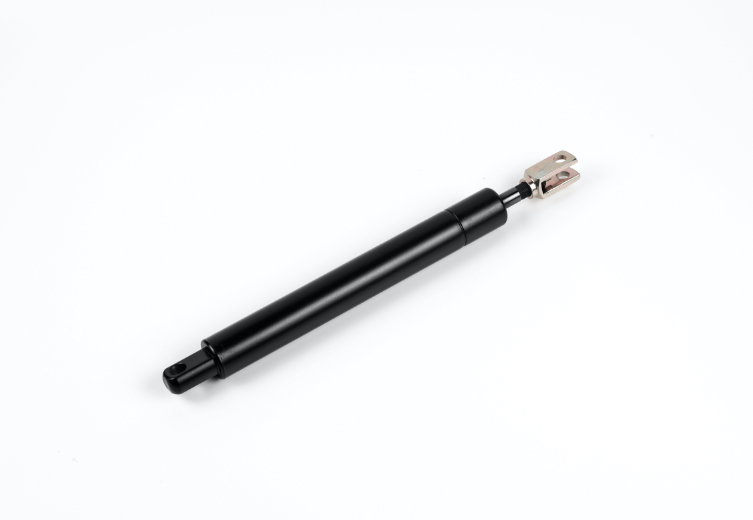
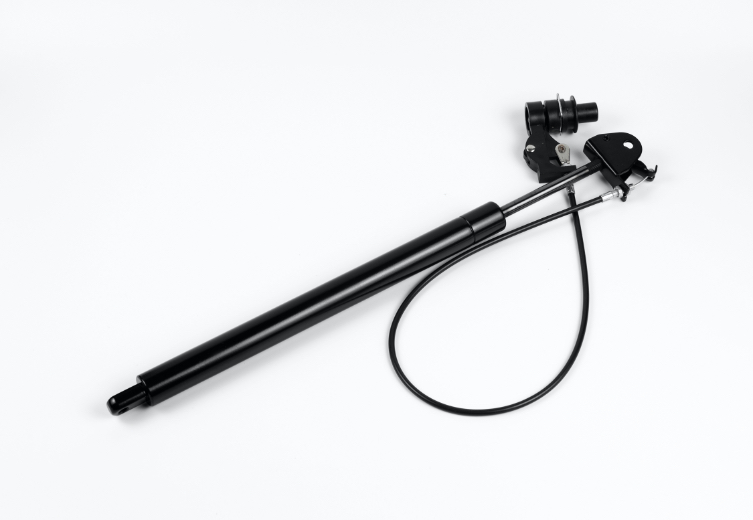
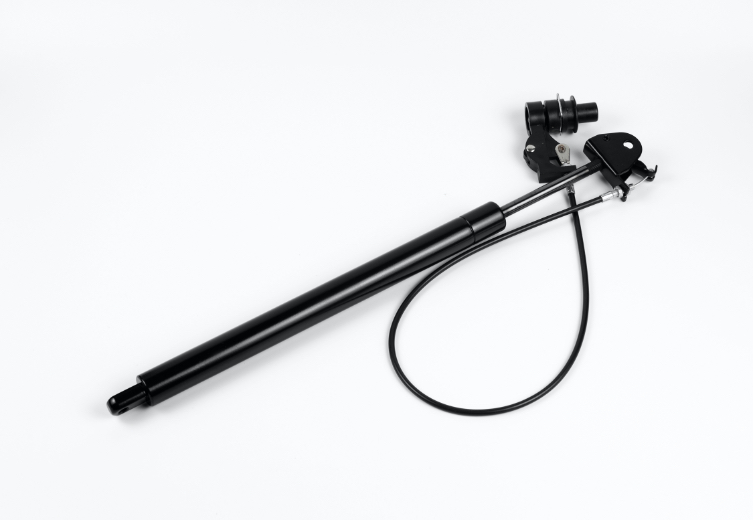
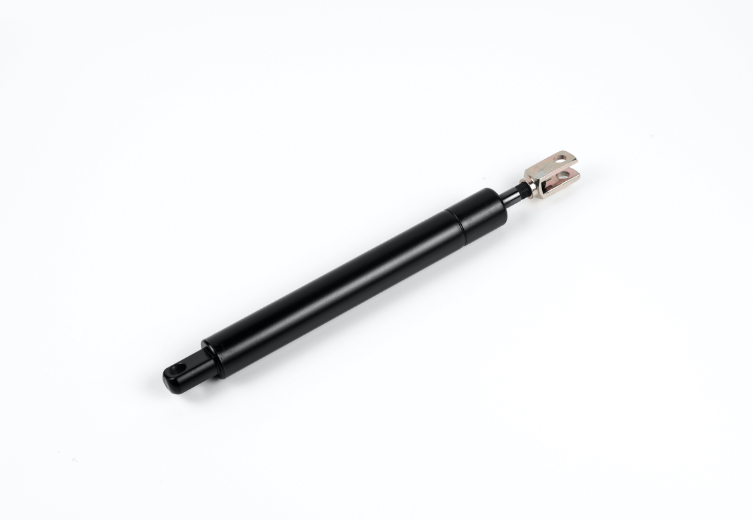
Hydropneumatic elements control heavy lid movement using pressurized nitrogen gas and hydraulic oil. In a lockable gas spring, a release plunger integrated into the piston rod actuates an internal valve mechanism. Pressing the release pin (or pulling a Bowden cable) opens the valve path between pressure chambers, allowing gas and oil to shift internally for smooth rod travel. Releasing the pin closes the valve instantly, trapping the hydraulic fluid and locking the piston rigidly in place. This adjustable locking mechanism holds heavy loads securely without external latches. High-performance models maintain stable internal pressure under severe loads, utilizing low-friction seals to ensure effortless operation.
Engineers must choose between fixed-force models and position-adjustable options. A standard gas spring carries a factory-set pressure fill for predictable counterbalancing, but it remains in constant motion until fully extended or compressed. Conversely, an adjustable lockable gas spring includes an internal valve mechanism for on-demand position locking. This gives operators the flexibility to stop heavy hatches at any desired angle, securing the workspace before performing maintenance. JUTENG gas springs, manufactured by ChangZhou Juteng Gas Spring Co., Ltd., preserve user safety across demanding industrial applications.
Sizing and Force Ratings up to 5000N
Heavy access covers require precise force calculations to ensure operational safety. Engineers calculate the minimum extension force F1 using the formula F1 = K × G × L / (b × n). Here, G represents lid mass in kg, L measures distance to the center of gravity, b is the force arm, and n specifies the count of gas springs. A safety factor K (typically 1.1 to 1.2) protects the hardware against friction and environmental shifts. A primary lockable gas spring handles these high load demands reliably. JUTENG lockable gas spring units cover ratings from 200N up to 5000N, with heavy-duty models featuring robust M14 threads to secure massive industrial hatches.
Locking behavior depends on hydraulic oil placement within the cylinder. Compression-locked rigid models place oil between the piston and the cylinder bottom, providing immense holding force when the rod is pushed in. Extension-locked designs place oil between the piston and the cylinder guide, excelling when the rod is fully extended. Both configurations provide zero deflection under rated loads. Using two gas springs symmetrically balances load distribution, preventing frame warping and ensuring predictable performance across thousands of cycles.
Standard Compression vs. Lockable Gas Springs
Engineers select counterbalancing mechanisms based on application stability and safety requirements. Choosing between fixed-stroke standard models and position-adjustable locking hardware dictates overall long-term reliability and operator protection.
Standard Springs for Predictable Loads
A standard gas spring contains a non-adjustable factory charge of pressurized nitrogen gas. Manufacturers seal these hydropneumatic units permanently during production. These units deliver consistent holding forces for mass-produced equipment with fixed enclosure weights. High-volume manufacturing lines rely on conventional struts because they maintain uniform performance across thousands of cycles. Industrial machinery, heavy hatches, and automotive enclosures often utilize these stable supports once design parameters reach total finalization.
While offering excellent economic value, non-locking force presents serious safety challenges for heavy lids. A standard gas spring cannot hold a 50kg steel hatch open at a 45-degree angle; it will either force it fully open or allow it to slam shut. If structural modifications happen after design freezes, such as adding heavy reinforcement plates, a standard gas spring cannot be recalibrated. Insufficient output force leads to inadequate performance, while excessive force causes structural strain on hinge mounting hardware. Therefore, standard struts are best suited for predictable loads where the lid only needs to be fully open or fully closed.
Adjustable Locking Springs for Operator Safety
Iterative testing and complex maintenance routines require flexible positioning parameters. A lockable gas spring incorporates an integrated release valve for custom position control. Prototyping engineers mount an adjustable lockable gas spring directly onto heavy prototype lids, allowing them to test the hatch at various opening angles. The field-accessible release pin or cable allows controlled movement, while releasing the trigger instantly locks the heavy lid in place. This mechanism facilitates safe, real-time adjustments on site without the risk of sudden lid drops.
Maintenance workflows benefit greatly from adjustable locking types. Operators can lift a heavy access hatch to exactly the height they need for clearance, lock it rigidly, and work safely underneath. Safety-shroud variants hold heavy access hatches securely in position even if accidental downward pressure is applied. This locking gas spring design prevents sudden lid drops during testing and protects operators from severe crushing hazards. By maintaining exact positional rigidity after valve closure, these units ensure structural safety during daily industrial routines.
Comparing design features simplifies component selection for industrial engineers.
Property | Standard Compression Strut | Adjustable Lockable Strut |
|---|---|---|
Position Flexibility | Continuous motion; only stops at full extension/compression | Rigid locking at any point within the stroke length |
Primary Application | Automated lids, simple toolboxes, automotive trunks | Heavy machinery hatches, medical beds, maintenance access panels |
Safety Profile | Requires external mechanical latches to hold mid-stroke | Built-in hydraulic/pneumatic locking prevents crushing hazards |
A comprehensive feature comparison clarifies structural trade-offs for heavy lid projects. An adjustable lockable gas spring is essential for applications requiring intermediate stopping points and operator protection. Selecting flexible gas springs eliminates the need for secondary mechanical prop rods. Industrial gas springs provide reliable motion control across heavy access covers, ensuring engineering teams maintain absolute control over heavy industrial hatches.
Heavy Lid Installation and Performance
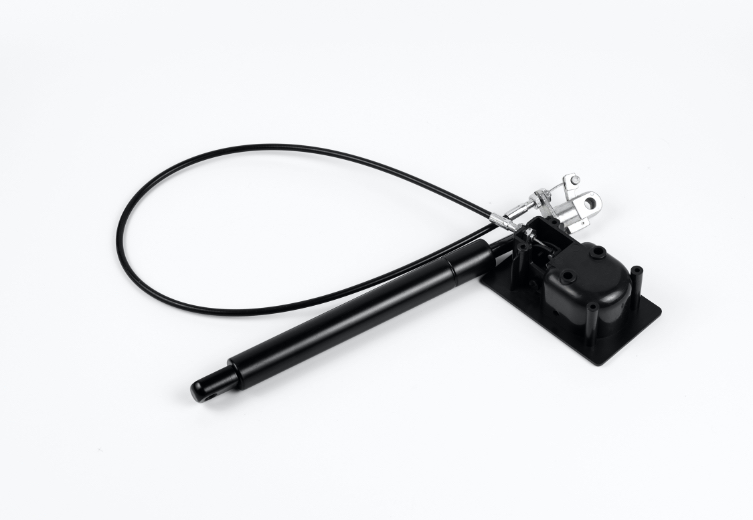
Installing heavy access covers requires precise mechanical alignment, structured mounting geometry, and symmetrical force application. Proper mounting configurations preserve operational safety while protecting heavy structural enclosures against frame warping. Engineers specify gas springs to balance installation geometry with component durability for long mechanical service life.
Dual Strut Mounting to Prevent Lid Twisting
Single-strut mountings create asymmetric mechanical loads on wide heavy access doors. Off-center lifting forces induce structural twisting, severe hinge binding, and uneven wear on perimeter rubber seals. Engineering teams eliminate these operational alignment issues by installing matching gas springs in mirror-image pairs on both sides of the enclosure frame. Dual-strut layouts share total mass evenly across both attachment brackets, ensuring smooth movement throughout the opening angle.
Practice | Mechanical Effect |
|---|---|
Mount hinge-side point at 20% of lid length | Applies lifting force near the hinge for balanced weight control |
Select strut length at 60% of lid length | Aligns stroke length with enclosure geometry to prevent binding |
Pair identical force units symmetrically | Prevents frame twisting and distributes mechanical stress |
Attach struts with hatch fully open | Eliminates pre-load misalignments before tightening brackets |
Proper mounting orientation dictates mechanical advantage during continuous operation. Mounting each lockable gas spring rod-down allows internal hydraulic fluid to coat the rod seal, maintaining constant seal lubrication and minimizing gas permeability. Ball socket end fittings accommodate minor angular misalignments, reducing side loading on the piston rod. Eyelets, mounting brackets, and clevis mounts provide rigid attachment points for severe industrial duty cycles. Symmetrical placement prevents premature seal degradation while maintaining structural safety across heavy access hatches.
Durability, Seals, and Maintenance
Heavy industrial applications demand continuous durability under challenging operating conditions. Standard hardware elements often experience seal wear under continuous mechanical strain. JUTENG units incorporate an advanced hermetic sealing system engineered to minimize internal friction and prevent seal leaks. This robust sealing package allows the lockable gas spring mechanism to maintain precise internal pressure across 50,000 double strokes. High-grade flame-retardant lubricants preserve smooth internal sliding motion while enhancing operational flame safety. Optional 304 stainless steel construction provides superior corrosion resistance in harsh marine environments, chemical processing plants, and heavy washdown areas.
Regular preventive maintenance routines preserve long-term equipment safety and reliability. Technicians should follow simple practical inspection procedures to keep mechanical support systems performing safely:
Inspect piston rods regularly for surface scratches, dirt accumulation, or mechanical dents.
Verify that each lockable gas spring holds a rigid position without drifting under full lid load.
Confirm that end fitting hardware remains tightly secured to structural mounting brackets.
Check perimeter door seals for evidence of uneven mechanical compression.
The internal valve mechanism incorporates critical safety features to protect operators during daily industrial routines. Pressurized nitrogen gas combined with integrated release mechanisms provides smooth, controlled motion without sudden door movements. Maintenance personnel must never attempt to open or repair hermetically sealed gas spring cylinders because high internal pressure creates severe hazards. Built-in mechanical safety features keep heavy access doors stationary during servicing routines.
Choosing the Right JUTENG Gas Spring
Matching Lid Weight to Support Type
Engineers must evaluate operational safety and load parameters when selecting motion hardware. Precise calculations prevent lid failure and protect technicians during daily maintenance routines.
Convert total mass to weight using the standard gravity conversion: weight in Newtons = mass in kg × 9.81.
Determine required force per strut using the leverage equation: F = (G × L) / (2 × N × b). In this equation, G represents total lid weight in Newtons, L measures hinge-to-center-of-gravity distance, N specifies strut count, and b indicates effective lever arm distance.
Calculate the force for a uniform 120 kg lid (1177.2 N) with a 500 mm center-of-gravity distance, 2 support struts, and a 200 mm lever arm. This layout yields a base requirement of 735.75 N per spring.
Add a safety factor margin between 10% and 15% to offset friction losses and environmental changes. This calculation sets a final requirement of about 850 N per strut.
Matching physical dimensions to lid mechanics ensures overall component durability. Selection parameters require systematic review:
Choose a lockable gas spring force rating slightly higher than calculated loads for firm holding.
Check stroke length and extended or compressed dimensions against spatial clearances.
Evaluate ambient operating conditions to select protective coatings or specialized seal packages.
Review heavy-duty output ranges such as 600N–800N and 1200N models for dense industrial access hatches.
Selecting a standard gas spring with fixed force output works well for static enclosure weights. Understanding the benefits and applications of gas springs optimizes operational hardware choices and ensures compliance with industrial safety standards.
Custom Engineering and Force Options
Modifying enclosure designs during production requires reliable engineering support. A standard gas spring delivers consistent holding capability, but precise installation geometry demands careful evaluation. Engineers often install adjustable locking models to test dynamic forces and clearance requirements during physical prototyping. The ability to lock the lid at various angles permits rapid spatial testing before locking down final hardware specifications.
JUTENG provides comprehensive engineering assistance for demanding applications. CAD models are submitted within 24 hours to accelerate development schedules. The overall design check reduces redesign work while improving operator safety. A custom lockable gas spring can be calibrated from lid mass, hinge geometry, and target opening angle. While a standard gas spring provides basic counterbalance support for predictable mass, a locking gas spring featuring an internal valve maintains rigid intermediate positioning. For extreme environments, a lockable gas spring crafted with a 316 stainless cylinder resists salt spray in marine applications. Advanced design features ensure long service life across diverse application environments.
Selecting motion hardware involves balancing development flexibility against long-term production costs. A standard gas spring delivers economical counterbalance performance for fixed enclosure masses. Conversely, an adjustable lockable gas spring provides essential safety and flexible positioning during operation and maintenance phases. Engineering teams preserve operational safety by matching lid weight to internal pressure and locking capabilities.
JUTENG supports designs with CAD modeling, customized strokes, end fittings, and force options. These high-performance gas springs protect equipment across heavy machinery, medical devices, marine hatches, and industrial enclosures. Deploying a lockable gas spring enhances user safety across demanding environments. Engineering teams should verify exact mass calculations before choosing a standard gas spring or locking gas spring solution.
FAQ
What force range do JUTENG lockable gas springs support for heavy lids?
JUTENG lockable gas springs provide force capacities ranging from 200N up to 5000N. This wide selection enables engineering teams to support dynamic load requirements across heavy industrial access hatches, medical equipment, and dense enclosure doors.
How does an adjustable lockable gas spring improve safety for heavy lids?
An adjustable lockable gas spring features an internal release valve actuated by a pin or cable. Operators can stop the heavy lid at any desired angle and release the trigger, instantly locking the piston hydraulically. This prevents the lid from dropping unexpectedly, protecting maintenance personnel from severe crushing hazards.
What service life can engineers expect from JUTENG gas springs?
JUTENG gas springs utilize a hermetic sealing system alongside specialized flame-retardant lubricants. This low-friction, maintenance-free design minimizes internal pressure losses, allowing the hardware to achieve an operational service life of up to 50,000 double strokes in harsh operating environments.
Why should heavy access doors use symmetrical dual-strut mountings?
Mounting matching gas springs in symmetrical pairs prevents structural twisting on wide enclosure doors. Dual struts share heavy mass evenly across attachment points. This balanced geometry eliminates hinge binding and protects perimeter rubber seals against uneven mechanical wear.