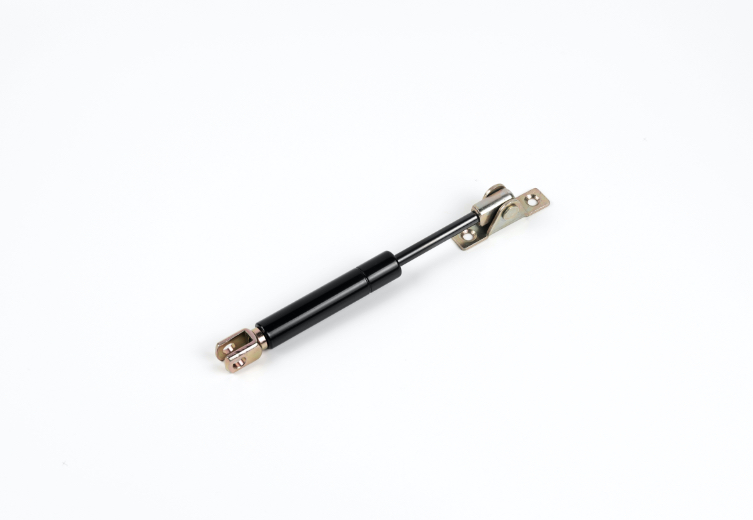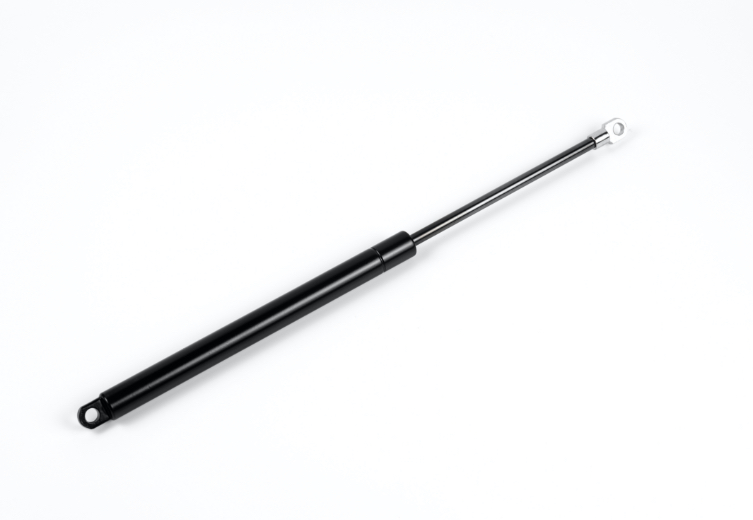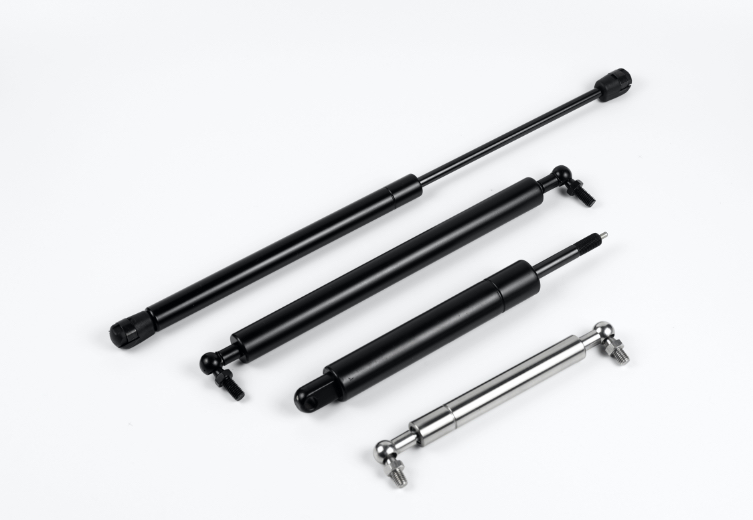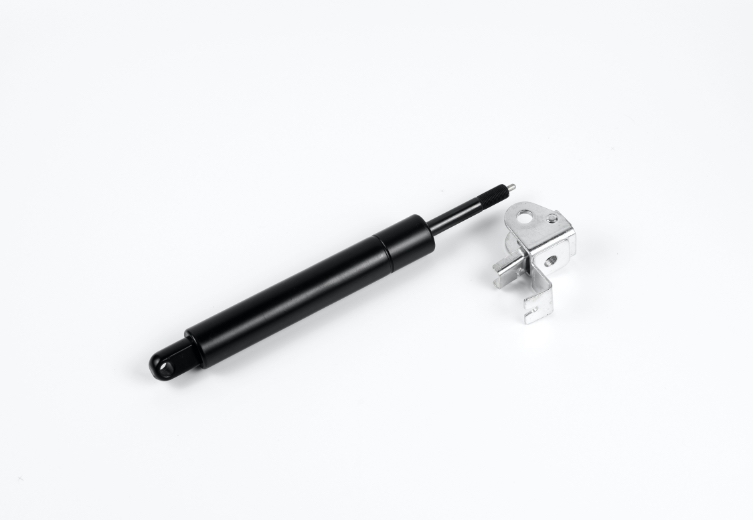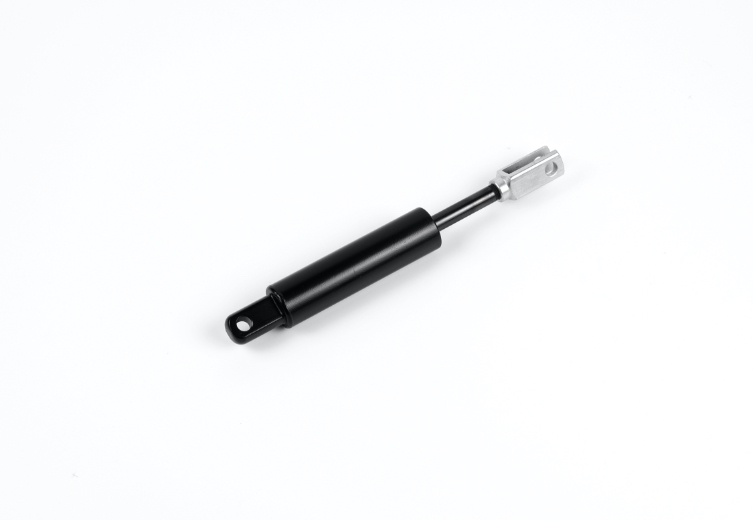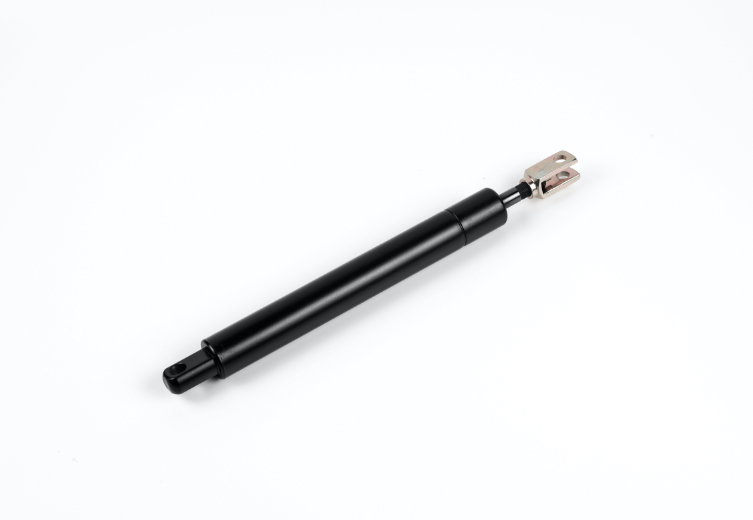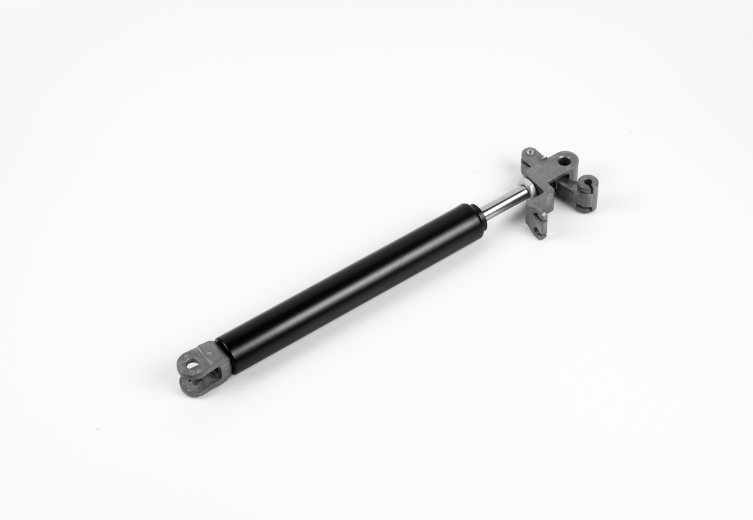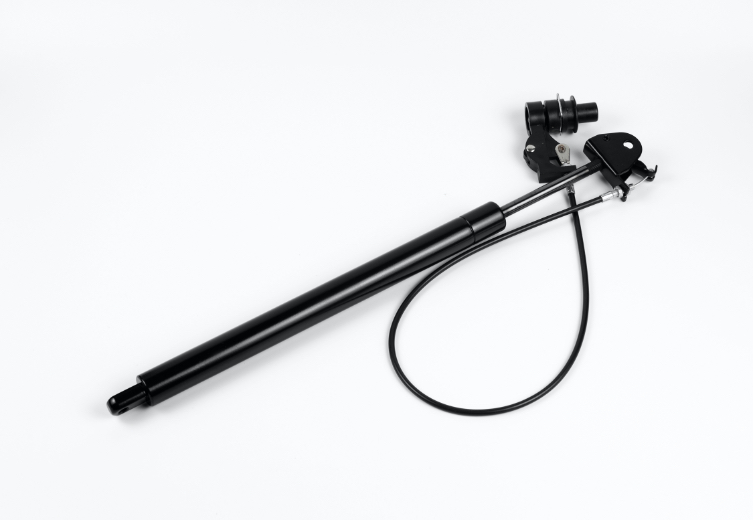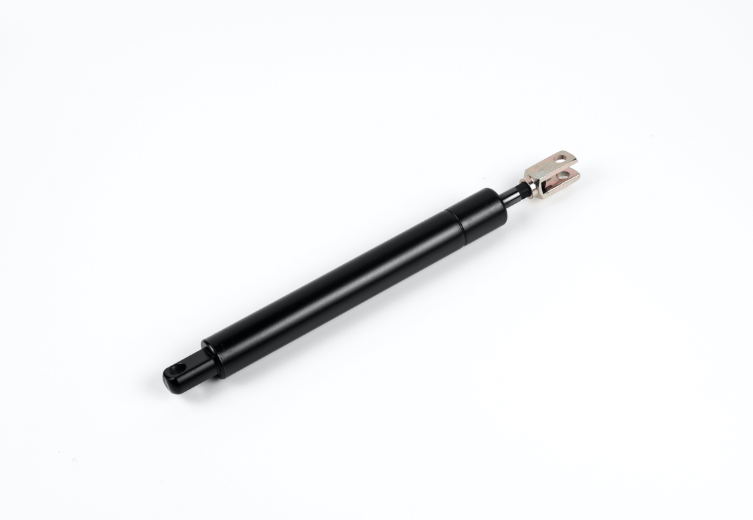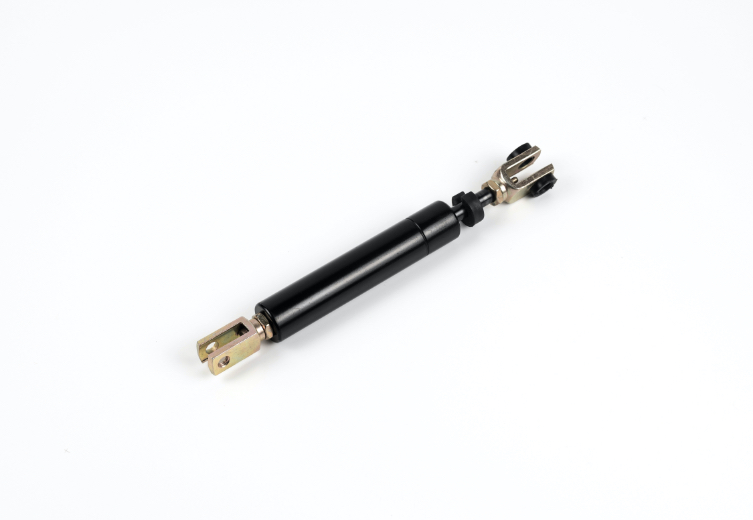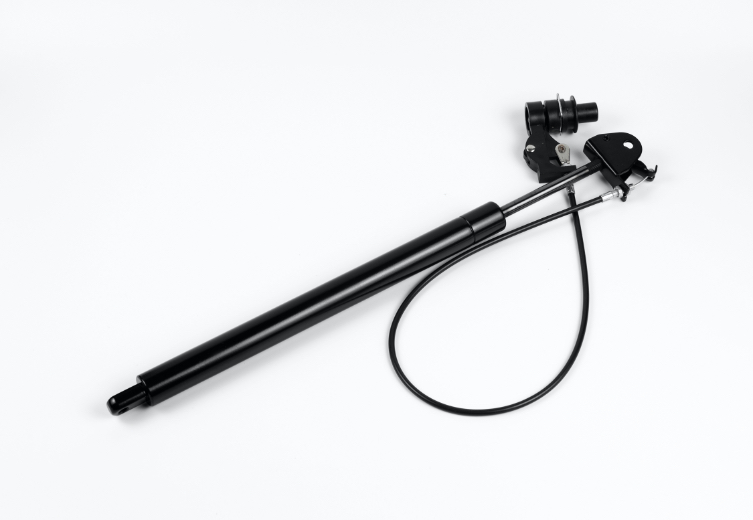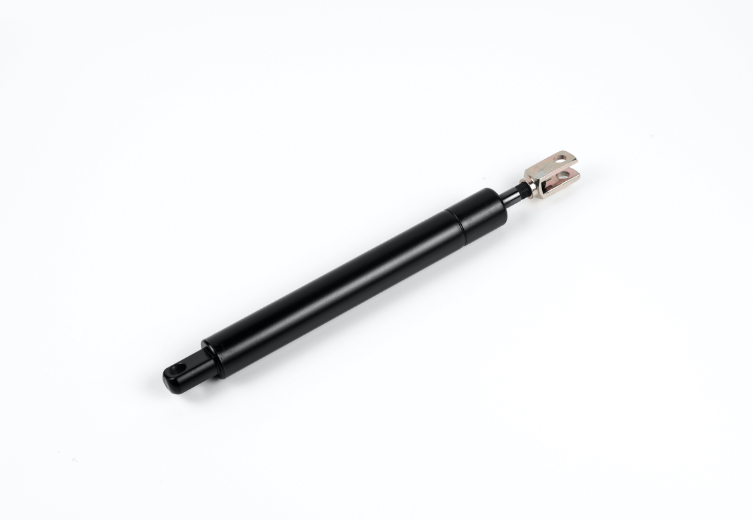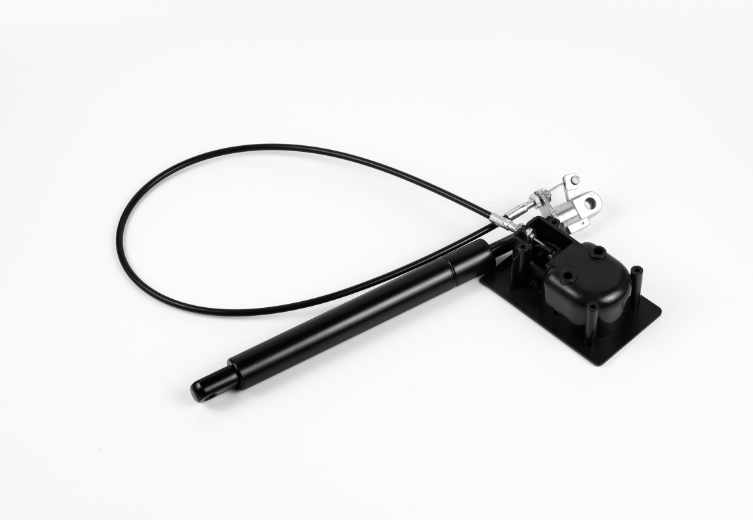





Layout and function of lockable gas springs
The type of locking for our gas springs can be calculated precisely to your individual requirements and coordinated during manufacture.
Operating the release opens the piston valve of the gas struts. When considering the elastic locking gas spring, it is nitrogen that flows through the piston, whereas in the rigid locking springs, it is oil that flows through it.
The flowing gas / oil moves the piston rod out by itself and in by pressure. When releasing the trigger, the valve in the inside is automatically being closed and stops the piston rod in any desired position. The locking gas spring with release button utilizes this principle, where pressing the button opens the valve to allow position adjustment.
How does a lockable gas spring work?
The lockable gas spring operates in conjunction with the mechanical structure through an internal high-pressure gas. The lockable gas spring is filled with nitrogen and other high-pressure gas. In the cylinder, the piston is connected with the piston rod. When an external force is applied to the piston rod, the piston moves in the cylinder, compressing or releasing the gas, using the gas pressure to provide support. Locking mechanisms usually rely on mechanical devices such as latches, locking pins, etc. . When locking is required, these devices hold the piston or piston rod in place so that it can not be moved; when unlocking, by operating unlocking devices such as buttons and knobs, the lock is released, allowing the spring to return to its normal telescopic function. The locking gas spring with release button design is particularly popular because it offers intuitive operation and precise control.
What is the function of a gas spring?
Gas Spring has two main functions: support and buffer. In terms of support, it can easily lift heavier objects, such as car hoods and large industrial equipment covers, by virtue of internal gas pressure, making opening and closing operations more labor-saving. In terms of cushioning, the gas spring absorbs the shock and impact force generated by the motion of the object, avoiding a hard collision. For example, the lifting parts of precision instruments, gas springs can ensure their smooth operation, protect equipment from damage, in automobiles, furniture, industrial machinery and many other fields are widely used.
How do you position a gas spring?
Many factors should be taken into account when installing the air spring. First of all, the installation position should be determined according to the actual use scenario. For example, the gas springs of the automobile hood are generally installed on both sides to achieve uniform support. When installing, make sure that the mounting point is firm and can bear the force of the spring. Also pay attention to the installation angle, try to make the spring axis and the direction of force consistent to give full play to its performance. At the same time, to reserve enough space to prevent the spring in the stretching process and the surrounding parts interference, affect the normal work.
How do you unlock a gas spring?
How you unlock a gas spring depends on its design. For a locking gas spring with release button, the unlocking process is straightforward and user-friendly. A common way to unlock is to operate specialized unlocking devices, such as buttons or knobs. If the button-type unlock, just press the button, trigger the internal unlock mechanism, so that the locking device and the piston or piston rod separation, so as to release the lock, so that the spring can return to a stretchable state. The knob-type unlocking is realized by rotating the knob to drive the action of the internal mechanical structure. Before operation, read the product instructions carefully, understand the correct method of unlocking, to avoid damage to the spring due to improper operation.
Locking Gas Spring with Release Button: Design and Operation
The locking gas spring with release button is one of the most popular and user-friendly designs in the lockable gas spring family. This type features a dedicated button mechanism that allows quick and easy locking/unlocking operations.
How the Release Button Works: When the release button is pressed, it activates the internal valve mechanism, allowing the piston to move freely for adjustment. Once the desired position is reached, releasing the button engages the locking mechanism, securing the piston rod in place.
Advantages of Button-Release Design: One-hand operation for convenient adjustments, quick position changes without tools, secure locking at any point in the stroke, and intuitive tactile feedback. This makes the locking gas spring with release button ideal for office furniture, medical equipment, and industrial applications requiring regular position changes.
FAQ about Gas Springs
1.What is a locking gas spring?
A locking gas spring is a device that adds a locking function to an ordinary gas spring. It can lock when it is extended or compressed to a specific position and maintain that state. It is often used in equipment that requires precise positioning support, such as adjustable parts of some office furniture.
2.Can you lock a gas strut?
Some gas struts can be locked. This type of strut has a built-in mechanical or hydraulic locking mechanism, which can be locked through specific operations such as pressing a button or turning a knob to meet the needs of fixed positions in different scenarios.
3.What does a locking gas cap do?
On the one hand, the locking gas cap is used to seal the gas spring's inflation port to prevent internal gas leakage and ensure the normal operation of the spring; on the other hand, its locking function can strengthen the seal to ensure the stable operation of the gas spring and maintain stable pressure.
4.What does a gas spring do?
Gas springs mainly play a supporting and buffering role. In the automotive field, it helps the hood open and close easily; in industrial equipment, it helps balance the weight of components, making operation easier and reducing vibration and impact.
5.How do you release a locked gas?
First find the control component for gas release, such as a valve. Slowly open the valve to allow the gas to gradually discharge and release the pressure. Be careful when operating to prevent the gas from spraying out quickly and causing danger.
6. What are the advantages of a locking gas spring with release button?
The locking gas spring with release button offers several key benefits: easy one-hand operation for convenient adjustments, quick position changes without tools, secure locking at any point in the stroke, durable mechanism resistant to wear, and suitability for frequent adjustment applications. This makes it ideal for office furniture, medical equipment, and industrial applications requiring regular position changes.