




Step by Step Guide to Compressing a Gas Spring Safely

Handling gas spring compression requires precision and strict adherence to safety protocols to prevent severe injuries or equipment damage. Utilizing the correct compression tool and understanding the mechanical principles of pressurized nitrogen cylinders are critical. As a leading manufacturer of high-quality gas springs, Juteng emphasizes that proper preparation and the right engineering support are the foundations of a safe installation. Before beginning, ensure you have reviewed the technical specifications of your specific gas strut model.
Key Takeaways
Always utilize a dedicated gas spring compression tool or appropriate C-clamps to maintain control over the pressurized rod.
Verify the force rating (e.g., 50N to 2000N) and dimensions of your gas spring against your application requirements before installation.
Wear appropriate Personal Protective Equipment (PPE), including safety glasses and heavy-duty gloves, to protect against sudden mechanical releases.
Follow the manufacturer's installation sequence, ensuring the piston rod faces downward during operation to maintain internal lubrication.
If your application involves complex load calculations, leverage professional engineering support or computer-aided design services to avoid mismatches.
Why Safe Gas Spring Compression Matters
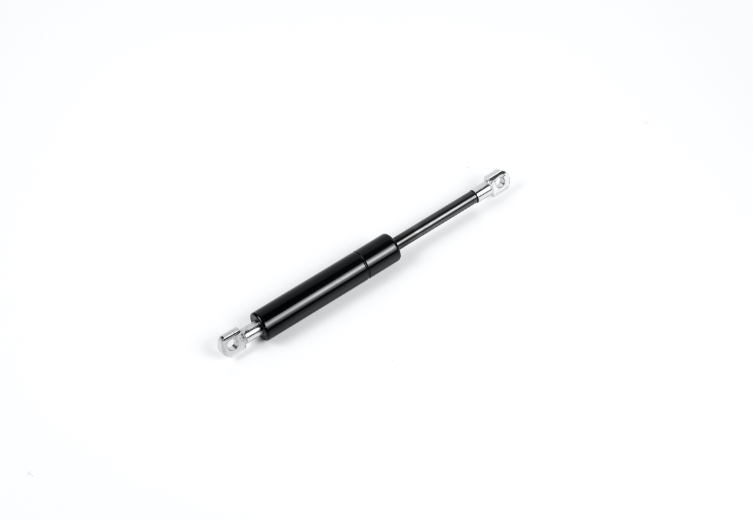
Gas springs contain nitrogen gas under high pressure. Mishandling them can lead to catastrophic failures. Juteng manufactures its products under strict international quality management systems to ensure structural integrity. Our commitment to safety and reliability is reflected in our manufacturing standards and product certifications.
Quality Standard / Feature | Description & Safety Impact |
|---|---|
International Quality Certification | Ensures high-precision manufacturing processes, minimizing the risk of seal failures or pressure tube bursts. |
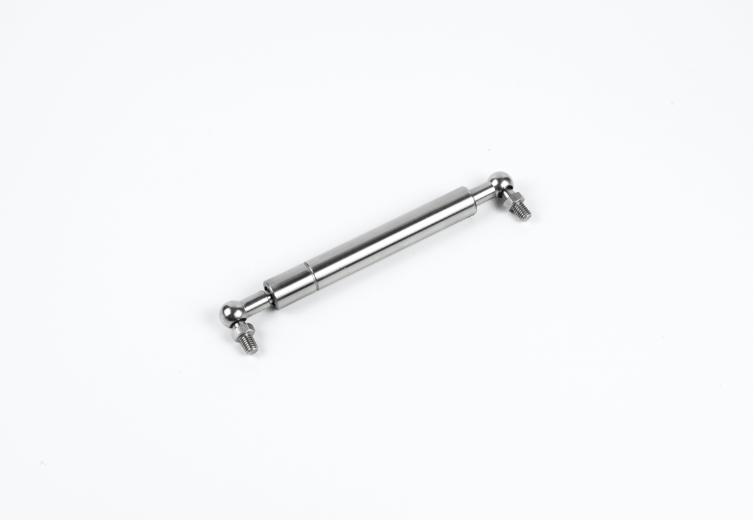
IP54 / IP67 Protection Rating | Available on specialized models, preventing dust and moisture ingress that could cause corrosion and sudden failure. |
Wide Temperature Tolerance | Engineered to operate safely in extreme environments ranging from -30°C to +80°C without pressure fluctuations. |
When working with pressurized struts, selecting the correct force rating is just as important as the physical installation. Using a gas strut force calculator or consulting with engineers ensures the mounting brackets and hinges can handle the operational load.
Risks of Improper Handling
Bypassing safety procedures or using incorrect tools exposes you to significant hazards. Gas springs can exert forces exceeding 2000N; if released uncontrollably, the consequences are severe.
High-Velocity Ejection: A disconnected or failing end fitting can cause the pressurized rod to shoot out like a projectile.
Seal Extrusion and Leakage: Applying lateral (side) forces during compression can damage the internal seals, leading to gradual or sudden gas leakage.
Pinch Point Injuries: Fingers or hands caught between the piston rod and the pressure tube during compression can suffer crushing injuries.
Structural Damage: Over-compressing the spring beyond its designed stroke length can permanently deform the internal components.
Critical Warning: Never attempt to puncture, weld, or forcefully drill into a gas spring cylinder. The high-pressure nitrogen inside can cause an explosive rupture.
Benefits of Professional Engineering Support
Partnering with an experienced manufacturer ensures that your application is engineered for safety and longevity. We offer free computer-aided gas spring design services to help you determine the exact force, stroke length, and mounting dimensions required for your specific project.
Optimized Lifespan: Correctly matched force ratings prevent overworking the spring, ensuring millions of reliable cycles.
Precise Positioning: For applications requiring stability, our lockable gas springs can securely hold loads at any point in the stroke.
Reduced Maintenance: Proper installation orientation (rod down) ensures the internal seals and piston remain lubricated.
Gas Spring Compression Tool & Safety Gear
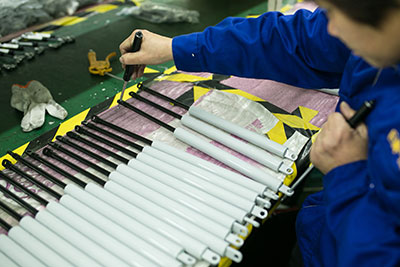
Essential Tools
To safely manage the internal pressure of a gas strut, you need tools that provide controlled, steady force.
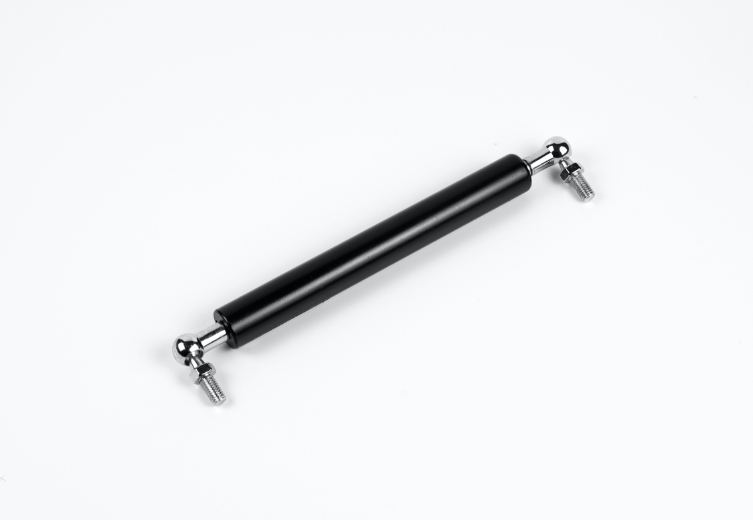
Gas Spring Compressor / C-Clamp: Essential for safely compressing the piston rod into the cylinder before mounting, especially for high-force industrial springs.
Socket Wrench Set: Required for securely fastening the mounting brackets and ball studs to your equipment.
Protective Padding: Soft wood or rubber blocks to place between the clamp and the gas spring body, preventing scratches to the pressure tube.
Calipers or Measuring Tape: To verify the stroke length and extended length match your technical drawings.
If you are unsure about the required specifications, Juteng provides comprehensive OEM/ODM services and custom design solutions. You can provide parameters such as lid weight, opening angle, and pivot distances, and our engineering team will calculate the optimal gas spring configuration for you.
Recommended Safety Equipment
Personal Protective Equipment (PPE) is mandatory when handling pressurized components.
Safety Glasses: Protects eyes from potential debris or sudden fluid/gas leaks.
Mechanic Gloves: Provides grip and protects hands from sharp edges and pinch points.
Steel-Toe Boots: Recommended when handling heavy industrial gas springs or large equipment hatches.
Preparation Before Installation
Inspecting Gas Spring & Work Area
Before applying any force, conduct a thorough inspection. Check the piston rod for any micro-scratches or dents, as surface damage will quickly destroy the internal seals. Ensure the end fittings (e.g., ball studs, clevises) are thread-locked and secure.
Verify the force rating label matches your project requirements.
Ensure the work area is well-lit and free of tripping hazards.
Confirm that the mounting points on your equipment are clean and structurally sound.
Securing the Environment
The object you are installing the gas spring on (e.g., a heavy hatch, lid, or medical bed section) must be mechanically supported. Never rely on your hands or the gas spring itself to hold a heavy load during installation. Use prop rods or clamps to secure the moving part in the open position.
Compression & Installation Steps
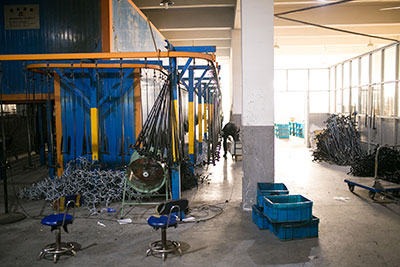
Step 1: Secure the Moving Load
Ensure the hatch, lid, or door is fully supported by a prop rod or safety stand. The load must be completely stable before you attempt to attach or compress any springs.
Step 2: Attach the End Fittings
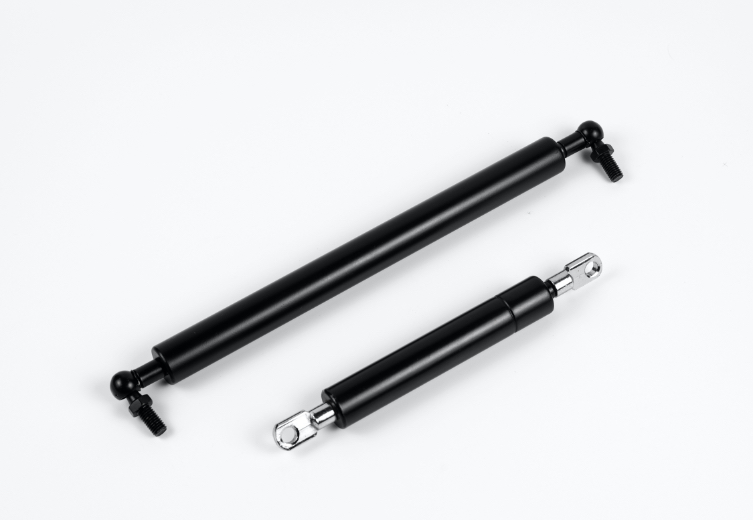
Align the gas spring between the upper and lower mounting brackets. Attach the ball studs or clevises to the mounting points. Do not force the rod to reach the bracket; if it is too short, you may need to gently compress the rod first.
Step 3: Apply Controlled Compression
If the spring needs to be compressed to snap into a tight bracket, use a dedicated gas spring compressor or a C-clamp with protective padding. Apply slow, steady pressure directly along the axis of the rod. Never apply lateral (side) force, as this will bend the rod and ruin the seals.
Step 4: Lock or Secure the Mechanism
If you are installing a lockable gas spring, ensure the locking mechanism is in the correct state (unlocked for installation). Once the rod is fully seated in the bracket, secure any retaining clips or fasteners.
Step 5: Remove Supports and Test
Slowly remove the prop rods or safety stands. Support the load with your hands initially, then gently lower it to test the damping and lifting force. The movement should be smooth and controlled without any sticking or sudden drops.
Installation Rule: Always install gas springs with the piston rod pointing DOWNWARD in the static (closed) position. This ensures the internal seal and piston are constantly bathed in lubricating oil, preventing dry friction and premature failure.
Troubleshooting & Technical Queries
Gas Spring Won't Compress or Extend Smoothly
If the spring feels gritty or sticks during movement, it may be suffering from lateral misalignment. Check that the mounting brackets are perfectly parallel. If the spring is installed at an extreme angle, it may create side-loading. Adjust the mounting position or consult Juteng's engineering team for a custom bracket solution.
Common Technical Questions
How do I calculate the required force? You need to know the weight of the lid, the location of the center of gravity, and the pivot points. Juteng offers free engineering calculations to calculate this for you.
Can I use standard gas springs for heavy industrial doors? Standard springs may not suffice. You may need high-force compressed gas springs or a system of multiple struts to distribute the load safely.
What is the advantage of a lockable gas spring? Unlike standard springs that only push, lockable gas springs can be locked at any point in the stroke, providing rigid support for adjustable medical equipment or heavy hatches.
When to Seek Professional Help
While basic replacements can be done DIY, complex applications involving heavy machinery, medical devices, or custom automotive modifications require professional engineering.
Scenario | Why Professional Support is Required |
|---|---|
Unknown Force Requirements | Incorrect force calculation can lead to equipment damage or inability to close the hatch. |
High-Force Applications (>1000N) | Manual compression is physically impossible and requires specialized hydraulic or mechanical pressing tools. |
Extreme Environments | Applications involving high heat, corrosive chemicals, or marine environments require specialized materials and IP ratings. |
If you are dealing with high-pressure systems or complex kinematics, reach out to a trusted manufacturer with extensive industry experience. Juteng's technical team is equipped to provide custom solutions, from material selection to force tuning. Contact our engineering team today to ensure your system operates safely and efficiently.
Safety and precision are paramount when compressing and installing gas springs. By utilizing the correct tools, respecting the internal pressure, and leveraging expert engineering support, you ensure the longevity and reliability of your equipment.
FAQ
How do you choose the right gas struts for your project?
You must calculate the weight of the moving part, the distance from the pivot to the center of gravity, and the desired opening angle. Using these parameters, you can determine the required Newton (N) force. Juteng provides free engineering calculations to help you select the exact specification.
What is the purpose of a clip in gas struts installation?
Retaining clips (such as circlips or spring clips) secure the ball stud or eyelet to the gas spring's piston rod or the mounting bracket. They prevent the component from vibrating loose under dynamic loads. Always ensure clips are fully seated in their grooves before applying force.
Can you use gas struts as a replacement for gas shocks or lift support?
Yes, but only if the force rating, extended length, and stroke length match the original specifications. Substituting a different force rating will alter the lifting speed and closing effort, potentially causing damage to the hinges or the equipment itself.
How do you safely remove a gas struts clip?
First, ensure the moving load is fully supported by a prop rod. Wear safety glasses. Use a small flathead screwdriver or specialized pick to gently pry the retaining clip away from the ball stud. Control the release of the clip to prevent it from flying off under tension.
Why is my new gas spring failing to hold the lid open?
This usually indicates that the force rating (Newton) is too low for the weight of the lid, or the gas spring was installed with the rod facing upward, causing internal friction. Verify the force calculation and ensure the rod-down installation orientation.